Three Overgrips, Two Sweaty Hands, One Honest Answer
It happens at exactly the worst moment. You're down 30-40, 4-4 in the second, and you reach for a kick serve on the ad side.

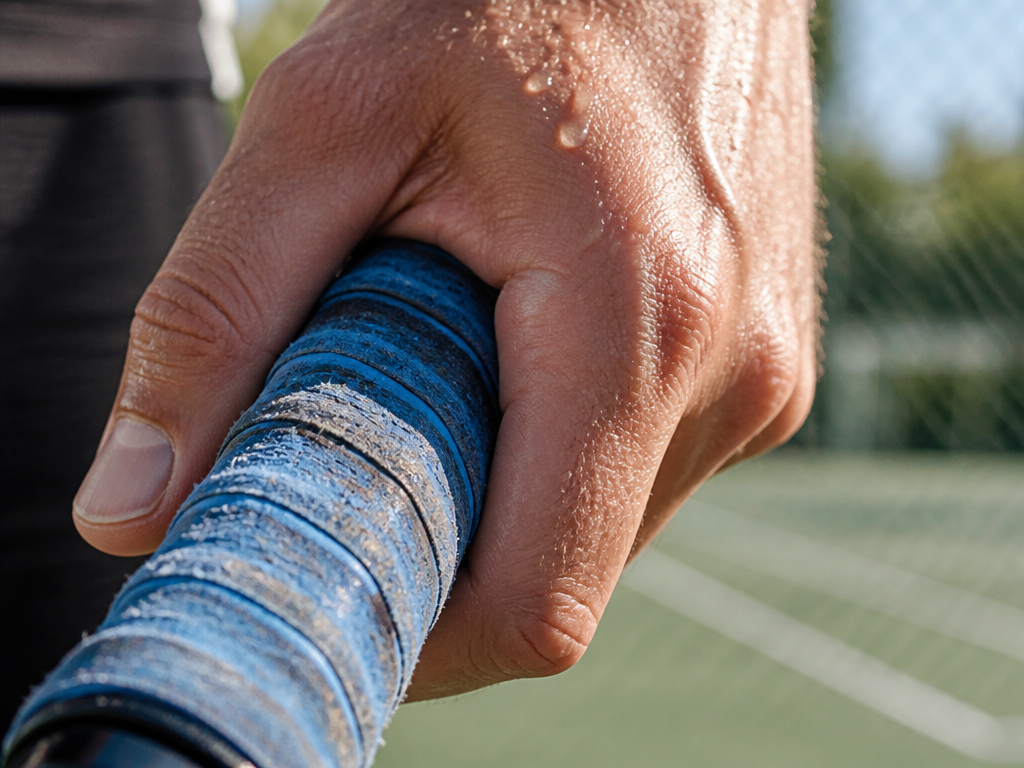
It happens at exactly the worst moment. You're down 30-40, 4-4 in the second, and you reach for a kick serve on the ad side. As your racquet head drops behind your back, you feel it — the handle turning in your hand a millimetre, maybe two. The ball sails long. You tell yourself to squeeze harder next time, but you already know: that's not the fix.
Sweaty hands don't care about your technique. They don't care how many hours you've spent on the practice wall or how carefully you've grooved your serve motion. At some point during every humid match, the grip you've been trusting starts feeling like a loose handshake. You change your grip mid-shot. You lose the two-hander on the backhand side because you can't trust your bottom hand. You start aiming instead of swinging.
The question you've probably asked yourself, standing at the pro shop wall with thirty overgrips staring back at you: which one actually works for sweaty hands? Not which one looks like it should work, or which one your friend swears by, or which one the internet ranked first last month — but which one, in live match conditions, with sweat dripping off your forehead and your palm wet by the second game, keeps the racquet where it belongs.
I've spent three months trying to answer that for myself. Here's what I found.
The two camps you need to know about
Before any brand names, you need to understand that every overgrip belongs to one of two families. They handle sweat differently, and if you grab from the wrong family, nothing else about the grip matters.
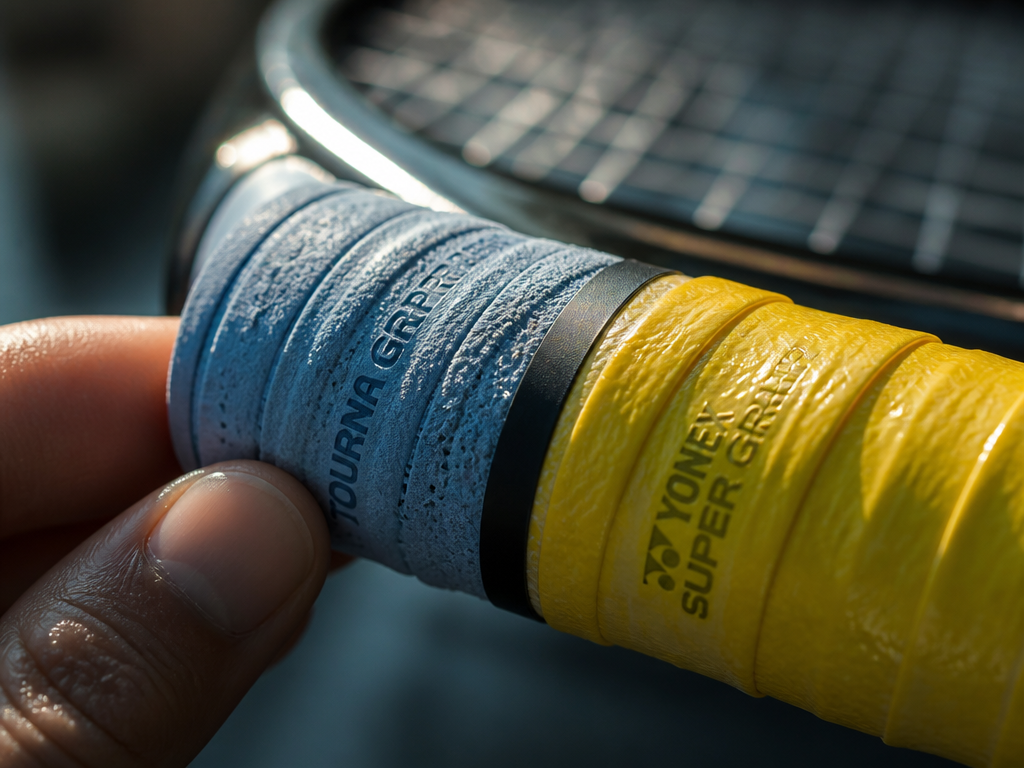
The first camp is absorbent and dry. These grips feel papery or cloth-like when you first touch them. They don't fight moisture by getting stickier — they soak it up and stay dry on the surface for a while. Tourna Grip is the classic example. The second camp is tacky when wet. These grips start out feeling sticky, almost rubbery, and they hold a tackiness that actually intensifies a little when moisture is present. Yonex Super Grap is the classic example.
Neither is better. They're different solutions to the same problem, and your hand chemistry determines which one suits you. I've seen players swap overgrips and immediately play better for no reason other than that they'd been using the wrong category for years.
But here's the thing: most players don't know which camp they're in until they've tried both. And most players try Tourna first because it's cheap and visible, then assume all overgrips are about the same. They aren't.
How I tested
I'm a right-handed player, 4.0 to 4.5 level depending on the day. My forehand grip is semi-Western, my backhand is two-handed, and I sweat heavily from my hands — not the kind of sweat that requires a towel between points, but the kind where I'm consciously thinking about my grip pressure by the third game of a set. I tested each grip over at least three matches on outdoor hard courts, in the kind of midday humidity where the ball feels heavier by the second set. No indoor courts, no climate control, no towel-rack privilege.
I'm not a biomechanist and I'm not testing tensile strength. I'm a player who wants to know which grip I can put on before a match and not think about for two hours.
Contender one: Tourna Grip (original blue)
If you've been playing tennis for more than a year, you've held a Tourna Grip. It's the one that comes in the cheap ten-pack, the one your high school coach handed out, the one that feels like suede or paper when you unwrap it. It's about 0.5mm thick — noticeably thinner than most competitors — and it has almost no elasticity when you stretch it during installation.
The first thing you notice in match conditions is that Tourna absorbs sweat fast. Like, faster than you expect. Your palm, which was slick at the start of the game, feels dry by the next changeover. The grip surface stays matte and functional even as it gets damp. This is genuinely impressive engineering for what is essentially a cloth-like material wrapped around polyurethane.
But there's a catch, and it's a big one for competitive play. Tourna starts deteriorating within about 45 minutes of active play. Not "slightly less fresh" — noticeably changing character. The fibres flatten. The grip becomes slick in a different way — not wet-slick, but compressed-slick. By the end of a 90-minute match, the grip feels different than it did at the start, and not in a good way. You can feel it in your two-handed backhand especially, where your bottom hand has been pressing against the same spot for the whole match.

The other downside: Tourna picks up court grit. If you set your racquet down on the court during a changeover, you'll find tiny particles embedded in the grip surface that don't brush off. This matters less during play but it bothers some players.
Tourna is also a bit merciless about how you wrap it. Because it has no stretch, every overlap edge is felt by your hand. If you don't wrap it perfectly — and most of us don't — you'll feel those ridges for the whole match.
Who it's for: Players who want maximum sweat absorption per dollar, who don't mind changing grips frequently, and whose hands get wet enough to need the absorbent category.
Who it isn't for: Players who want one grip to last a whole tournament, players who hate the feeling of a grip changing character mid-match, players with sensitive hands who feel every overlap ridge.
Contender two: Yonex Super Grap
I used Tourna for years. I bought it in bulk. I defended it to friends who complained about it wearing out. And then I tried Yonex Super Grap during a humid tournament in Durban, and I had the same reaction most people have: "Why didn't I try this sooner?"
Super Grap is thicker — about 0.65mm — with a noticeable rubbery tack when you first unwrap it. It stretches during installation, which means you can pull it tight and get a smooth single-edge wrap without the ridges that Tourna leaves. The feel in hand is soft, almost plush compared to the papery Tourna. It doesn't feel like it's absorbing moisture; it feels like it's holding onto your hand despite the moisture.
And in match play, that tackiness does something interesting: it works better the more you sweat, up to a point. Your palm gets damp, and the grip gets grippier. Not absorbent — tacky. Your racquet doesn't twist because the tack creates friction that your sweat doesn't break down. I've played through a third set where my hand was soaked and the racquet stayed stable on every shot.
The durability difference is substantial. A fresh Super Grap lasts three to four matches before it needs replacing, compared to maybe one match plus warm-up for Tourna. The tackiness fades gradually rather than abruptly. You'll notice on day three that the grip feels less "sticky" than day one, but it doesn't fall off a cliff the way Tourna does.
The downside: some players find it too thick. If you have small hands or you're used to the thin feel of an exposed replacement grip, Super Grap can make the handle feel bulky. It also doesn't handle extreme sweat the way Tourna does. I said "up to a point" about the tack — that point is somewhere around "dripping wet." If your hands are soaked enough that water is running down the handle, Super Grap becomes slick in a different way, because the tack can't hold against free-flowing water. For most players, this isn't the problem they have. But if you're the player who uses a towel every two points, you're on the boundary.
Who it's for: Players with moderate to heavy sweat who want one grip to last a full match (or tournament), players who prefer a thicker feel, players who hate the ridge sensation.
Who it isn't for: Players with small hands who find extra thickness uncomfortable, players whose hands drip sweat rather than just getting damp, players who prefer the dry-fibre feel of absorbent grips.
Contender three: Wilson Pro (original feel)
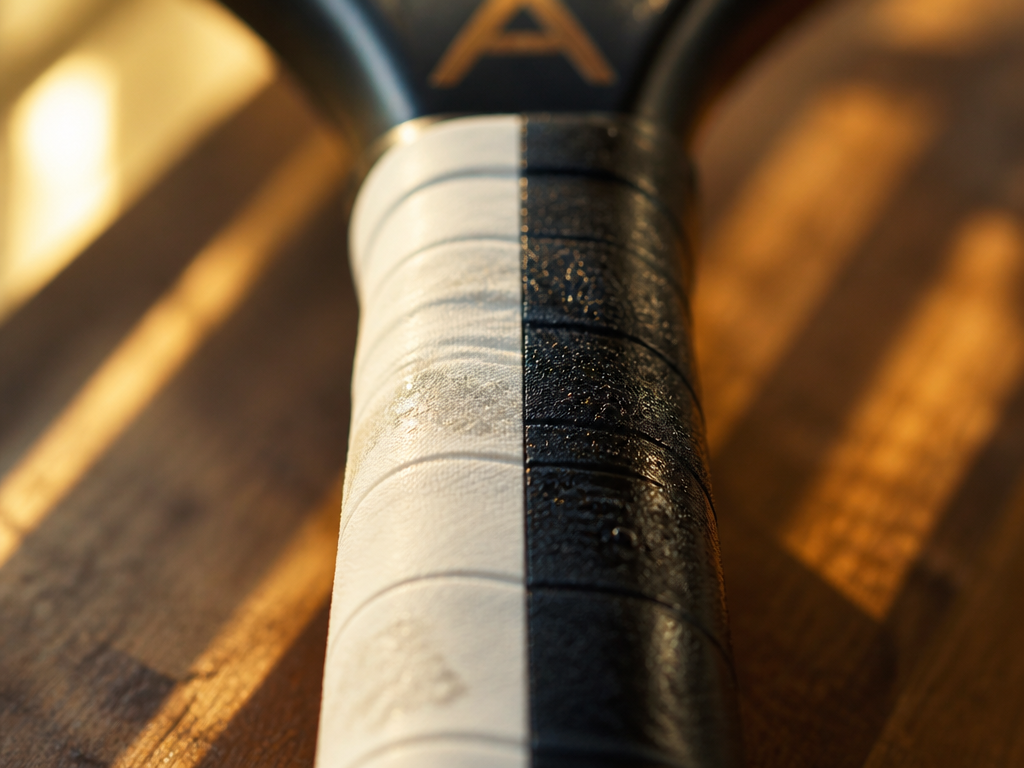
Wilson Pro sits in the middle of the road — which is the most honest way to describe it. It's not as absorbent as Tourna. It's not as tacky as Super Grap. It feels like a competent overgrip that does everything at 70% and nothing at 95%.
The material is somewhere between the two extremes: a slightly fibrous feel with moderate tack. It's about 0.55mm thick — thinner than Super Grap, thicker than Tourna. Installation is straightforward; it has some stretch but not as much as Yonex, so you'll still feel some overlap line if you're heavy-handed with the wrap.
In match conditions, Wilson Pro does a decent job for about the first hour. It absorbs sweat moderately well. It retains its texture moderately well. It doesn't pick up court grit moderately. It's a moderate overgrip.
The problem is that "moderate" is exactly what you don't want when sweat is your primary problem. You want something that either soaks up moisture aggressively (Tourna) or fights it with tack (Super Grap). Wilson Pro doesn't commit to either approach, which means it handles moderate sweat moderately and heavy sweat poorly. I found myself noticing the grip by the middle of the second set — not slipping, exactly, but not inspiring confidence. And for me, that's almost worse than outright sliding, because I start thinking about it.

Wilson Pro's main strength is its accessibility. You can find it in any shop. It's cheaper than Super Grap but more expensive than Tourna. It's the grip you grab when the shop is out of your preferred option and you need something before a match. It will not ruin your day. It will also not make your day noticeably better.
Who it's for: Players who sweat lightly and want a balanced grip that doesn't lean too far in either direction, players who hate changing grips and want something that works acceptably on day one and day five.
Who it isn't for: Players who are reading this article because they are frustrated by grip slippage. If you're here, your problem is bigger than what Wilson Pro solves.
The honest truth no review tells you
Over three months of testing, I learned something I wasn't expecting: grip preference changes with conditions more than it changes with brands. The same Super Grap that felt perfect in a dry Cape Town summer felt unstable in the Durban humidity. The same Tourna that saved me in a sweaty club match felt like useless fabric in a cooler evening session where my hands weren't producing enough moisture to activate the absorption.
Your grip preference also changes with your grip style. A Western forehand grip puts the handle deep in your palm with more surface contact — tack matters more here. An Eastern grip uses your fingers more, where a dry feel prevents the racquet from slipping out of your fingers. A continental grip, which you use for serve and volley, exposes the heel of your hand in a way that makes absorbency more relevant.
And then there's grip pressure. The tighter you hold the racquet, the more you compress the overgrip material, which changes how sweat interacts with the surface. If you're a death-grip player (and many club players are, especially under pressure), you'll wear out any overgrip faster and change its character more dramatically than a player with relaxed hands.
This is why it's difficult to give a universal answer. The grip that works for your friend might not work for you, not because your friend has bad taste, but because your hand chemistry, grip style, and local climate are different.
How I'd actually decide
Forget the brand names for a moment. Ask yourself three questions.
First: Does your sweat bead up on your palm, or does it get absorbed into your skin? If it beads up — you see droplets forming during changeovers — you're probably in the tacky camp. You need a grip that creates friction despite moisture. If your hands just feel damp and clammy without visible droplets, you're probably in the absorbent camp.
Second: Do you change grips after every match, or do you want one grip to survive a tournament? If you're willing to re-grip regularly, Tourna's trade-off of short life for excellent absorption is worth it. If you want to put a grip on and forget it for a week, Super Grap gives you more playable hours per dollar despite the higher initial cost.
Third: Do you have large or small hands? If you're already using a grip size that feels borderline big, Super Grap's added thickness will push it past comfortable. If your grip is on the small side, the added thickness may actually help. This is the variable most reviews ignore, and it matters more than brand loyalty.
What I keep in my bag
I carry three racquets to a match, strung identically. Two have Super Grap. One has Tourna. I start with Super Grap. If I'm two sets in and the humidity is high and I'm sweating through, I switch to the Tourna racquet at the start of the third set. Not because Tourna is better for the long haul — it isn't — but because the fresh dry-fibre feel of a just-installed Tourna gives me 45 minutes of confidence that nothing else matches. If the match ends in straight sets, the Tourna racquet never gets used. If the match goes deep, I have it.
That's not a recommendation. That's just what my testing lands on. Over three months, through wins and losses, through humid days and dry evenings, I've learned that the best overgrip isn't the one that works perfectly in all conditions. It's the one that works well enough in your worst conditions that you stop thinking about your hand and start thinking about the ball.
The serve that sails long on 30-40 because the grip turned in your hand — that's not a technique problem, not a fitness problem, not a mental weakness. It's a piece of material, three dollars at most, that you haven't dialled in yet. Now you know where to start.