Tacky vs Dry Overgrips: What Actually Happens When Your Hands Sweat
You are up 4-2 in the second set, your first serve has found its spot wide to the ad court, and you step in behind it feeling something rare — momentum.

You are up 4-2 in the second set, your first serve has found its spot wide to the ad court, and you step in behind it feeling something rare — momentum. The return comes back crosscourt, waist-high, your ball. You set up for a forehand up the line, and as you swing, you feel it. A tiny rotation of the handle in your hand. The ball goes wide by half a metre. You look at your palm, then at the grip. You know what happened. That rotation wasn't the racquet turning in your hand. It was you, loosening your hold just slightly because your brain, faster than your conscious thought, already knew the grip was going to slip and tried to adjust mid-swing. You lost the point before the racquet met the ball.
If you have played tennis for more than a few months with any seriousness, this moment is familiar. And if you have searched for a solution, you have encountered two big words that seem to describe everything and nothing: tacky and dry. The overgrip market — the thing you wrap around your existing grip to manage sweat, feel, and friction — divides itself along these two lines. But the way these words get used in product descriptions and forum threads obscures more than it reveals. What does it actually mean for a grip to be tacky? What does it mean for a grip to be dry? And more to the point: given your hand sweat, your budget, and the court you play on tomorrow, which one should you wrap around your handle tonight?
The Two Camps
Let me name the two categories plainly, because the industry does not make this easy.
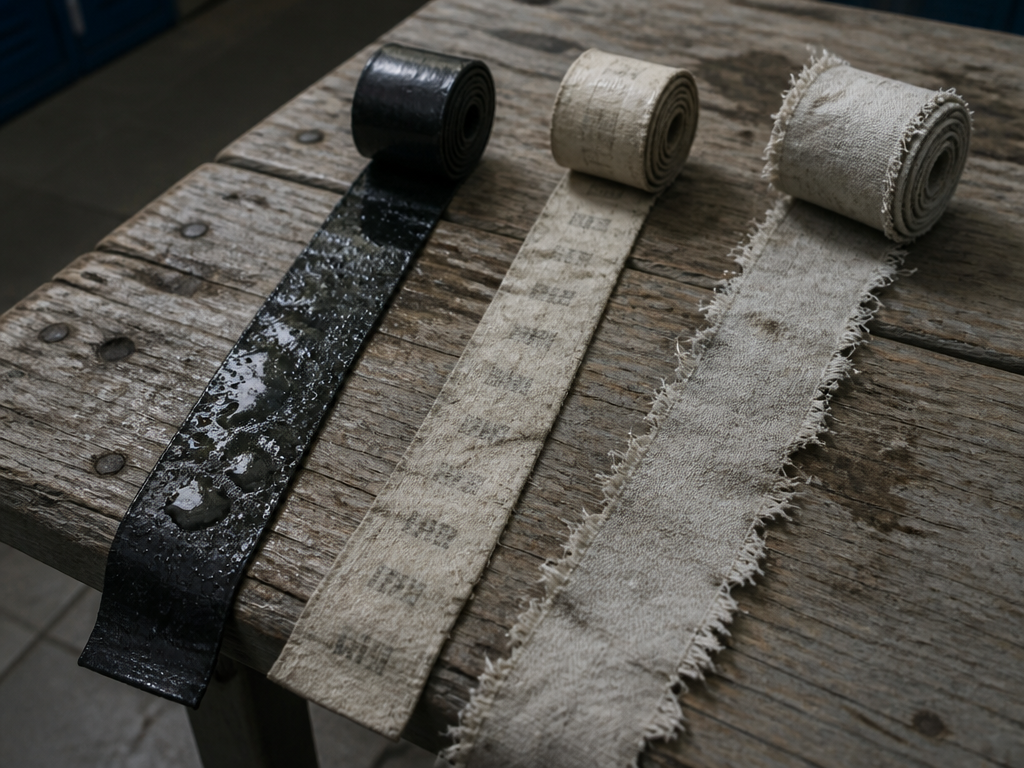
Tacky grips are designed to be sticky to the touch, even when new. They use a formulation of polyurethane that creates high static friction — the grip grabs your skin before you start sweating. Yonex Super Grap is the most famous example. Wilson Pro Overgrit is another. When you press your thumb into a fresh tacky overgrip, you feel resistance immediately. The grip is trying to hold onto you.
Dry grips are designed to feel matte, sometimes almost papery or cloth-like. They absorb moisture into their material rather than sitting on top of it. Tourna Grip is the standard here. When you hold a dry grip, it does not feel sticky. It feels like a surface that is waiting to soak up whatever your hand produces.
These are not just differences in feel. They are differences in how the grip handles the fundamental problem: the layer of sweat between your hand and the handle.
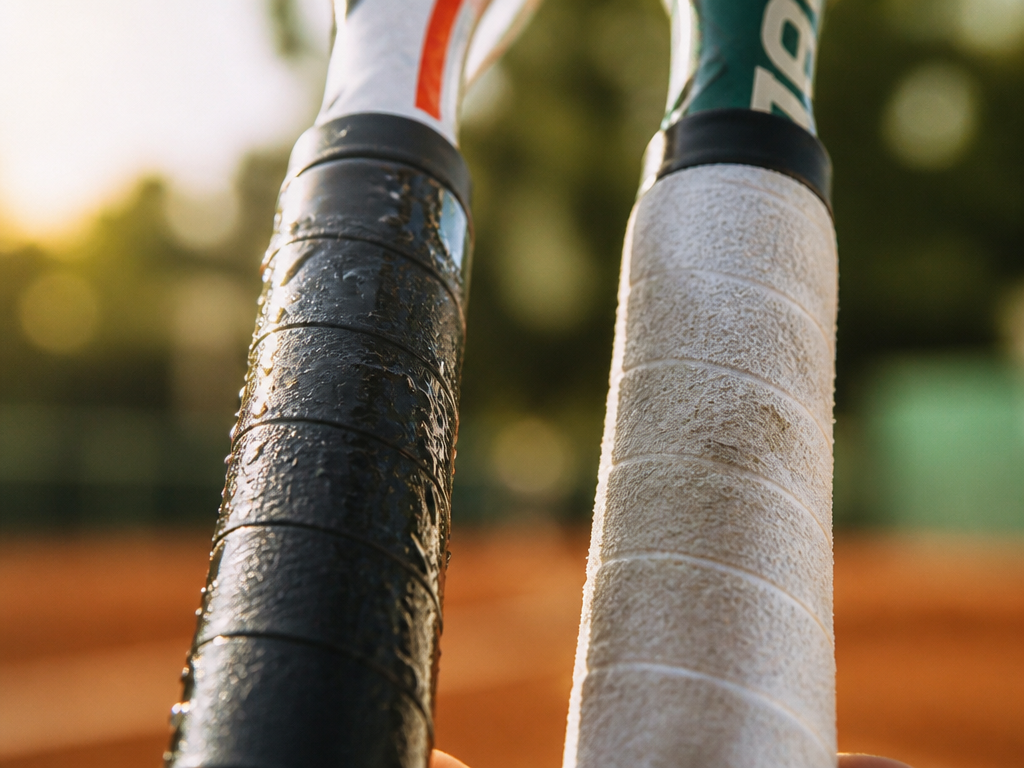
A tacky grip keeps its tackiness until it gets wet. Once the surface is saturated — once your sweat forms a continuous film between your palm and the grip — the tackiness reduces. The grip does not feel slippery exactly. It feels… less sticky. And because it started tacky, the drop-off in friction feels larger than it actually is. Your brain notices the change more than the absolute level.
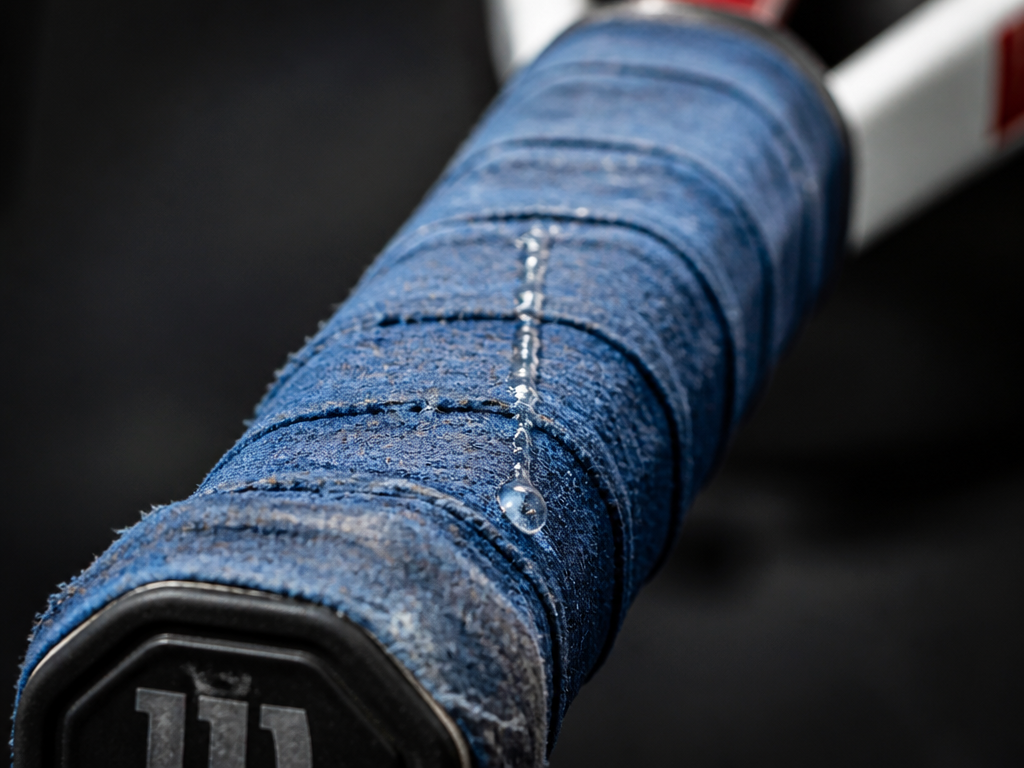
A dry grip, by contrast, feels less grippy when dry. But as you sweat, the grip absorbs moisture into its structure. The surface itself changes. The fibres swell slightly and become more conforming to your hand. Many players report that a dry grip actually gets more grippy as they sweat. The grip becomes a kind of sponge that moulds to your palm.
Both approaches work. Neither works all the time. And the belief that one is universally better than the other has a history worth understanding.
Where the Belief Came From
In the 1970s, most tennis players used leather grips. Leather feels great when it is dry. When it is wet — whether from sweat or humidity — leather becomes slippery, then waterlogged, then slick as a fish. Players dealt with it by using rosin bags, talcum powder, or just changing grips mid-match. It was not ideal.
In 1977, a company called Unique Sports Products released Tourna Grip. It was not the first overgrip on the market, but it was the first that solved the sweat problem deliberately. Tourna Grip used a cotton-like, absorbent material that pulled moisture away from the hand. It was almost aggressively non-tacky. If you held a fresh Tourna Grip between your fingers, it felt like nothing — like a thin, textured cloth.
The tennis world adopted it quickly. For a certain generation of players — particularly in hot, humid climates — Tourna Grip became the default. Andre Agassi used it. Jimmy Connors used it. The belief formed: sweaty hands need a dry grip that absorbs moisture. Tackiness is irrelevant, even counterproductive.
Then in the 1990s, Yonex released Super Grap. Super Grap was different. It was visibly shiny, slightly tacky to the touch, and thin — noticeably thinner than Tourna Grip. When you wrapped it, it felt like a second skin over the handle. And it did not absorb sweat. Instead, it stayed tacky on its surface, and when the surface got wet, you were supposed to wipe it on your shorts or towel and it would go back to being tacky again.
A new belief formed: a tacky grip gives you better feel and control, and as long as you can dry it between points, you do not need it to absorb sweat.
Both beliefs are still alive today. And both are partially wrong, because neither accounts for the actual conditions in which most players use a grip over the course of a three-set match.
The Three Grips I Played With

I spent a month testing three overgrips in match conditions: Tourna Grip (the dry standard), Yonex Super Grap (the tacky standard), and Wilson Pro Overgrip (the most popular overgrip on the market, a tacky grip with a slightly different feel than Super Grap). I played singles and doubles on hard courts in humid conditions — the kind where you walk off court and your shirt is a different colour. I changed grips before each match to start fresh. Here is what I found.
Tourna Grip
It smells like a chemistry set when you take it out of the wrapper. That smell is part of the lore. People who use Tourna Grip know it. It is not pleasant, but it is familiar — like the smell of a new can of balls.
Tourna Grip is papery. It has no stretch to speak of. When you wrap it, you pull it tight and it conforms to the bevels of the handle without any of the elastic rebound that tackier grips have. The result is a grip that feels thin and direct but also a bit dead. There is no bounce in the feel.
On court, it does exactly what it promises. Your hand sweats, and the grip absorbs it. After an hour of play, the grip feels damp but not slippery. The surface texture changes — it becomes slightly fuzzy, like worn cotton — but the friction stays consistent. I never felt the handle rotate in my hand with Tourna Grip, even when my palms were wet enough to leave marks on the ball.
The downside is durability. Tourna Grip does not last. After two hours of match play, the grip is visibly worn at the points where your index finger and thumb meet the handle. The absorbent material compresses and loses its structure. By the third hour, you are essentially playing on a compressed layer of damp fibre. It still works, but it does not feel the same.
The other downside is that Tourna Grip feels terrible when it is dry. If you play in low humidity or on a cool day where you do not sweat much, the grip has a dead, almost dusty feel. Your hand does not slide — but it does not connect either. It feels like you are holding the handle through a thin cloth.
Durability at match play: 2–3 hours before noticeable degradation. Best use: High sweat, high humidity, players who regrip before every match. Worst use: Dry conditions, players who want the same grip for a week of practice.
Yonex Super Grap
Super Grap is the benchmark for tacky overgrips for a reason. When you take it out of the wrapper, it has an almost rubbery sheen. It stretches about thirty percent more than Tourna Grip when you wrap it. The tackiness is immediate — you cannot touch the grip without feeling it grab your skin.
In dry conditions, Super Grap is extraordinary. The tackiness gives you a sense of control that is difficult to describe objectively but easy to feel. Your hand does not need to squeeze the handle as hard, because the grip is doing some of the work. There is a feeling of security that lets you relax your grip pressure, which in turn lets you swing more freely.
When you start sweating, two things happen. First, the tackiness reduces. Not to zero, but noticeably. The grip that grabbed your skin now feels like slightly damp rubber. Second, the sweat does not absorb into the grip. It sits on the surface. If you wipe the grip on your shorts between points, it goes back to being tacky for the next point. But the sweat is still on the surface, and it will accumulate.
For players who sweat moderately, this is fine. Wipe, reset, play. For players who sweat heavily — the kind where your overgrip is soaked after two games — Super Grap becomes a problem. The sweat on the surface creates a thin film that reduces friction. The grip that gave you so much confidence when dry now feels like it is slipping. And because it started so tacky, the drop in friction feels dramatic even if the absolute level is still adequate.
I had to be honest with myself about this: Super Grap works for me for about a set, and then I need to change it. In a three-set match, I would need three overgrips. That is not practical for most players.
Durability at match play: One intense set before tackiness drops noticeably. Can be extended by towelling off the grip. Best use: Low-to-moderate sweat, dry conditions, players who value feel over absorption. Worst use: Heavy sweat, high humidity, players who do not want to regrip mid-match.
Wilson Pro Overgrip
Wilson Pro is the most popular overgrip on the ATP tour and in club tennis. It sits somewhere between Tourna and Super Grap in feel. It is tacky, but less aggressively so than Super Grap. It has some absorbency, but less than Tourna. It is a compromise — and it is a remarkably good one.
When I wrapped it, the first thing I noticed was the thickness. Wilson Pro is thicker than both Tourna and Super Grap. It has a cushioned feel that the other two do not. Some players hate this — they want to feel the bevels of the handle directly. Other players love it — it absorbs vibration and softens the impact.
On court, Wilson Pro handles sweat better than Super Grap and worse than Tourna. The surface stays tacky for a while, then gets a little damp, then stays damp but functional. It does not have the dramatic drop-off that Super Grap has. It also does not absorb as quickly as Tourna, so if you sweat heavily, the grip will feel wet on the surface before it starts absorbing.

The durability is good. Wilson Pro lasts about twice as long as Tourna Grip before the tackiness wears off or the material compresses. I got four to five hours of match play out of a single wrap before I wanted to change it.
The downsides: It changes the shape of the handle more than the other two because of its thickness. If you have a small hand or you like a sharp bevel feel, Wilson Pro will round out the handle perceptibly. And it does not have the specificity of the other two — it is not the best for heavy sweat, and it is not the best for dry feel. It is good at everything and great at nothing.
Durability at match play: 4–5 hours before noticeable degradation. Best use: Moderate sweat, players who want one grip for practice and matches, cushioned feel. Worst use: Heavy sweaters, players who want maximum bevel feel.
How I Would Actually Decide
Your decision comes down to three things, and only three things. Everything else — brand loyalty, what a pro uses, forum recommendations — is noise.
How much you sweat. This is the primary variable. If you sweat heavily — if your grip is damp after two games and soaked after four — you need a dry grip. Tourna Grip is the obvious choice, not because it is the best at anything else but because it is the best at managing high sweat over time. The tacky grips will fail you, not because they are bad but because they were not designed for your condition.
If you sweat moderately or lightly — if your grip gets a little damp by the end of a set but is never soaked — you should use a tacky grip. The feel is better, the control is better, and you will never need the absorbency of a dry grip. Super Grap or Wilson Pro will serve you better.
How often you are willing to regrip. If you replace your overgrip before every match, you can use whatever you want. The durability argument disappears. If you want a grip to last a week of practice and a weekend match, you need Wilson Pro or something similar. Tourna Grip will be dead by Wednesday. Super Grap will lose its tackiness by the middle of your second practice.
What you want to feel. This is the one that players tend to overthink and under-experiment with. There is no substitute for buying one of each and playing a set with them. You will know within ten minutes which one you prefer. The feel of the grip in your hand is the only feedback that matters.
Who This Is For
The competitive club player who plays two to three times a week, practices on a wall or with a partner, and wants to eliminate one source of uncertainty in their game. You are not a touring pro. You are not sponsored. You are spending your own money on gear, and you want it to work.
For you: start with Wilson Pro. It is the safest bet. If you sweat a lot, switch to Tourna. If you sweat little and want more feel, switch to Super Grap. Do not buy a twelve-pack of anything until you have played two full sessions with a single wrap.
Who This Is Not For
The beginner who is still figuring out their grip and has not yet experienced sweat as a match issue. You do not need an overgrip analysis. You need to play more tennis, and whatever grip came on your racquet is fine for now.
The player who changes grips once a month and wonders why their handle feels different every week. You are not experiencing the grip. You are experiencing the accumulation of dirt, dead skin, and dried sweat on a surface that was designed to work fresh. Change your overgrip more often. Once every three to four hours of court time is a reasonable schedule.
Where the Science Stops
There is a question I cannot answer, and neither can the manufacturers.
No one has published a proper friction-coefficient study of overgrips under controlled moisture conditions. Not the brands, not the tennis academies, not the universities. The claims that tacky grips get more slippery when wet, or that dry grips get grippier when wet — these are based on subjective reports, not measurements.
It matters because the belief that a tacky grip "loses its grip" when wet might be a perceptual trick. When you start with high friction and drop to medium, it feels like a large decrease. When you start with low friction and rise to medium, it feels like a small increase. The end state might be the same coefficient of friction — both grips might perform identically once your hands are sweaty. The difference is only in where you started and how the change felt.
I do not know the answer. And until someone does the study, neither does anyone who tells you that their grip is better for sweaty hands. We are all just going on feel.
Which is fine. Feel matters. But it is not the same as truth. Next time your grip slips on a forehand up the line, ask yourself: did the grip actually lose friction, or did you just notice the change?
The answer will not help you win the next point. But it might help you pick your next overgrip with a little more clarity.