The One Overgrip Rule That Falls Apart When Your Hands Sweat
You're in the third set, serving at 4–5, and the two-handed backhand you've hit a thousand times comes off the frame because your right hand slipped a quarter-turn at contact. You look at the handle.

You're in the third set, serving at 4–5, and the two-handed backhand you've hit a thousand times comes off the frame because your right hand slipped a quarter-turn at contact. You look at the handle. The overgrip is dark with sweat. You've been playing forty-five minutes. You put this grip on last week, maybe eight hours of court time. It should still be fine.
Most advice you hear about overgrips goes like this: change them often, keep a fresh one in your bag, and you'll never have a grip problem. It sounds reasonable. It's the kind of thing a club pro says in a group lesson, and everyone nods. The advice is roughly right for a certain kind of player — the one whose hands get a little damp, who changes grips every couple of weeks, who never thinks about it until someone brings it up.
If you're reading this, you're probably not that player. You're the one who walks off court wringing sweat from the butt of your racquet. You've gone through a Tourna Grip in a set and a half. You've tried the sticky grips, the dry grips, the perforated grips, and you still lose the handle on serve. The common advice isn't wrong exactly — it's just aimed at someone whose hands don't do what yours do.
There are two kinds of sweat players. Figuring out which one you are is the only thing that matters before you spend another rand on a three-pack of anything.
Type A — Your hands get damp. The palm is moist, not wet. You can play two or three sets before the grip feels slick. A tacky overgrip, something that grabs the skin, will get stickier as it warms up and works perfectly for you until the surface wears smooth.
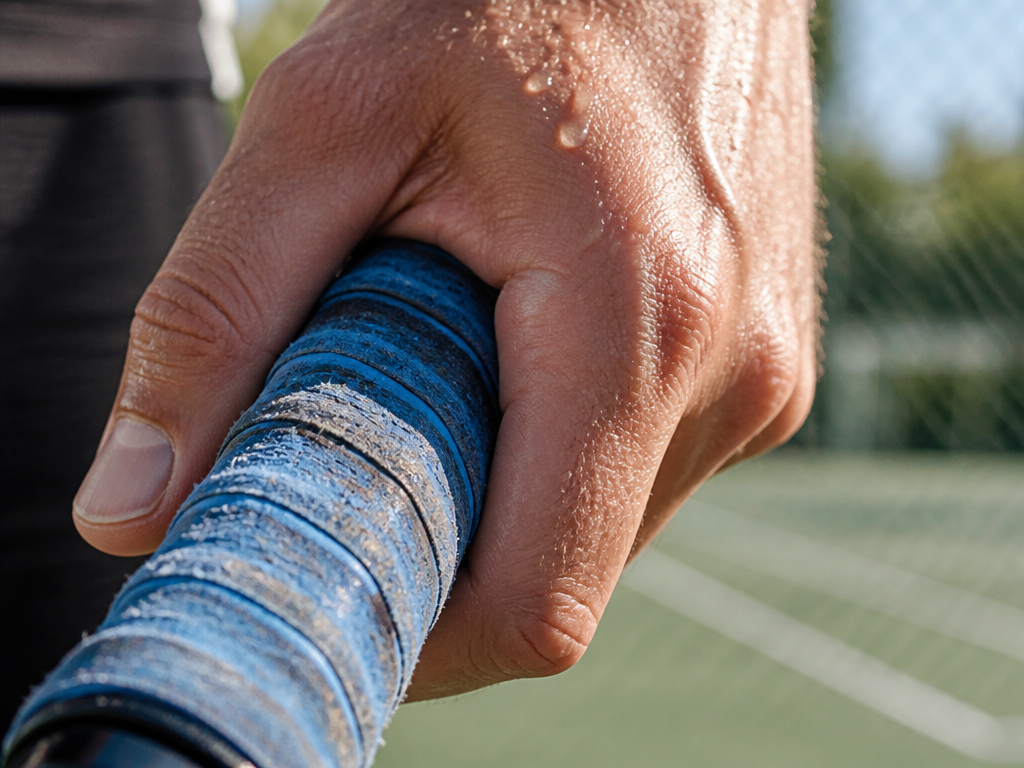
Type B — Your hands drip. You can see moisture on the grip after one service game. You wipe your hand on your shorts between points and the shorts are soaked by the second set. Tacky overgrips turn into a wet film under your palm. You need something that absorbs moisture into itself and stays dry-feeling on the surface.
If you're Type A, almost every overgrip on the market will work for you. Change it every few sessions and you're fine. If you're Type B, you've probably learned to live with a bad grip because you don't know there's another option. You might be using Tourna Grip, which is the standard recommendation for sweaty hands. It works, but it has a cost most people don't talk about.
I've spent the last several weeks cycling through four different grips in match play — league matches, practice sets, tiebreaks in humidity that makes the balls feel heavy. Not a lab test. Real conditions, real sweat, real frustration when a grip let go at the wrong moment. Here is what I found.
The Four Grips
Tourna Grip Original
You already know this grip. It's the thin, pale-blue roll that comes in a plastic tube, the one your first coach used to wrap your racquet with. It feels like paper when you touch it — dry, almost chalky. The thing Tourna does that nothing else does is absorb sweat into itself. You can soak it through, and the surface still feels reasonably dry to the touch.
The good: No other grip manages sweat the way Tourna does. If your hands drip, this is the one you can trust in the third set. It's thin enough that you don't lose feel of the bevels — you always know where your grip is. And it's cheap. A ten-pack runs less than most three-packs of the premium brands.
The bad: It wears fast. Really fast. Two or three hard practice sessions and the surface starts compacting and losing its absorbency. By session four, you're essentially playing on a smooth, slightly dirty layer of whatever was on your hand during the last match. You can extend it with a wet cloth wipe-down, but that buys you maybe one more session. Tourna also has almost no tack when it's dry. If you're a light-sweater, you'll find it slippery in a different way — your hand doesn't stick to it, and that can feel insecure on the serve.
The honest verdict: Tourna is the best grip for Type B players and a mediocre grip for everyone else. It sacrifices durability and feel for sweat management, and that's the right trade for a player who can't hold the racquet any other way. But you should expect to change it every six to eight hours of court time. If you're getting ten hours out of a Tourna, you're not sweating enough to need it.
Wilson Pro Overgrip
The standard competitive option. It comes in black, white, and a few colours depending where you are. It's thicker than Tourna — you feel it in the hand, slightly cushioned. The surface is tacky, not absorbent.
The good: The tack is consistent. You wrap it, it's grippy immediately, and it stays that way for the first four or five hours. It doesn't change character as you sweat — it feels the same in the first game as it does in the middle of the second set. The thickness also means it dampens vibration a little, which some players like on stiffer frames.

The bad: That tackiness disappears when the surface gets wet. If you're Type B, your sweat doesn't get absorbed — it sits on top of the grip, and the tack turns into a slick film. You'll find yourself wiping the grip between points, and then it's tacky again for two points, and then it's wet again. The cycle is exhausting. Pro also wears out differently than Tourna — it doesn't go smooth so much as it loses the surface tack. You get seven or eight hours before it feels like a different grip.
The honest verdict: This is the right grip for Type A players who want consistent feel and don't have a moisture problem. It is a poor choice for heavy sweaters. I see a lot of competitive juniors using it because it feels crisp and responsive, and they can afford to change it twice a week. But if you're buying one pack a month because you're on a budget, and you sweat heavily, you're going to be fighting the grip by the second week.
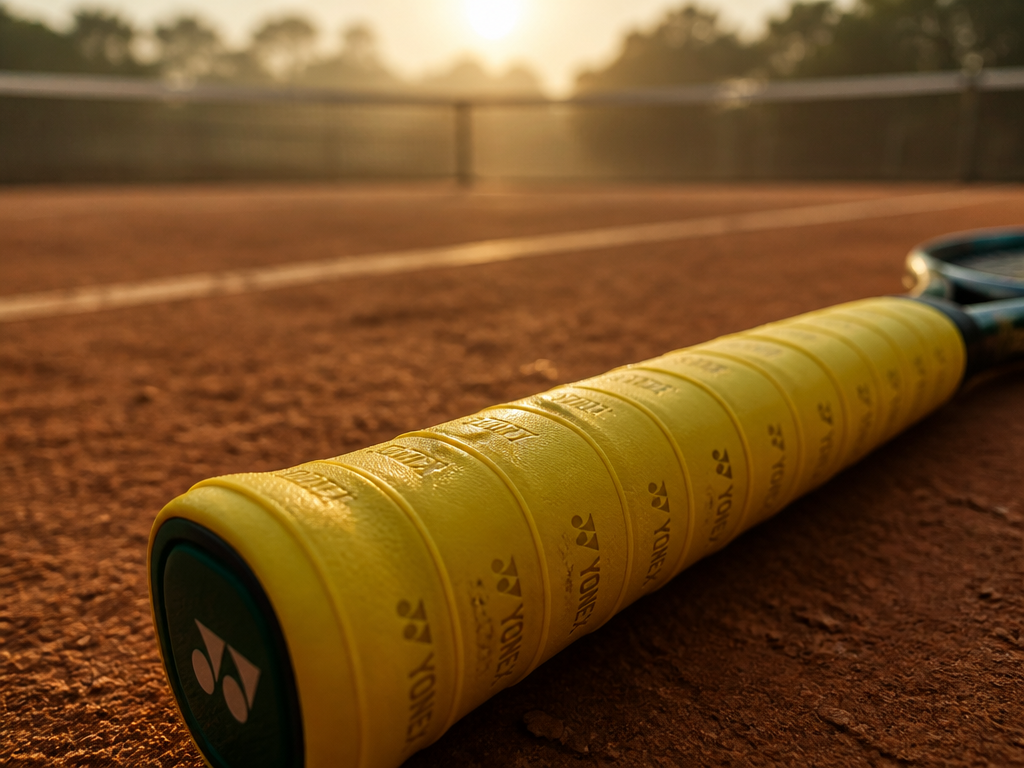
Yonex Super Grap
I used Tourna for years. I thought that was what a sweaty-hand player was supposed to do. Then a friend handed me a racquet wrapped in Super Grap during a practice break, and the first thing I said was, "wow."
Super Grap is tacky, but not like Wilson Pro. It's a different kind of stickiness — softer, almost rubbery. It grabs your hand without feeling glued to it. And crucially, it has a subtle texture that helps channel moisture rather than trap it against your palm.
The good: The feel is excellent. You know where the bevels are — it's thicker than Tourna but not as padded as Wilson Pro — and the tack works even when your hand is moderately damp. It doesn't turn to slime the way some tacky grips do. The durability is noticeably better than Tourna. I got ten hours out of one wrap before I felt compelled to change it, and it could have gone another session.
The bad: It is not a heavy-sweat grip. If your hands drip, the moisture eventually wins. Super Grap manages dampness well, but it doesn't absorb the way Tourna does. After an hour in high humidity, it feels wet. Not slick — the tack holds a little longer — but definitely wet. It's also more expensive than Tourna, though comparable to Wilson. And it comes in individual sleeves, not ten-packs, which adds up.
The honest verdict: Super Grap is the best all-rounder on this list. It does nothing perfectly, but it does everything well enough that most players wouldn't need to look further. If you're on the line between Type A and Type B — your hands get sweaty but don't drip — this is your grip. It forgives more than Tourna does on feel and more than Wilson Pro does on moisture.
Volkl V-Dry
This one is less common. You might not see it in your local shop. Volkl makes it, and it's designed specifically for humidity and sweat. The material feels different — slightly fuzzy, not tacky, not papery. More like a microfiber cloth.
The good: The absorption is real. It doesn't wick sweat the way Tourna does (which pulls moisture into the grip), but it sits on top of the moisture differently — your hand doesn't slip because the surface texture grabs even when wet. It lasts significantly longer than Tourna. I got twelve hours out of one wrap, and it was still functional, just dirty. It's also thicker than Tourna, which some players prefer for comfort.
The bad: The feel is unusual. If you're used to tacky grips, V-Dry will feel dead in your hand. There's no feedback from the surface — it's like holding a towel wrapped around the handle. You lose some of the bevel feel, especially on slice and volley where you need to know exactly where your palm is. And it's hard to find. Most shops don't stock it because it doesn't sell as well as the big brands.
The honest verdict: V-Dry is a specialist tool for the player who sweats heavily, hates changing grips every few sessions, and is willing to trade feel for durability. It's not better than Tourna for pure sweat management, but it lasts twice as long, which makes it cheaper in the long run if you're a heavy user. If you're Type B and you hate the ritual of re-gripping every week, try it.
How the Grip Changes Through a Match
This matters more than initial feel. Every grip starts fresh. The question is what happens at the end of the first set, then the second, then the third.
Tourna starts dry and chalky. By game six, the chalk is gone and the surface is starting to compact. By game twelve, you're playing on a compressed layer that still absorbs moisture but doesn't feel like it did. The grip gets harder and thinner as it goes. Most players' first reaction is "this feels different, I don't like it" — but it still works. The shot doesn't slip.

Wilson Pro starts tacky and consistent. By game six, if your hands are damp, the tack is gone from the areas your palm contacts. The rest of the grip still feels fresh, which creates an uneven sensation. By game twelve, the contact areas are smooth and the grip has a permanent indent where your thumb wraps. The tack doesn't return once it goes.
Super Grap starts tacky but softer. By game six, the tack has softened further but hasn't disappeared — it's more like a worn rubber surface. By game twelve, it's smooth but not slick. The grip feels tired, but it still holds. It does not degrade the way Wilson does because the tack is integrated into the material rather than coated on top.
V-Dry starts fuzzy and quiet. By game six, the fuzz is compressed in the contact areas but still functional. By game twelve, it's noticeably worn but still absorbs moisture. It doesn't degrade into slickness the way tacky grips do — it degrades by getting smoother, but the texture remains enough to grip.
What Nobody Tells You About Durability
The biggest lie in overgrip marketing is "lasts twice as long." No grip lasts twice as long for the same player because you're not a constant — your sweat output changes with temperature, humidity, match pressure, and how much caffeine you had before you played. A grip that lasted ten hours in April might last four in January if you're playing indoors with a cold ball and your hands are bone-dry. A grip that lasted a full match in dry heat might barely survive a set in coastal humidity.
The honest thing to do is test a grip in your conditions and track how many hours you get before you lose trust in it. Not before it falls apart — before you stop believing it will hold. That's the real durability number. For me:
- Tourna: 6–8 hours before I stop trusting it on serve.
- Wilson Pro: 7–9 hours, but less if my hands are sweaty.
- Super Grap: 9–11 hours.
- V-Dry: 11–13 hours.
But those numbers mean nothing if your hands behave differently. A Type A player might get 14 hours out of Wilson Pro. A Type B player might get 4.
Who Each Grip Is For
Tourna is for the player who would rather change grips every four sessions and never think about slipping. It is not for the player who wants a nice feel or a comfortable grip. It is functional. If you sweat heavily, this is your baseline.
Wilson Pro is for the player who plays in moderate conditions, changes grips weekly, and wants consistent tack without paying Yonex prices. It is not for the heavy sweater or the player who wants their grip to last a month.
Super Grap is for the player who wants one grip that works in most situations — damp but not soaked, competitive but not hyper-specialised. It is not for the player on a tight budget or the player whose hands drip through a towel between games.
V-Dry is for the heavy sweater who is tired of re-gripping every few sessions and is willing to sacrifice bevel feel for longevity. It is not for the player who needs to feel every edge of their grip for kick serves and volleys.
The Honest Rule
The common advice — change your overgrip more often — is not wrong. It's just incomplete. It assumes the problem is frequency, when the real problem is fit. You can change a wrong grip every day and still have it slip on you in the third set.
The better rule: Match your overgrip to how your sweat behaves, not to your budget or your brand habit. Then change it when the surface changes, not when the calendar does.
If your hands get damp, use a tacky grip and change it when the tack smooths out — about every six to eight hours. If your hands drip, use an absorbent grip and change it when the surface compacts — about every four to six hours, or sooner if you feel the racquet start to turn.
Try This This Week
If you've never tried anything other than the grip you're using, buy one sleeve of Super Grap and one tube of Tourna. Wrap your practice racquet with Super Grap. Keep your match racquet with Tourna, or the other way around. Play one session with each and pay attention to what your hand tells you at the end of the first set.
You don't need to decide today. You need to decide which of the two categories you actually belong to, and the only way to know is to feel both on your hand when it matters — in a real game, with the score close, when your hand is sweating and you need to trust the grip to hold. One of them will. The other one won't. That's the one to keep.