Children of Blood and Bone: Film Adaptation Announcement and the Orïsha
The number I wrote down was ten. I had the trailer running in one tab and a dog-eared paperback of Children of Blood and Bone face-down beside the keyboard, and I did the small, slightly obsessive…

The number I wrote down was ten.
I had the trailer running in one tab and a dog-eared paperback of Children of Blood and Bone face-down beside the keyboard, and I did the small, slightly obsessive thing you do when a book you know turns up as a movie: I counted. Tomi Adeyemi's novel sorts its magic into ten maji clans — Reapers, Tiders, Burners, Winders and the rest — and binds each clan to a deity. Ten clans, ten domains, one kingdom called Orïsha. That number is the load-bearing wall of the story, which makes a film adaptation announcement, among other things, a promise about how much structure a screen can hold up.
Then I counted a second time, in a different book, and got four hundred and one.
The scale of the thing
Adeyemi's debut arrived in 2018 and did not behave like a debut. It sold enormously, held a long run on bestseller lists, and was optioned for film before most of its readers had reached the last chapter. The years since have been ordinary development weather: rights changing hands as studios consolidated, creative teams attached and unattached, a release window that kept sliding. Footage does a specific job after a wait like that. It converts a rumour into a production. You can see the money in it — and for an epic fantasy built on West African material, that is not a small sentence to write. Studios have spent this kind of budget on Norse gods and Greek gods for the better part of a century without anyone calling it a risk.
So the celebration is earned, and it is worth being clear about what is being celebrated. Not a documentary. Not a filmed account of anyone's religion. A large, expensive, seriously made fantasy that took its vocabulary from a living tradition and built something new out of it. Those are different things, and the difference is where this piece lives.
Are the orisha in Children of Blood and Bone real deities?
Partly, and the split is clean enough to state in a sentence: the deities are borrowed, the magic system is invented. Ọya, Ṣàngó, Ọ̀ṣun and Yemọja are real figures in Yoruba tradition, venerated today in southwestern Nigeria, in Benin, and across the Americas. The ten maji clans that organise them in the novel are Adeyemi's own design, written for a story that needed factions, stakes and a visual language. No Yoruba lineage counts ten clans of magic-users.
Adeyemi has been direct about this in interviews. She has described building the world after seeing Black figures painted in the imagery of the òrìṣà, and writing a book that carried the weight of American police violence inside a fantasy plot. The result is a novel with roots, not a transcription.
Even her spelling marks the seam. The kingdom in the book is Orïsha, with a diaeresis over the i. The Yoruba word is òrìṣà, with tone marks and a dot under the s. One is a place a novelist made. The other is a category of divine beings that people address by name every day of the week.
Four hundred and one, in one telling
Here is the count that stopped me. In Yoruba tradition, the primordial divinities — the irúnmọlẹ̀ — are numbered, and the number most often given is four hundred and one. Four hundred, plus one.
Other tellings give other figures. You will find two hundred and one. You will find six hundred and one. Elders and lineages disagree, and the disagreement is not a flaw in the record; it is what an oral tradition looks like when it has been carried by many mouths across many towns for many centuries. Versions differ, and both sides of a difference can be taught faithfully.
What holds across the tellings is the structure of the number. It is a large round figure with one added to it, and the one is doing the work. Four hundred is a way of saying more than you can hold. The plus-one is a way of saying, and the list is not finished. New òrìṣà have entered the tradition. Local ones are known to a single town and unknown three towns over. A count built this way is a count designed never to close.
Above all of them sits Olódùmarè, the supreme being, who is not one of the four hundred and one and who is not approached the way they are. The òrìṣà are the ones you can name, address and know. This is why the English word "gods" fits them badly, and why missionary-era writers who reached for "idols" were describing something they had not understood.
Names and terms
- Òrìṣà (aw-REE-shah) — a divine being in Yoruba tradition, each with a domain, a character and a history. Plural and singular look the same.
- Olódùmarè (oh-LOH-doo-mah-reh) — the supreme being, source of everything, distant from daily address.
- Ọya (OH-yah) — òrìṣà of wind, storm and abrupt change; associated with the Niger River and with the boundary of the dead.
- Ṣàngó (SHAN-goh) — òrìṣà of thunder and justice, remembered also as a king of Ọ̀yọ́; the double-headed axe is his.
- Ọ̀ṣun (OH-shoon) — òrìṣà of fresh water, wealth and fertility, whose river runs past Òṣogbo in Nigeria.
- Yemọja (yeh-MOH-jah) — òrìṣà associated with motherhood and with waters; in Brazil and Cuba she is strongly a sea figure.
- Èṣù (EH-shoo) — messenger and keeper of the crossroads; nothing happens between people and òrìṣà without him.
- Ifá (ee-FAH) — the divination system through which Òrúnmìlà's wisdom is consulted; its verses are a body of literature in their own right.
- Babaláwo (bah-bah-LAH-woh) — a trained Ifá diviner; the word means something close to "father of secrets".
- Maji, divîner, Orïsha the kingdom — Adeyemi's inventions, from the novel, not from the tradition.
Why Èṣù is not the devil
If the films and the merchandise and the think-pieces do their usual work, this is the error that will resurface, so it is worth setting down plainly. Èṣù is not a devil figure. He is the messenger, the one who carries words between people and the òrìṣà, and the one who stands at the crossroads where choices are made. He is unpredictable and he tests people, and in the stories he is often very funny. None of that is satanic; it is what a crossroads is like.
The confusion has a traceable source. Nineteenth-century Bible translators working into Yoruba needed a word for Satan, and they used Èṣù. Generations of readers then met the name inside a frame that had nothing to do with it. That is a translation decision, not a fact about the tradition, and it can be corrected as calmly as it was made.
The traditions that are already living
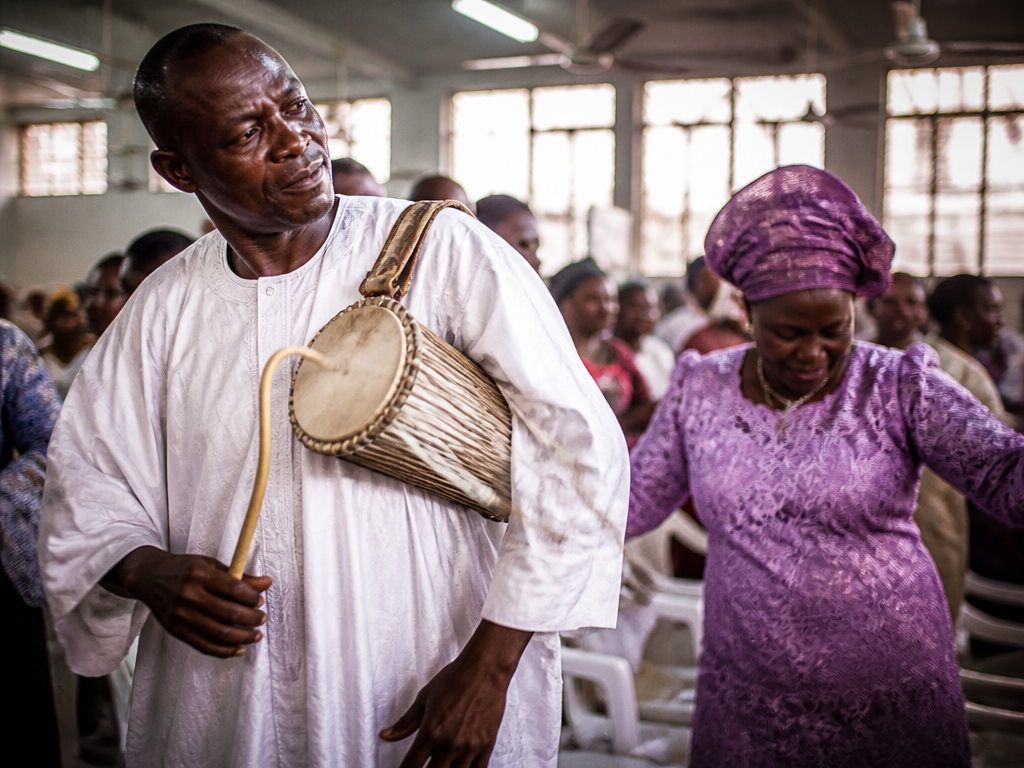
Nothing here is dormant. The òrìṣà are venerated now, this week, by millions of people, and the practice travelled the Atlantic with the people who were taken across it. What a viewer meets as fantasy design, someone else's grandmother keeps as a calendar.
| Where | What it is called | What changes |
|---|---|---|
| Southwestern Nigeria, Benin | Ìṣẹ̀ṣe, or simply the tradition | The Yoruba-language home of the practice; town and lineage shape which òrìṣà are prominent |
| Cuba | Lucumí, also Santería or Regla de Ocha | Òrìṣà names paired with Catholic saints under colonial pressure; drum and song repertoires preserved in an archaic Yoruba |
| Brazil, especially Bahia | Candomblé, Ketu nation | Orixá spellings in Portuguese; terreiros as community houses; strong Yoruba lineage alongside other African nations |
| Trinidad | Orisha faith, historically Shango Baptist | Yoruba practice interwoven with Baptist forms after decades of legal suppression |
| United States | Lucumí, Ifá, Òrìṣà-Voodoo communities | Twentieth-century arrivals via Cuba, plus direct initiation lines to Nigeria |
One separation worth keeping straight, because films blur it constantly: Vodou is not this. Haitian Vodou draws chiefly on Fon and Ewe traditions from the region of old Dahomey, with its own spirits, its own vocabulary and its own history. It sits beside Yoruba practice, not inside it.
What a screen can carry
A film needs ten. Ten is castable, colour-codable, cuttable into a two-minute reel with a drumline under it. Ten gives a costume department something to do and an audience something to hold. There is no dishonesty in that; it is what adaptation is, and Adeyemi built the ten herself precisely so that nobody would have to flatten four hundred and one into a screenplay.
The risk is only ever what happens next — when a viewer assumes the ten were the whole inventory, or that a fantasy kingdom is a country, or that a religion practised in Lagos and Havana and Salvador on any given Sunday is a set of powers from a movie. That gap is not the film's job to close. It is this kind of page's job.
There is a Yoruba proverb that fits the moment: bí ọmọdé bá ṣubú, á wo iwájú; bí àgbà bá ṣubú, á wo ẹ̀yìn — when a child falls, they look ahead; when an elder falls, they look back. A big adaptation is the fall that makes a lot of people look, and which direction they look is still open.
My envelope now has ten crossed out and 401 written under it. The correction matters less than what the second number turned out to mean. Four hundred and one was never a total either. It is four hundred, and then a door someone deliberately left open — and a film that sends a few thousand people through it has done the honest half of its work.