Children of Blood and Bone: Inside a Film Adaptation Announcement
A teaser plays before whatever you actually queued up. Ninety seconds, a drum figure under the studio logo, and a single word held on screen long enough to read: Orïsha.

A teaser plays before whatever you actually queued up. Ninety seconds, a drum figure under the studio logo, and a single word held on screen long enough to read: Orïsha. Somewhere in that audience is a woman who last heard something like that word at her grandmother's kitchen table, attached to a name nobody ever explained to her. A film adaptation announcement has just done, at scale, what no syllabus managed — put the word in front of her.
What follows is the machine behind that ninety seconds, in the order it actually runs. Not because the machine is more interesting than the tradition, but because knowing the sequence tells you exactly where a real religion gets translated, compressed, and occasionally bent — and which of those decisions were made years before anyone bought a ticket.
First: the tradition was already there
Before the novel, before the option, there is a system of thought roughly a thousand years old and very much in use this morning.
In Yoruba tradition — Yoruba people live mainly in southwestern Nigeria, with communities in Benin and Togo — the world is understood through the òrìṣà (pronounced roughly oh-REE-shah). They are not gods in the Greek sense of a fixed pantheon on a mountain. They are closer to forces with biographies: presences that govern iron, rivers, thunder, the crossroads, the wind that arrives before a storm. Counts vary by lineage and by teller. Some say four hundred and one, a number that is less an inventory than a way of saying more than you will finish naming.
Above them is Olódùmarè, the source, generally understood as remote from daily petition. Between the source and the world runs àṣẹ (AH-sheh) — the power that makes a thing happen when it is spoken. Òrìṣà are approached through lineages, through the divination system called Ifá, and through priests, the babaláwo among them, who train for years.
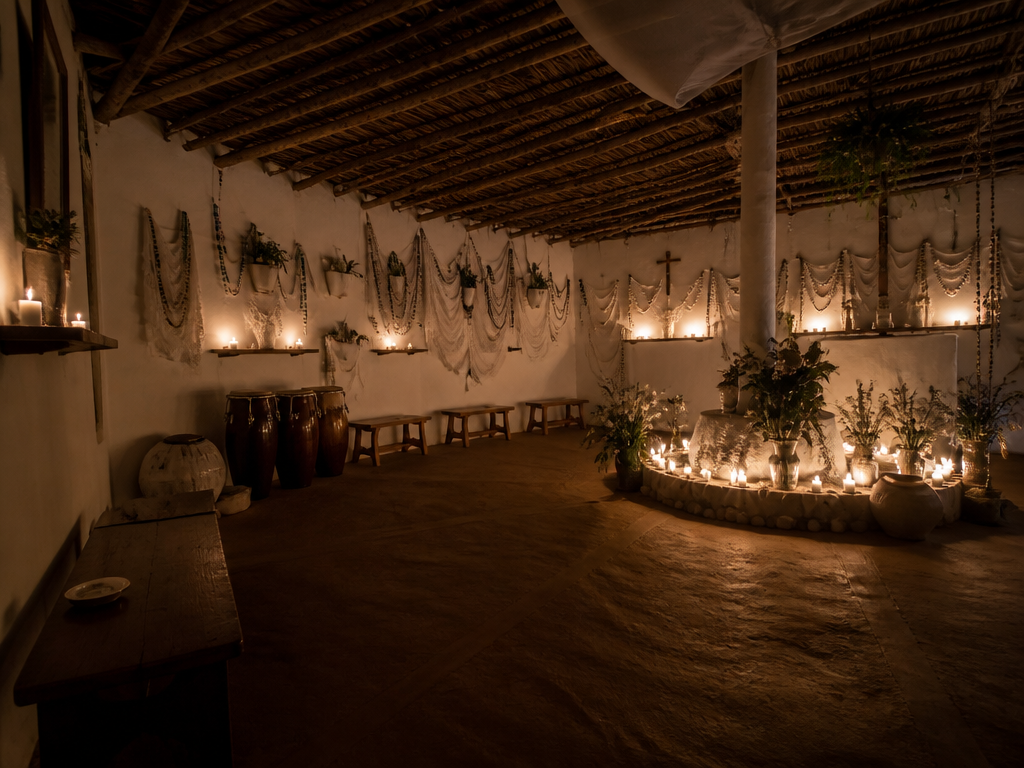
That is present tense. Òrìṣà tradition is practised now in Nigeria, and — carried across the Atlantic by people who were trafficked and who kept what they could — in Cuba as Lucumí, in Brazil as Candomblé, in Trinidad, in Miami, in Houston. It is somebody's Sunday. Keeping that in the front of your mind changes how you watch a fantasy film, in the way that knowing a cathedral is still open changes how you watch a heist set inside one.
Then: a novelist borrows a framework and renames it
Tomi Adeyemi published Children of Blood and Bone in 2018. Her fictional kingdom is called Orïsha — the tradition's word, promoted to a place-name. Her magic system sorts practitioners, the maji, into ten clans by domain: fire, iron, water, life and death, the mind, the wind. The domains echo the territories of the òrìṣà. Some clan deities carry names a Yoruba speaker would recognise on sight.
Adeyemi has been consistent in interviews that she was working from Yoruba material deliberately, including time spent studying Yoruba culture in Salvador, Brazil — one of the great centres of Candomblé outside Africa. She has also been consistent that the book is a novel.
So the honest description is this: the adaptation's source material borrows a vocabulary and a shape, and invents nearly everything else. The clan system is hers. The kingdom's politics, the king, the rebellion, the specific rules by which magic works and can be taken away — hers. A reader who arrives at the tradition through the book arrives with a real word and a fictional map.
Is Children of Blood and Bone based on real Yoruba religion?
Partly, and not in the way the phrase usually implies. The book takes names, a sense of how òrìṣà divide the world by domain, and the Yoruba language's texture. It does not take, and does not attempt, the actual structure of Yoruba religious practice — no working divination system, no lineage, no initiation as any priest would describe it. The maji clans are a fantasy invention that rhymes with òrìṣà tradition rather than reproducing it.
That distinction matters more once a film exists, because film flattens. A novel can gesture; a frame has to show you a costume, a gesture, a face. Which brings us to the part of the sequence people rarely see.
Next: rights, development, and the announcement machine
The order is standard across the industry and worth knowing, because each stage narrows what the final film can be.
Option and rights. Studios buy screen rights early, sometimes before publication, on the strength of a manuscript and a buzz cycle. Rights to Adeyemi's novel moved in that pre-publication window — first to Fox 2000, then, after Disney's acquisition of Fox reshaped the whole landscape of who owns what, onward. The project now sits at Paramount.
Development. Years, usually. Drafts, directors attaching and unattaching, budgets tested against comparable titles. Most books that get optioned die quietly here.
Greenlight. The financial commitment. Only now does anything get built.
Casting. Announced in tranches, deliberately, each one a small news event. The lead first, then the recognisable veterans, then the ensemble.
Production and post. Where the film is actually decided — see below.
First look, then trailer, then a dated slot. A still, then footage, then a calendar position the studio defends.
The announced package here — Paramount, Gina Prince-Bythewood directing, a cast built substantially from actors of West African and Black diaspora descent, and a 2027 release position — reads as a studio betting real money on epic fantasy that is not Northern European in its furniture. That is the genuinely notable thing about this film adaptation announcement, and it is a business fact before it is a cultural one.
Where the tradition actually gets decided
None of the above determines whether the film treats Yoruba material well. That happens in a handful of rooms, months before a trailer exists.
Pronunciation. Whether a production hires a Yoruba language coach, and whether leads use them, decides if a diaspora audience hears its own language said correctly or hears an approximation. Diacritics carry tone in Yoruba; the marks are not decoration. Ọya and a mispronounced Oya are not the same sound.
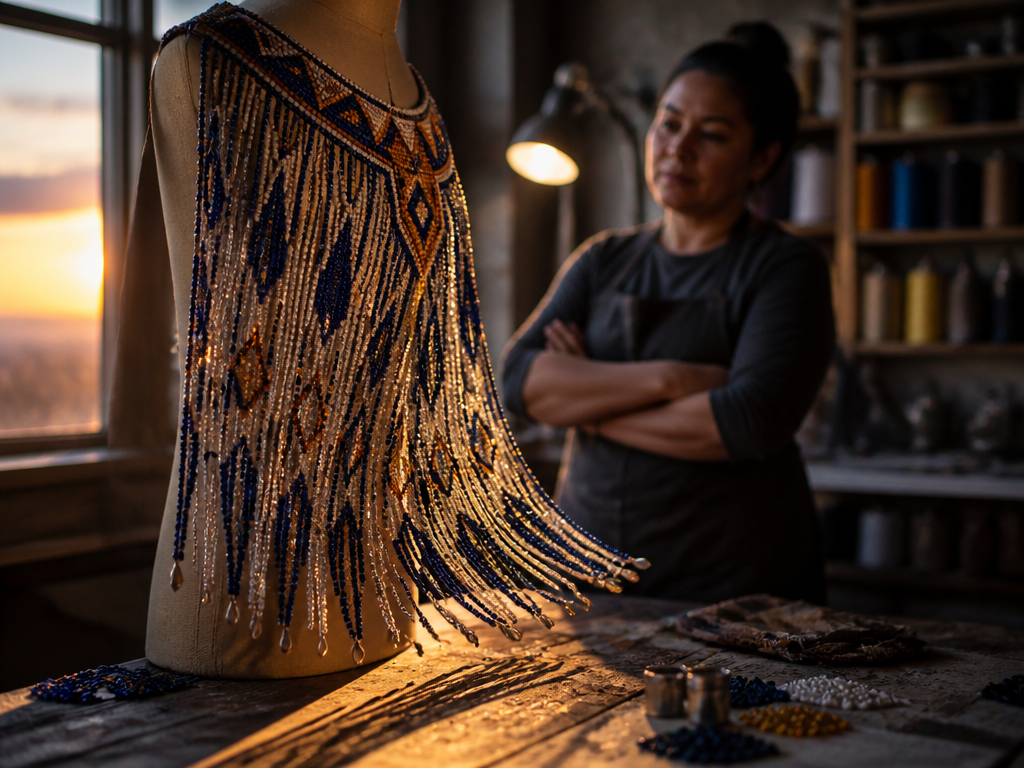
Costume and production design. The choice is between drawing on specific West African textile, metalwork, and architectural traditions — Yoruba adire cloth, Benin bronze, Ilé-Ifè sculpture — or defaulting to a generic fantasy-Africa that belongs to nobody. This is the single most visible decision a production makes, and audiences read it instantly.
Score. A composer either builds from talking drum, sekere, and bàtá traditions, or lays orchestral fantasy strings over the top and calls it a fusion. Both approaches have shipped before.
The line between depiction and instruction. Serious productions handling living religion tend to show that something sacred is happening without staging a working ceremony. It is a craft decision as much as an ethical one, and it usually improves the scene.
Names and terms
- Òrìṣà (oh-REE-shah) — the presences of Yoruba tradition; the novel repurposes the word as a kingdom's name.
- Àṣẹ (AH-sheh) — the force that makes speech effective; also said at the close of a prayer, roughly as amen functions.
- Ifá — the Yoruba divination system, still practised, interpreted by trained babaláwo.
- Olódùmarè — the supreme source in Yoruba cosmology.
- Maji — Adeyemi's invention. Not a traditional term.
- Candomblé / Lucumí — òrìṣà tradition as it is practised in Brazil and Cuba today.
A few names travel, and change as they go:
| Domain | Yorubaland | Cuba (Lucumí) | Brazil (Candomblé) |
|---|---|---|---|
| Thunder, justice | Ṣàngó | Changó | Xangô |
| Wind, storms, the dead | Ọya | Oyá | Iansã |
| Rivers, sweetness | Ọ̀ṣun | Ochún | Oxum |
| Iron, roads, labour | Ògún | Ogún | Ogum |
| The crossroads | Èṣù | Eleguá | Exu |
Versions differ on how closely these figures map onto each other. Practitioners in Havana and Ìbàdàn will not always agree, and that disagreement is normal in a tradition carried by lineage rather than by a single book.
Last: the loop back
Here is the stage nobody plans for. A trailer runs, and within a day search traffic for a handful of Yoruba names climbs sharply. The people typing those names get whatever the internet has cached — which, for African traditions, still includes a stubborn residue of missionary-era vocabulary and horror-movie framing. Èṣù, the òrìṣà of the crossroads and of communication, was mistranslated as the devil in colonial-era Yoruba Bibles, and that single editorial decision has outlived the empire that made it.
So the last step of the mechanism is the audience's, not the studio's. A film cannot correct that record. It can only send a very large number of people looking, at once.
There is a Yoruba proverb: àgbà kì í wà lọ́jà kí orí ọmọ tuntun wọ́ — an elder does not stand in the marketplace and let a newborn's head go crooked. Somebody who knows is supposed to say something before the shape sets.
This week, do the small version of that. Pick one name off the screen — Ọya will do — and spend five minutes finding a recording of a Yoruba speaker saying it. Not the meaning yet, not the whole tradition. Just the sound, said properly, once. When the film lands, you will hear immediately whether the production did the same homework.