What Is Black Folklore? From Anansi to Br'er Rabbit
A child in western North Carolina meets Br'er Rabbit in a school reader, learns he is a Southern folk character, and closes the book. That is true, and it is about a third of the story.

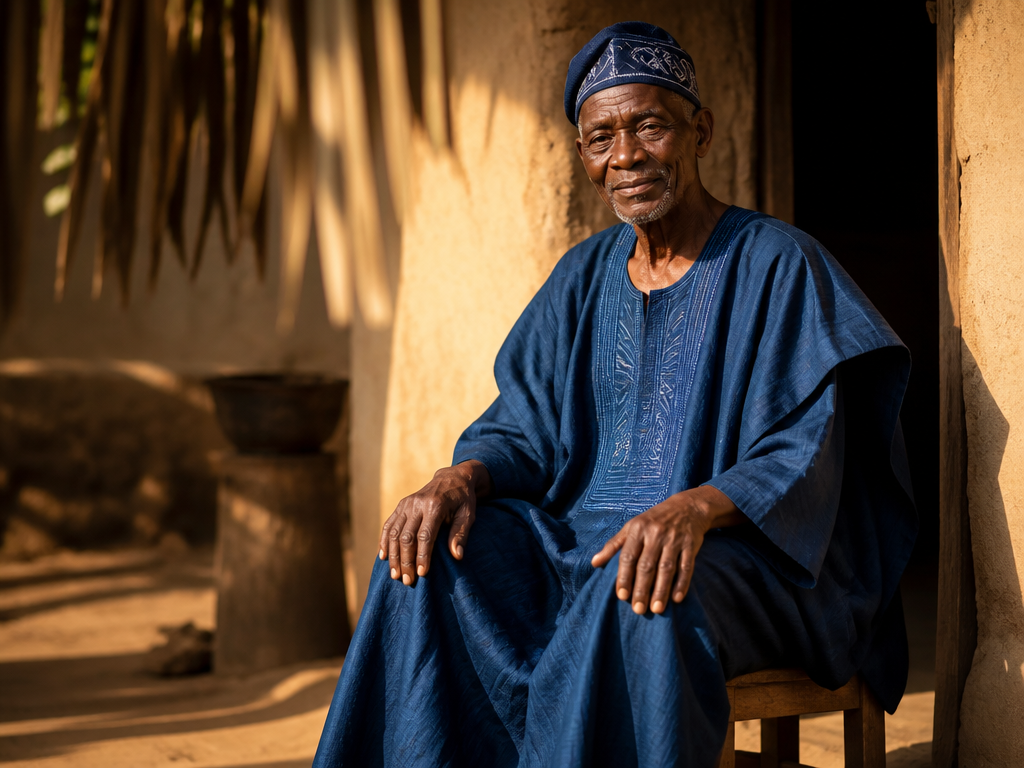
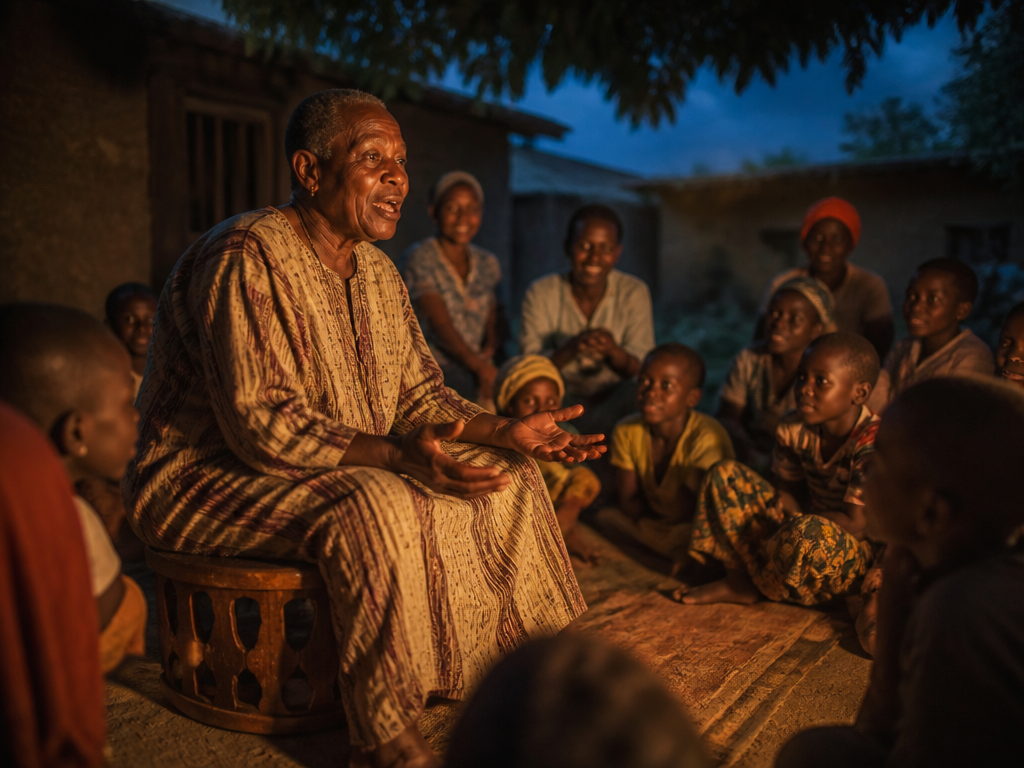
A child in western North Carolina meets Br'er Rabbit in a school reader, learns he is a Southern folk character, and closes the book. That is true, and it is about a third of the story. Black folklore — the stories, songs, sayings and beliefs that Black Americans carried across an ocean, remade under conditions nobody chose, and kept telling — is the larger frame that rabbit sits inside. African American studies is the field that keeps track of where he came from and whose hands held the thread. Once a month in Waynesville, somebody stands up in a community room and tells these stories aloud, which is the form they were built for.
What is Black folklore?
It is the oral tradition made and carried by people of African descent in the Americas: trickster tales and animal fables, haunt stories, proverbs, work songs and spirituals, preached sermons, rhymed boasts, conjure and root lore, and the family stories nobody bothered to write down. It draws on West and Central African traditions, on the conditions of slavery and the long century after it, and on the ordinary invention of communities in the Sea Islands, the Mississippi Delta, Chicago, and the southern Appalachians. It is not one canon. It is a set of related traditions that differ by region, by family, and by who is doing the telling, which is why the same rabbit can be charming in one county and merciless in the next.
What most people do
Most of us do five things with this material, and I have done all five.
We file it under February. It becomes a unit, a themed display, a program with a date on it, and then the shelf goes back to normal in March. That treats a living tradition as a commemoration.
We start the clock at the slave ships. The unspoken assumption is that the Middle Passage was year zero and that everything after it was invented from scratch on this side of the water. Captives arrived with languages, cosmologies, legal reasoning, agricultural knowledge, and a full inventory of stories. What happened here was adaptation under pressure, not a blank page.
We take Uncle Remus as the source. Joel Chandler Harris, a white journalist in Georgia, published Uncle Remus: His Songs and His Sayings in 1880 from tales he heard from Black tellers. The tales inside are real; the plantation nostalgia wrapped around them, including the contented old narrator, is Harris's addition. Reading the frame as if it were the tradition is like judging a song by its record sleeve.
We read instead of listen. These stories were built for a room — for a teller who can pause, an audience that answers back, a child who asks what happened next. On the page they hold their plot and lose their timing.
And we say "African folklore" flat, as though a continent of thousands of peoples kept one storybook. Akan is not Yoruba is not Wolof is not Kongo. The specificity is the respect.
What the evidence suggests
Start with a spider. Among the Akan of Ghana and Côte d'Ivoire, Anansi (ah-NAHN-see) is the spider trickster — small, greedy, funny, and almost always the smartest one in the room. The stories are called anansesem, roughly "spider stories," and the name became a general word for tales of that kind. Anansi is not a hero in the tidy sense. He wins by talking, and he sometimes loses because he cannot stop.
He travelled. In Jamaica he is Anancy. In the Gullah Geechee communities of the South Carolina and Georgia coast, collectors recorded him as Aunt Nancy. Across much of West and Central Africa the trickster part is also played by a hare, and the hare who outsmarts bigger animals shows up in Black storytelling across the American South as Br'er Rabbit. Folklorists have argued for more than a century about how the weighting works, and they still differ. Complicating it usefully: the Southeast already had its own rabbit trickster. Cherokee stories collected by James Mooney in Myths of the Cherokee (1900) feature Jisdu, the rabbit, running the same kind of con. Waynesville sits an hour from the Qualla Boundary. Two trickster traditions were in the same mountains, and neither one needs to be the other's origin for both to matter.
The collecting record matters too. Zora Neale Hurston trained as an anthropologist and went back to Florida — Eatonville, the sawmill camps of Polk County — to gather tales from the people telling them, publishing Mules and Men in 1935. She is the corrective to Harris: the same body of story, gathered by someone inside the community, with the tellers left visible. In 1943 she wrote about High John de Conquer, a figure of endurance and laughter who belonged to people with very little else, and she wrote about him as a serious idea, not a curiosity.
Some of it is not comedy at all. Along the Georgia coast, tellers interviewed for the Georgia Writers' Project book Drums and Shadows (1940) described Africans who could fly — who rose up from the field and went home over the water. In one telling they fly; in another they walk into the creek and are gone. The stories cluster around accounts of Igbo captives at St. Simons Island in 1803, at the place now called Igbo Landing, and versions differ on nearly every detail. What the stories agree on is refusal.
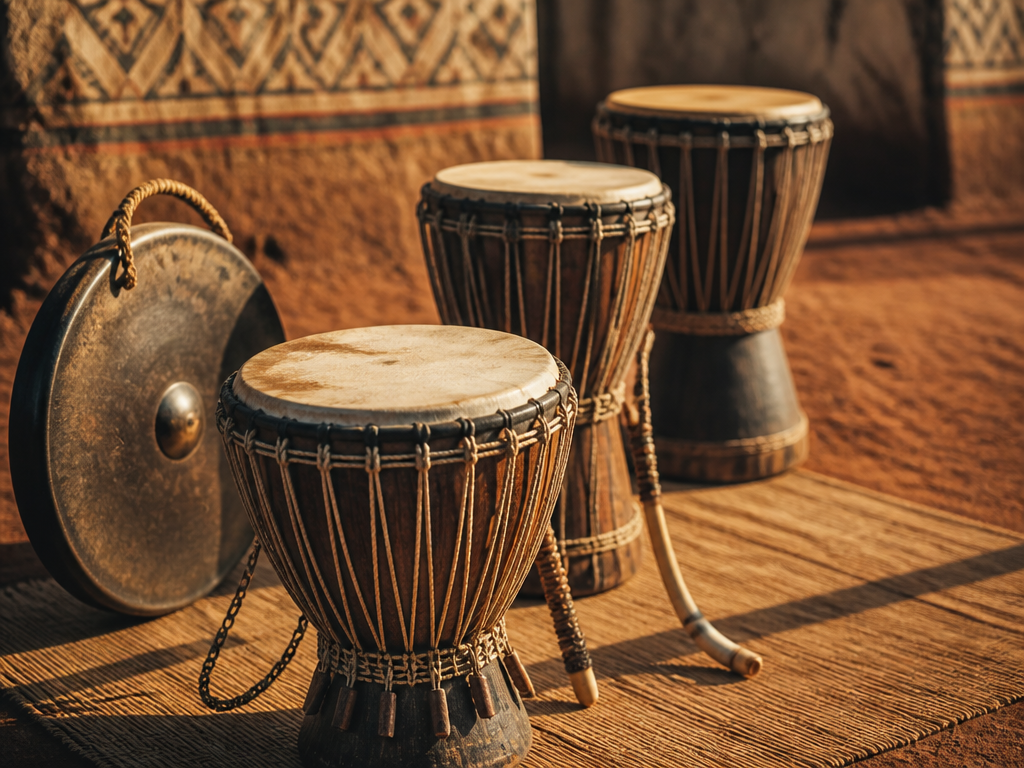
And some of it is present tense. The ring shout — a counterclockwise moving song with stick and hand percussion, carried in the Gullah Geechee community — is still performed by groups such as the McIntosh County Shouters in Georgia. Not a survival. A practice, with people who do it.
Black Appalachia is part of this map. The poet Frank X Walker coined "Affrilachia" in 1991 because the word Appalachian had come to mean white by default, which erased the Black families who had been in these mountains for generations, Waynesville's historically Black neighborhood among them. Mountain Black folklore is its own strand, with its own tellers, and it does not have to travel from the coast to belong here.
| Where | Name | What changes |
|---|---|---|
| Akan, Ghana and Côte d'Ivoire | Anansi | Spider; wins by talk, loses by appetite |
| Jamaica | Anancy | Spider or man, depending on the telling |
| Sea Islands, Georgia and South Carolina | Aunt Nancy, Br'er Rabbit | The spider thins out; the hare takes over |
| The wider US South | Br'er Rabbit | The trick turns on survival against stronger animals |
| Cherokee, western North Carolina | Jisdu | A separate tradition, same mountains, same rabbit logic |
That is what African American studies contributes to a story most people already half-know: provenance. Who told it, where, when, to whom, and who was writing it down.
What I actually do
I ask three questions of any tale before I decide what it means. Who told it. Where were they standing. Who were they telling it to. A story told to a child at bedtime and the same story told to a folklorist with a notebook are not the same performance, and the difference is usually visible in the text.
I read the collector's frame separately from the tale. If the introduction is sentimental about plantations, I do not throw out the story; I throw out the introduction.
I try to hear it before I settle it. This is the part I was slowest to learn. In the anansesem tradition the audience is not furniture — people interrupt, correct, sing the refrain, ask the teller to go back. A tale that reads thin on the page can be devastating in a room, because the teller is watching you and adjusting. Recordings help. A live telling helps more.
So I go. That is the honest case for the monthly storyteller series in Waynesville: not that a visiting teller has an impressive list of appointments, but that a story in a room does something a story on a page cannot, and there is no way to get it secondhand. Bring someone under fifteen. Stay for the questions afterward, which are frequently better than the program, and ask your own — where did you learn that one is a question tellers tend to enjoy.
Afterward I follow exactly one name. One deity, one teller, one place, one word. Six months of that is a real education and it costs nothing but attention.
And I keep the traditions separate. Akan is not Yoruba. Gullah Geechee is not Delta. Coastal is not mountain. When I cannot tell which one I am looking at, I say so out loud, because a guess repeated confidently is how bad information gets into a schoolbook.
Names and terms
- Anansi (ah-NAHN-see) — the spider trickster of Akan tradition in Ghana and Côte d'Ivoire.
- Anansesem — "spider stories"; the Akan storytelling form, performed with audience response.
- Br'er Rabbit — the hare trickster of Black storytelling in the American South; "br'er" is brother.
- Gullah Geechee — the people, language, and culture of the coastal Sea Islands of South Carolina, Georgia, and northern Florida.
- Ring shout — a moving, singing, percussive religious practice carried in Gullah Geechee communities and still performed today.
- Griot (GREE-oh), or jeli — in parts of West Africa, a hereditary keeper of history, genealogy, and song. Not a synonym for storyteller.
- Affrilachia — term coined by poet Frank X Walker in 1991 for Black Appalachian identity and culture.
The Akan have an image for all of this: sankofa, the bird turned to take an egg from its own back — go back and fetch what you left behind. Tonight, when you read or hear one of these stories, ask who told it and to whom before you ask what it means; if you cannot answer that, you are holding a summary, not a story.