Black Folklore: What Crossed the Atlantic, and How It Traveled
"He threw me in the briar patch." People say it in Haywood County the way people say it everywhere in the South, usually meaning a punishment that turned out to be exactly what they wanted.

"He threw me in the briar patch." People say it in Haywood County the way people say it everywhere in the South, usually meaning a punishment that turned out to be exactly what they wanted. The phrase outlived the story it came from: a rabbit talking his way out of a fox's hands by begging not to be thrown into the one place he could survive. That gap — between a line nearly everybody knows and a tradition almost nobody was handed — is the space Black folklore lives in.
Start with a number. Of roughly 12.5 million people forced onto ships in the transatlantic trade, about 389,000 disembarked in mainland North America, according to the best current count from the Trans-Atlantic Slave Trade Database. They arrived owning nothing. No cooking pot, no drum, no cloth, and in most cases not the name they were born with.
The myth: that the crossing wiped the slate clean
Here is the assumption a well-read person has probably absorbed without ever deciding to believe it. Slavery was so total, and lasted so long, that it severed the people it stole from anything they came with. Whatever looks African in Black Southern storytelling is either coincidence, or something invented on this side of the water, or something white writers put there.
This is not a fringe idea. It was a serious scholarly position. The sociologist E. Franklin Frazier argued for decades that enslavement had destroyed African cultural inheritance in the United States almost completely, and that Black American life had to be understood as something built from scratch under American conditions. The anthropologist Melville Herskovits argued the opposite in 1941, cataloguing survivals in speech, music, burial custom, and story. Frazier's view won the room for a generation. It is still the default in most American classrooms, usually as an unexamined background hum rather than an argument anyone makes out loud.
Where Br'er Rabbit actually comes from
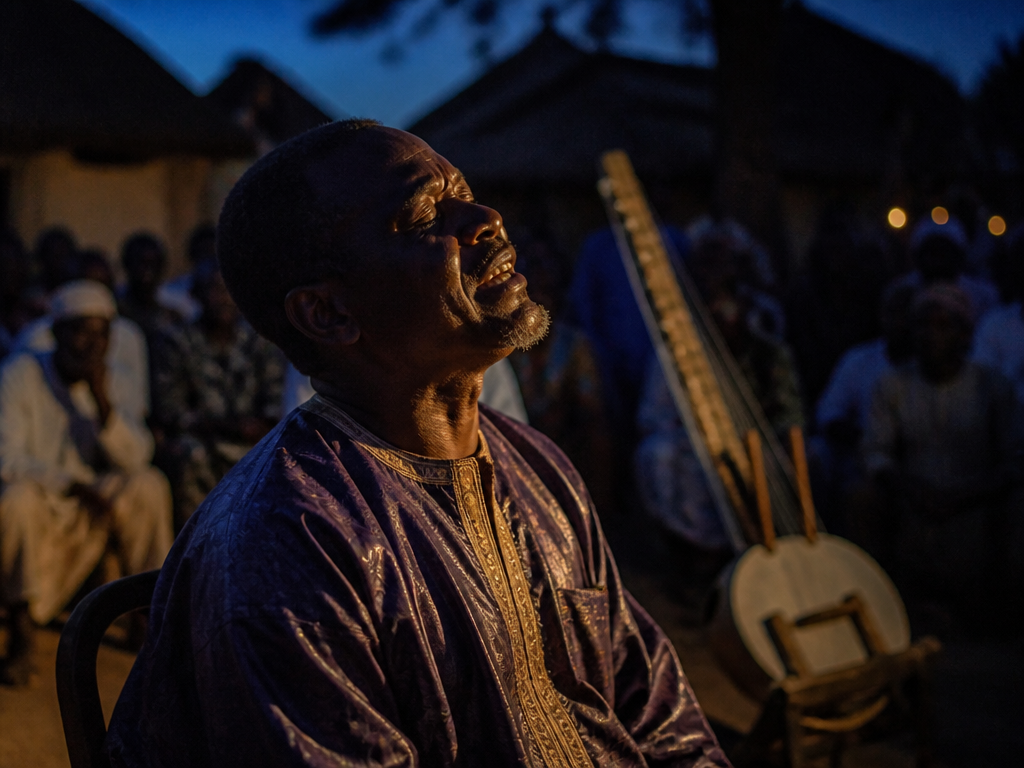
Br'er Rabbit is not an American invention, and he is not a plantation mascot. He is the American form of a trickster who is much older and much more widely traveled: the small, weak, fast-thinking animal who beats larger animals by talking. Among the Wolof of Senegal, that figure is Leuk the hare. Across a broad band of Central and Southern Africa, including among the Bemba of Zambia, he is Kalulu, also a hare. Among the Akan of Ghana he is Ananse, a spider, and the tales themselves are named after him. Among the Yoruba of Nigeria he is Ìjàpá the tortoise, slower but no less devious, and frequently undone by his own appetite.
The clearest surviving thread runs through the Sea Islands of South Carolina and Georgia, where Gullah Geechee communities held onto more of West and Central African speech and practice than anywhere else in the country. Ananse arrives there under a lightly Anglicized name: Aunt Nancy, sometimes Ann Nancy. That is not a scholar's inference drawn from a plot resemblance. That is the same name, still in use, still attached to the same kind of story.
Zora Neale Hurston, trained as an anthropologist, went home to Florida in the late 1920s to write down what people were actually telling each other — in Eatonville, in the sawmill and turpentine camps of Polk County — and published it in 1935. What she found was not a museum. It was a working repertoire, told competitively, for laughs and for status, by people who would have been surprised to hear it called folklore.
What the collectors did with what they were given
Joel Chandler Harris published the Br'er Rabbit tales beginning in 1880. He did not write them. He heard them from Black tellers in middle Georgia, and then wrapped them in a frame of his own making: a kindly old formerly enslaved narrator, telling stories to a white child, in a South remembered as gentle. The tales inside that frame are largely faithful. The frame is a lie, and for a century it did the damage — it made stories about power look like stories about nostalgia.
The same thing happened to this region's other storytelling inheritance. Richard Chase collected the Jack tales from the Hicks and Harmon families around Beech Mountain in the 1930s and published them in 1943, and he too smoothed, combined, and rewrote what he was given while presenting himself as a transcriber. Two collectors, two traditions, one habit. It is worth knowing before you assume that any printed folktale is the thing itself.
Why stories survive when everything else is taken

This is the part that answers the myth. Cultural survival under slavery was not a matter of luck or of stubbornness. It was a matter of medium.
An object can be confiscated. A drum can be banned, and in South Carolina after 1739 it was. A language can be broken up deliberately, by mixing people who do not share one. A story has none of these vulnerabilities. It weighs nothing, it leaves no evidence, it cannot be searched for, and it survives the death of the person carrying it as long as one listener was paying attention.
It is also deniable. A tale in which a rabbit humiliates a fox and a bear can be told within earshot of anyone, because on its face it is about animals. The argument inside it — that the strong are not the smart, that the powerless survive by reading the powerful better than the powerful read them — travels under cover. That is why the trickster, of all the figures that could have crossed, is the one that crossed most intact.
And the form is built to move. An oral tradition expects variation; there is no fixed text to lose, no canon to be caught without. A hare becomes a rabbit where rabbits live. A spider keeps her name where enough tellers remember it. Versions differ by region, by family, by who is telling and who is listening, and that flexibility is not decay. It is the survival mechanism itself.
| People and place | The trickster | What the story turns on |
|---|---|---|
| Akan, Ghana | Ananse, a spider | Cleverness taking what strength cannot |
| Yoruba, Nigeria | Ìjàpá, a tortoise | Appetite defeating its own schemes |
| Wolof, Senegal | Leuk, a hare | Wit outranking rank |
| Bemba and neighbors, Zambia | Kalulu, a hare | The small animal outmaneuvering the big |
| Gullah Geechee, Sea Islands | Aunt Nancy | Ananse carried over, name and all |
| Black South and Appalachia | Br'er Rabbit | The weak outwitting the strong, at a cost |
Names and terms
- Anansesem (ah-NAN-seh-sem) — the Akan word for folktales; literally, spider stories.
- Ananse / Anansi — the Akan spider trickster, and the source of Aunt Nancy in Sea Island and Caribbean tellings.
- Ìjàpá (ee-JAH-pah) — the tortoise trickster of Yoruba tales.
- Gullah Geechee — descendants of enslaved West and Central Africans along the Carolina, Georgia, and Florida coast, with their own creole language and a living body of story.
- Signifying — a Black vernacular art of indirect speech: making a point by pointing at it sideways. The trickster's native grammar.
- Creolization — what happens when traditions in contact produce something that is neither parent and not a blend.
What can honestly be claimed
Not a straight line. Anyone who tells you Br'er Rabbit is simply Kalulu in American clothes is tidying up a genuinely tangled record. The Cherokee have their own rabbit trickster and their own tar-trap story, written down by James Mooney in the 1890s, and the Southeast was a place where Cherokee, African, and European tellers lived within earshot of each other for generations. Which way any one plot traveled is often unrecoverable. Some plots appear in unconnected traditions worldwide.
So the claim is not preservation. The claim is continuity plus creation: people arrived with a way of thinking in stories, met new listeners and new dangers, and kept making. That is a stronger claim than purity, because it is the one the evidence actually supports.
Why this belongs in a room, not a book
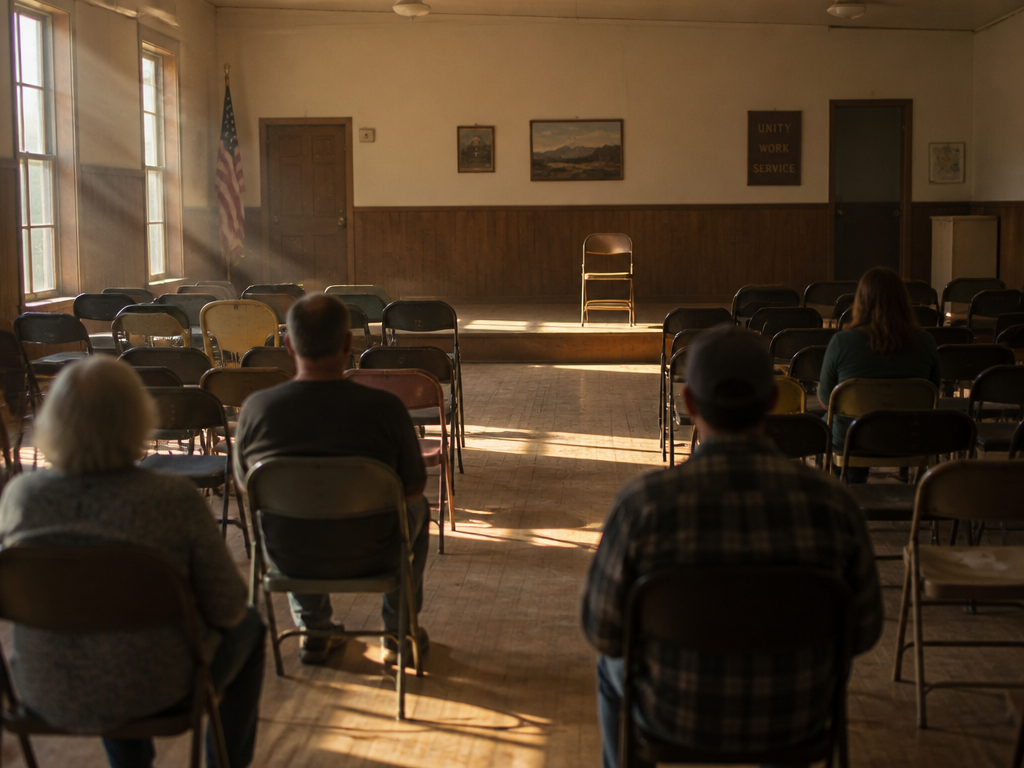
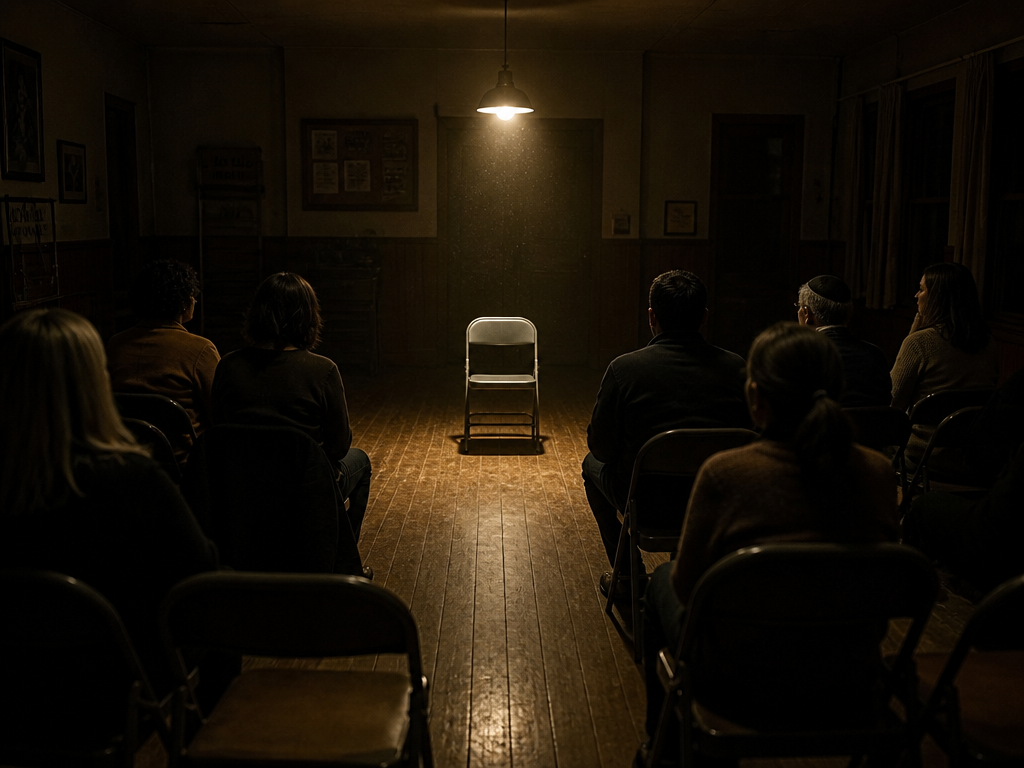
Everything above is secondhand — a transcript of a transcript. The tradition is a performance form. Timing, the pause before the punchline, the listener who talks back, the teller who adjusts because the room is younger than expected: none of that survives print, and all of it is the art. That is the honest case for the monthly storyteller series in Waynesville, and it is not a sentimental one. If you have only read these stories, you have read the score and never heard it played.
Which brings the number back around. About 389,000 people arrived here with nothing in their hands. What they were carrying was the one kind of property that cannot be taken at a dockside, and it is still in circulation, in a phrase about a briar patch that half this county uses without knowing whose it is. The Akan of Ghana have a name for that inheritance — anansesem, spider stories — because in their telling every story that gets told belongs to Ananse in the end.