Overgrips for Sweaty Hands: What Actually Works When the Air Is Thick
The ball is coming to your backhand side. You set your feet. You start your unit turn. And then you feel it — that tiny rotational slip in your hand right before contact.

The ball is coming to your backhand side. You set your feet. You start your unit turn. And then you feel it — that tiny rotational slip in your hand right before contact. The shot goes long, wide, or both.
If you play in humidity, you know this feeling. You've probably tried a tackier overgrip, hoping the stickiness would fix it. That's the myth I want to address: that more tack equals more control when you're sweating.
It doesn't. Here's what does.
The Myth
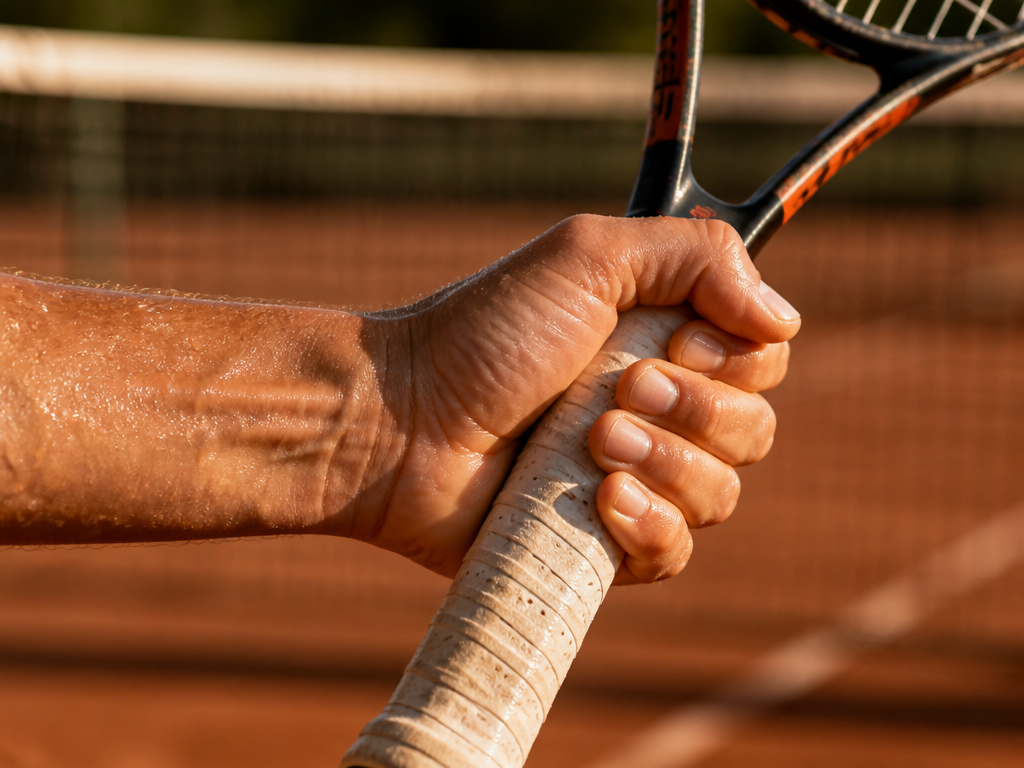
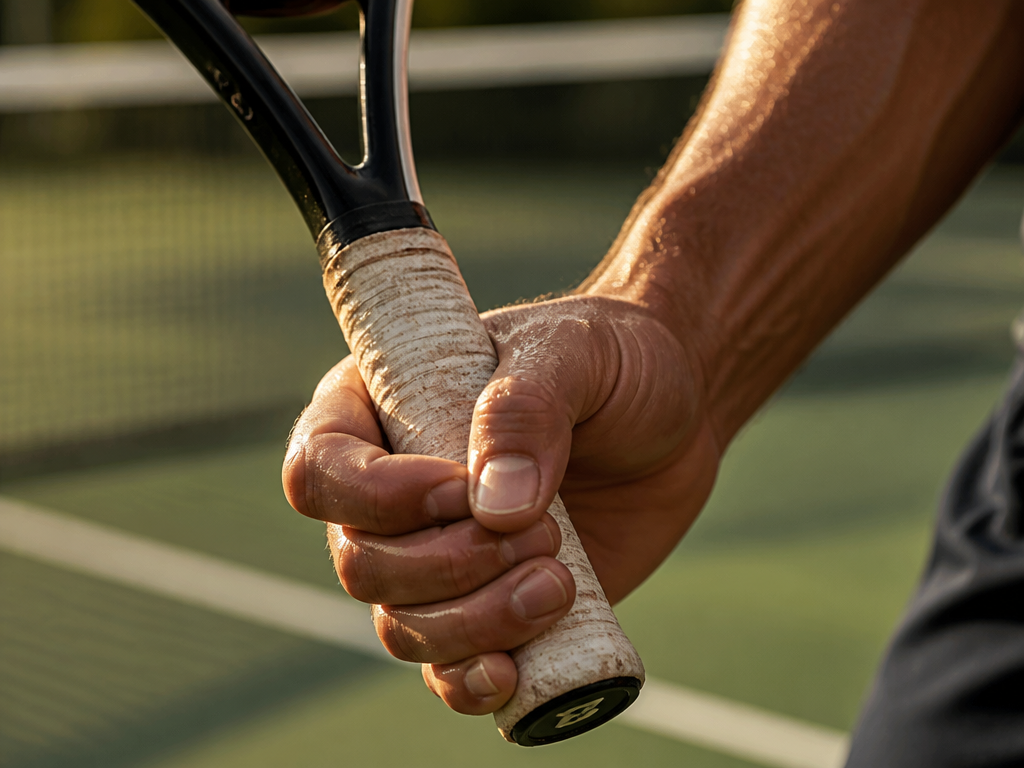
Tacky grips feel amazing in the shop. Peel the plastic and that surface grabs your palm like Velcro. Your first few practice swings are reassuring — the racquet feels locked in. But tack is a dry-surface property. The moment your palm gets damp, tack turns into a slick film. The chemistry is simple: moisture sits between your skin and the grip surface, and the tacky material can't bond through that layer. You're holding a wet bar of soap wrapped in plastic.
I used Tourna Grip for years because I believed tack was the answer. It works brilliantly for the first twenty minutes. Then my hand sweat kicks in, and by the end of the first set I'm unconsciously gripping tighter, my forearm burning, my swing shortened. I thought that was just how tennis felt on humid days.
The Evidence
I spent two months rotating through five overgrips during match play in Lagos, where the relative humidity sits around 80–85% most of the year. No lab conditions — just league matches, set after set, with a towel on the bench and a spare racquet in the bag.
What I found: overgrips fall into two real categories, and the marketing doesn't tell you which is which.
Category one — sticky when wet. These grips get tackier as your hand dries them, like a climbing chalk ball that activates with moisture. They feel terrible for the first few points and then settle in. Examples: Yonex Super Grap, Wilson Pro Overgrip.
Category two — soak up moisture and stay dry-feeling. These grips are thin, porous, and feel almost papery. They absorb sweat into the material rather than letting it sit on the surface. They don't feel tacky at all when new. Examples: Tourna Grip original (blue), Solinco Heaven.
I spent years in the wrong category.
The Mechanism
Dry-absorbent grips work by wicking moisture away from your palm into the grip material itself. The surface remains relatively dry even when you're sweating. Your hand can maintain friction against a dry surface — not against a tacky surface, but against a matte, textured one that doesn't get slick.
Here's the trade-off you need to know: absorbent grips wear out faster. A tacky grip lasts four to six hours of play. A dry-absorbent grip lasts two to three hours, sometimes less. The material is softer and thinner by design. You change it more often. That's the price.

Tacky grips last longer because the material is denser and doesn't absorb anything. The sweat sits on top. In dry conditions they're fine. In humidity they're a liability.
Three Grips I Actually Used
Solinco Heaven
Thinnest overgrip I've tested. Feels like it's not there for the first ten minutes — and that's the point. As your hand sweats, the grip absorbs and the texture becomes more present. It doesn't get tacky. It gets grippy. I lost the "slipping on the two-hander" feeling completely after switching to this.
The downside: you will replace it every two matches, maybe every match if you sweat heavily. It's priced about the same as Tourna, so the cost per hour is higher. But it works.
Wilson Pro Overgrip
This is the opposite approach: a tacky grip that somehow holds up in humidity longer than most. It gets slippery for the first few games, then dries against your hand and locks in. The feel is cushioned — thicker than Solinco — which some players like for shock absorption. I found it reliable through about four hours before the tack completely died.
If you want one grip that works decently in both dry and humid conditions and you don't want to change grips every session, this is your pick.
Yonex Super Grap
This is the one that surprised me. I picked it because a friend said it "feels wet but doesn't slip." That description is wrong and also accurate. The grip has a slight moisture to its texture from the factory, which sounds off-putting but means your sweat doesn't change the surface much. It stays consistent — same feel at set one and set three. It's the most durable of the three, lasting five to six hours before needing replacement.
The catch: if you hate the initial feel, you'll hate it forever. It's not absorbent. It's not exactly tacky either. It's its own thing.
The Honest Takeaway
For humidity, buy an absorbent grip, not a tacky one. That means Tourna Grip (original, not the tacky version) or Solinco Heaven. Change it often. Accept that a grip that lasts six hours in air conditioning will last two hours in the wet season. That's not a product failure — it's physics.
If you want one grip for all seasons and you're willing to put up with a few slippery games at the start, Wilson Pro Overgrip does the best balancing act.
I haven't tested every grip on the market. I haven't tested any of these in dry winter conditions or on synthetic gut strings that vibrate differently. I don't know how they behave with a leather base grip underneath — I use a cushioned base grip and that affects the feel. If your setup is different, your experience will be too.
What I do know: the wrong category of overgrip makes you play worse without you realising why. Your grip tightens, your arm fatigues, your confidence in the racquet drops. The right one costs ten dollars and twenty minutes to install. That's the cheapest improvement you can make this season.