Adinkra Symbols: The Count of 53, and What It Missed
The bird has its head turned all the way backwards. Its feet point one way; its beak reaches back over its own spine for an egg.

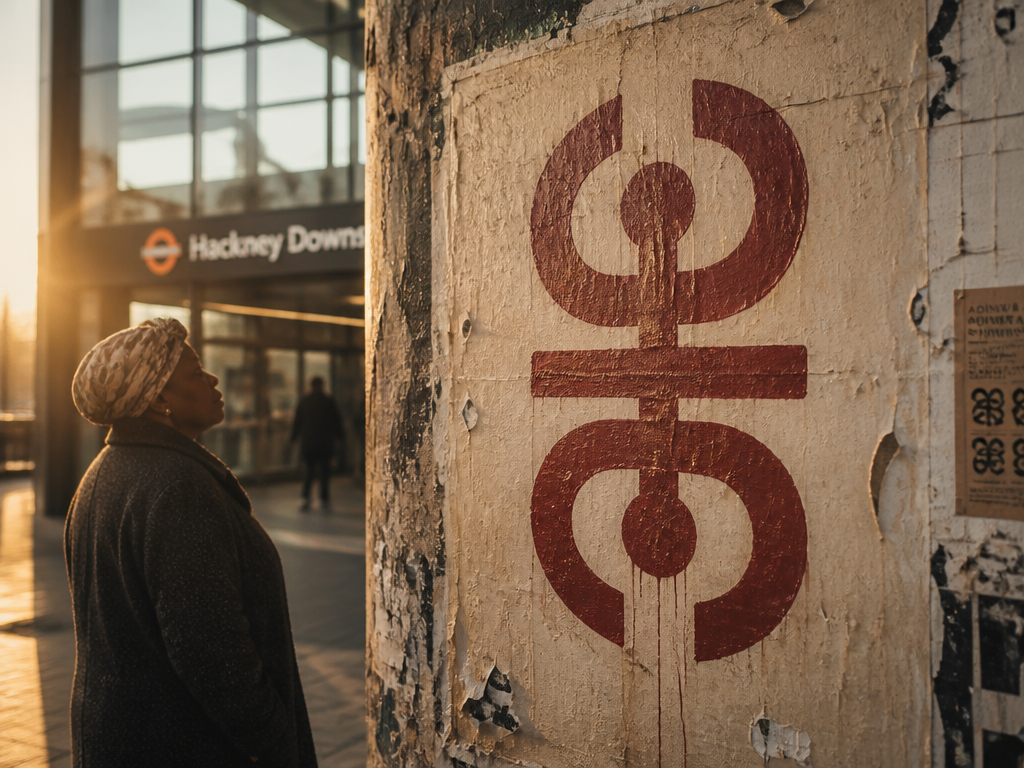
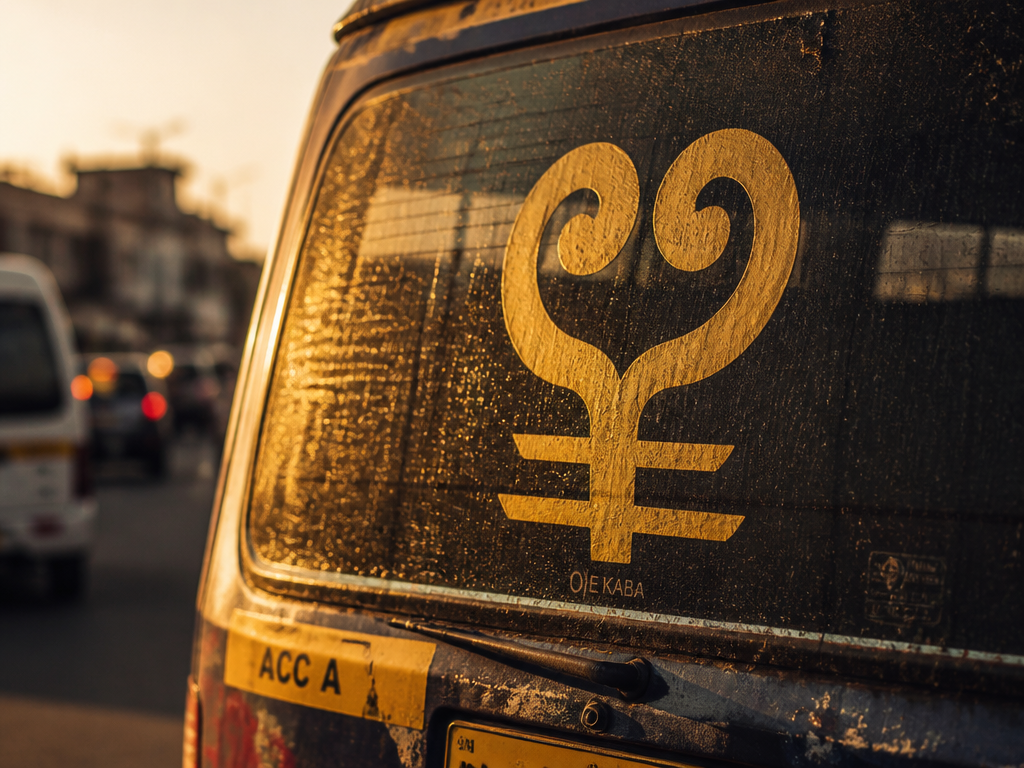
The bird has its head turned all the way backwards. Its feet point one way; its beak reaches back over its own spine for an egg. You have probably met it already — sprayed across a gable end, inked on a forearm on the train, embroidered on a graduation stole, pressed into the corner of a record sleeve. Its name is Sankofa, and it belongs to a family of stamped designs called Adinkra symbols, made by the Akan peoples of Ghana and eastern Côte d'Ivoire.
Almost every introduction to them opens with a number. The number is 53.
Where 53 comes from
In 1927, a British colonial officer and anthropologist named R. S. Rattray published Religion and Art in Ashanti. Among its illustrations was a set of adinkra stamps, drawn, named in Twi, and glossed into English. The count usually taken from those pages is fifty-three. Nearly a century later, that figure is still the one that turns up on museum labels, in design-school lectures, in the caption under a photograph of a mural.
It is a real number, carefully recorded. It is also, strictly speaking, a number about a book.
What the count actually measured
To see what 53 caught, you have to see how the cloth is made. A stamp is cut from calabash gourd — a curved shell trimmed to a palm-sized block, the design carved into its face, sticks lashed on as a handle. The ink is adinkra aduru, boiled down from the bark and roots of the badie tree with iron slag until it is thick and black and will hold on cotton. First the cloth is divided into panels with lines drawn using a comb. Then the stamping: dip, press, lift, again, until the field is full.
Most of that work has long centred on Ntonso, a town north of Kumasi in Ghana's Ashanti Region, where families still do it and visitors can still watch it done. The cloth was, above all, funeral cloth — dark browns, russets, and blacks for mourning; in some accounts a white version worn when a death was judged full and good, or for celebration. The name itself is contested. Some connect it to the Twi sense of taking leave, a message left behind; others tie it to Nana Kwadwo Adinkra, a Gyaman ruler defeated by Asante in the early nineteenth century. Versions differ, and both are still told.
So here is what fifty-three actually measured: the stamps in working use, in one region, in one decade, that a visiting Englishman was shown, that could be pressed flat and printed on a page. It is a good photograph of a workshop. It is not a census of a tradition.
What the number does not measure
It does not measure the carving that kept going. Stamps are cut by hand, and hands keep cutting; carvers have added designs across generations as people found new things to say. Published catalogues today run into the several hundreds, and the exact total depends entirely on who is counting and what they will admit as adinkra — which is a way of saying the tradition never agreed to hold still at 53.
It does not measure use. A count of designs says nothing about which ones a family actually chooses for a funeral, which a chief may wear, which a carver will decline to cut for a stranger.
And it does not measure meaning, which is the part the internet loses first.
What do Adinkra symbols mean?
Each design is the short form of a proverb or a saying, usually in Twi. The symbol is not a word and not a letter; it is a compressed argument you are expected to be able to unfold. Gye Nyame, the most reproduced of them all, is often glossed in three words — "except for God" — but it sits on a longer saying about the beginning of creation, which nobody living saw and nobody living will outlast. Sankofa (san-KOH-fa) breaks down as san (return), ko (go), fa (fetch): go back and get it. Dwennimmen, a pair of ram's horns, holds strength and humility in one image, because the ram fights hard and still submits. Funtunfunefu-Denkyemfunefu shows two crocodiles sharing one stomach, which is a joke and a warning at once about people who fight over food they will digest together.

A one-word label on a poster — humility, unity, wisdom — is a filing tag, not the content. And the unfolding varies. Different lineages, different tellers, and different regions gloss the same stamp differently, and an elder in Ntonso is not obliged to agree with a caption written in a design studio.
Why the bird ended up on walls in Brooklyn and Brixton
The route is traceable, and it is political rather than mystical. Ghana became independent in 1957, the first sub-Saharan colony to do so, and Accra turned into a destination for Black thinkers from across the Atlantic — W. E. B. Du Bois moved there and died there in 1963. Adinkra designs travelled outward on that current, carried by students, by Pan-African organising, by Black arts movements looking for visual language that was not borrowed from Europe. Haile Gerima's 1993 film Sankofa put the word into wide circulation. Graduation stoles, community centre signage, and Ghana's 2019 Year of Return campaign kept it there. By the time a muralist in a northern English city or a South Side neighbourhood reaches for the bird, it has been in diaspora hands for three generations.
Two things get muddled along the way, and both are easy to fix. Adinkra is stamped; kente is woven — different craft, different makers, often shown together and routinely confused. And adinkra is not an "ancient African alphabet". It is a proverb system belonging to specific Akan peoples, not a script and not a continent's shared code. A Yoruba reader in Lagos or a Swahili speaker in Mombasa has no more inherited claim on Gye Nyame than you do.
Names and terms
- Akan — a group of peoples in Ghana and eastern Côte d'Ivoire, including the Asante, Fante, Akuapem, and Bono.
- Twi — the Akan language most adinkra names and proverbs are given in.
- Adinkra — stamped cloth, and the designs stamped on it, long associated with funerals and formal occasions.
- Adinkra aduru — the black dye, boiled from badie bark and roots with iron slag.
- Ntonso — the town north of Kumasi that remains the centre of adinkra cloth-making.
- Sankofa — the backward-turning bird, or a stylised heart-shaped form; go back and fetch it.
- Gye Nyame — the most widely copied of the designs; a statement about God's precedence over everything.
- Kente — the woven strip cloth often mistaken for adinkra; a different craft entirely.
What the artists actually run into
A muralist working from a phone reaches a wall of listicles that copied each other, three sites deep, none citing a carver. Meanings arrive stripped of the proverb, sometimes attached to the wrong stamp. The people in Ntonso whose families carved these blocks are almost never credited on the finished wall and almost never paid, while the same designs get registered as logos and printed onto merchandise by companies with no Akan connection at all. And the symbol travels lighter than the language does — the shape crosses an ocean in a JPEG; the Twi behind it does not.
None of that is an argument against putting the bird on a wall. It is an argument for knowing what you are putting there.
The Asante proverb behind Sankofa runs: Se wo were fi na wosankofa a yenkyi — it is not wrong to go back for what you forgot. So here is the honest rule of thumb, good for tonight: before you save, tattoo, or paint a symbol, look up its Twi name and the proverb under it rather than its one-word meaning, because the name leads you back to the people who made it and the meaning without them is only decoration.