HEAD Extreme 2026 Review – What the 2024 Model Got Wrong and Whether This Fixes It
I hit one backhand slice with the 2024 HEAD Extreme, lowered my racquet, and knew I wouldn't be switching. It wasn't a bad shot. The ball cleared the net, landed deep, stayed low.

I hit one backhand slice with the 2024 HEAD Extreme, lowered my racquet, and knew I wouldn't be switching.
It wasn't a bad shot. The ball cleared the net, landed deep, stayed low. But I had no memory of it leaving the strings. The frame had swallowed the collision whole — no vibration, no sound, no sense of whether I'd caught it clean or caught it thin. The 2024 Extreme was a dampened, disconnected experience, and for a player who reads a shot through the racquet, that silence is worse than feedback. You don't know what you just hit, so you don't know what to adjust.
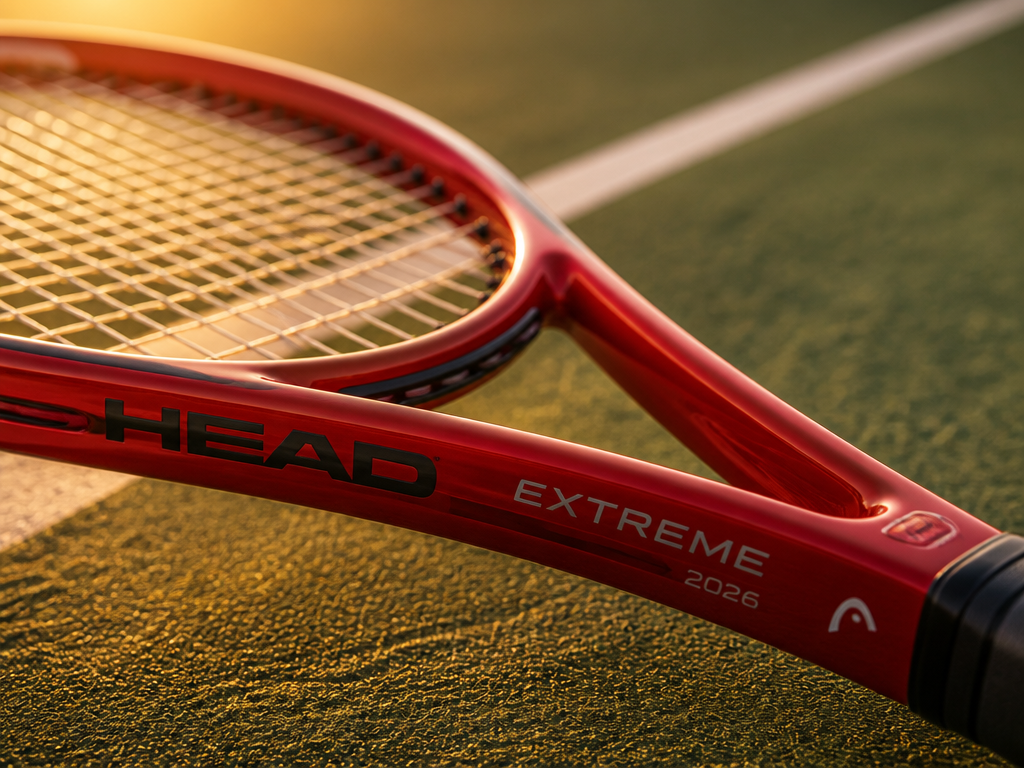
That's the problem HEAD set out to solve with the HEAD Extreme 2026 review cycle. The new generation keeps the Extreme family's signature spin-friendly 16×19 pattern and 100-square-inch head, but swaps the material story. The 2024 used Graphene 360+ with a foam handle insert that killed vibration so aggressively it killed feel. The 2026 introduces Hy-Bor, a boron-fibre layup in the upper hoop that stiffens the frame's response without adding mass at the tip.
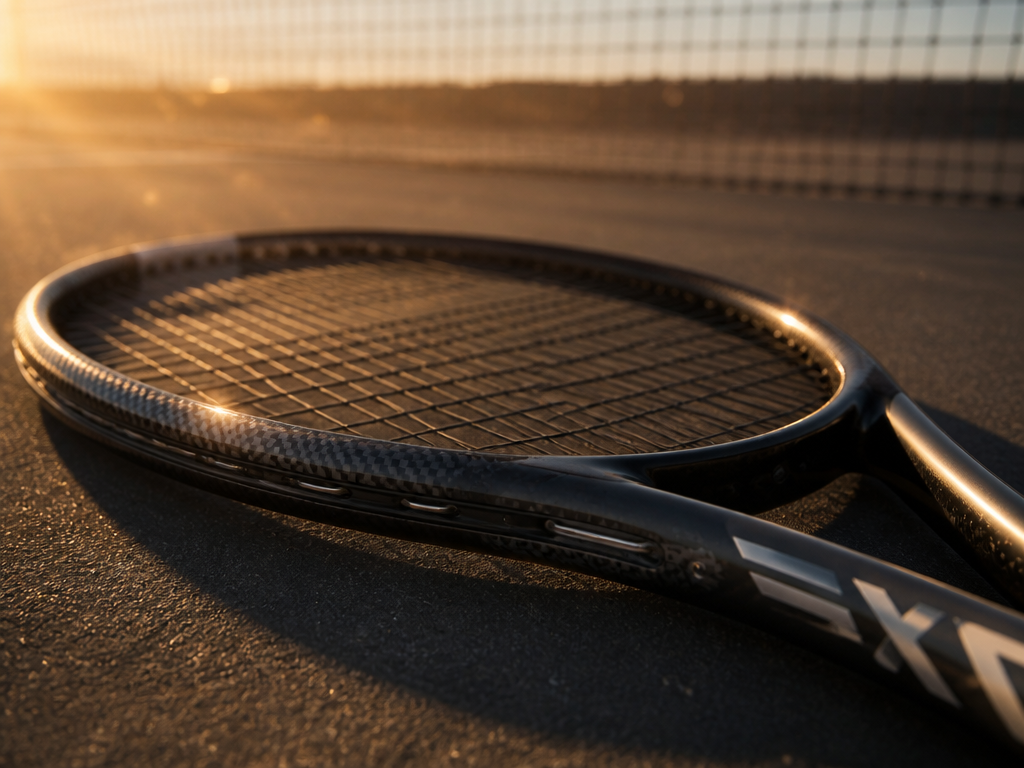
Boron isn't new to tennis — some pro stock frames have used it for years — but this is its first retail rollout in HEAD's lineup. What it does is measurable: upper hoop stability at contact, especially on off-centre hits toward 10 and 2 o'clock. What it feels like is more important. The ball stays on the stringbed a perceptible moment longer before it leaves. That dwell time gives you the feedback the 2024 buried.
The lineup, honestly
HEAD sent four models for testing. I spent three weeks with them, hitting on hard courts and clay, against a ball machine and live partners. Here's what each does and who it serves.
Extreme MP — the safe bet
The MP (305g unstrung, 16×19) is the volume seller and the most familiar transition for anyone coming from a midweight 100. The Hy-Bor stiffens the upper hoop just enough that you feel the ball pocket and release rather than just dampen and disappear. Launch angle is medium-high, predictable. Spin access is excellent but not dramatic — you don't have to whip the racquet to shape the ball; a normal swing path does the work.
What it forgives: Late preparation, compact swings, transition from a control frame. What it punishes: Nothing, really. It's a well-behaved racquet that won't surprise you. That's the compliment and the limit.
Extreme Pro — the demanding option
The Pro (315g unstrung, 18×20) is where the Extreme line gets interesting if you have a full swing and a one-handed backhand. The 18×20 pattern lowers the launch angle and tightens the dispersion. Slices stay skidding, drive shots stay flat. The extra static weight and higher swing weight give it plough-through that the MP can't match.
But the Pro punishes late racquet preparation brutally. If your take-back isn't set when the ball bounces, you'll hit short and in the net. This is not a racquet for partial commitment. I went through a full set of balls before I stopped mistiming the contact point.
Extreme MPL — the one nobody talks about
The MPL (285g unstrung, 16×19) is the lightest in the line and the easiest to swing. It gets dismissed as an intermediate frame, but that's a mistake. At a 3.5 level, the MPL lets you generate racquet-head speed without fighting the weight, and the Hy-Bor upper hoop means you still get clean feedback on off-centre hits. The downside is obvious: against heavy ball, the frame gets pushed around. You have to lead it up at 3 and 9 if you face pace regularly.
Extreme MP XL — the standout
The MP XL (310g unstrung, 16×19, 27.5 inches) is the model that made me reconsider my own racquet. The extra half-inch extends the lever arm, which generates more racquet-head speed from the same swing. Combined with Hy-Bor's stiffer upper hoop, you get a frame that feels crisper at contact than the standard MP but also more forgiving on extension.
The trade-off is real: the longer length changes your serve toss and your two-handed backhand reach. For a one-handed backhand player, the extra half-inch is a gift — more leverage on the slice, easier to block back heavy kick serves. But switching back to a standard-length frame after three sets is harder than I expected. The timing difference is small and persistent.
If you demo the MP XL, commit to it for two weeks before judging. The first session will feel wrong. The tenth session will feel like the racquet was made for your hand.
The one-handed backhand test
This is the clearest differentiator between the 2024 and 2026 Extremes. The 2024's foam-filled handle and flexible throat meant that one-handed backhand drives — especially those hit high, near the upper hoop — came off the frame feeling hollow. No connection between hand and stringbed. The 2026's Hy-Bor upper hoop changes that. A one-handed backhand hit at shoulder height now gives you a clean, localized sensation at contact. You know where on the stringbed you caught it. That information is what lets you adjust your swing path next time.
For one-handed backhand players, the MP XL is the obvious starting point. The Pro is also viable but demands more physical commitment.
Who this is for and who it isn't
This is for: Players who found the 2024 Extreme disconnected and want the same spin-friendly 100-square-inch head with real feel. One-handed backhand players who need upper-hoop feedback. Competitive club players (3.5 NTRP and above) who trust their hands and want a frame that doesn't filter everything through foam.
This isn't for: Players who loved the 2024's dead feel and want more of it. Players who prefer a traditional flex-through-the-throat response (look at the Radical or Prestige instead). Players who buy one racquet every five years and don't want to re-learn timing for an XL model.
How I'd actually decide
| If you... | Start with... |
|---|---|
| Played the 2024 and wanted more feel | MP or Pro, depending on swing weight preference |
| Hit a one-handed backhand | MP XL |
| Need forgiveness on off-centre hits | MPL (add lead if needed) |
| Volley aggressively | Pro (18×20 keeps the ball flat) |
| Want to demo just one | MP XL |
| ## What to check in your demo session |
First, hit ten backhand slices aiming for the service line. Don't watch the ball — keep your eyes on the racquet face at contact. Do you feel the ball against the strings? With the 2024, you wouldn't. With the 2026, you should.
Second, hit five forehands at 70% effort, then five at 90%. The MP XL in particular should hold its launch angle consistent across both speeds. If the ball balloons at higher pace, the string tension is too low. If it dies, the tension is too high. Hy-Bor frames seem to prefer a multi or soft poly in the 48-52 lb range.
Third, serve ten flat first serves and ten kick serves. The MP XL will produce a higher differential between the two — flatter flat, loopier kick — than the standard MP. If the kick serve feels dead at the top of the bounce, you're not extending through contact. The frame will reward you for swinging through, not at. That first backhand slice with the 2024 Extreme told me everything I needed to know. I felt nothing, so I learned nothing. The 2026 Extreme MP XL let me feel where I caught it, how clean it was, and what to change for the next one. That's the difference between a frame that filters the ball and a frame that tells you the truth. A demo session is your chance to find out which one you're holding.