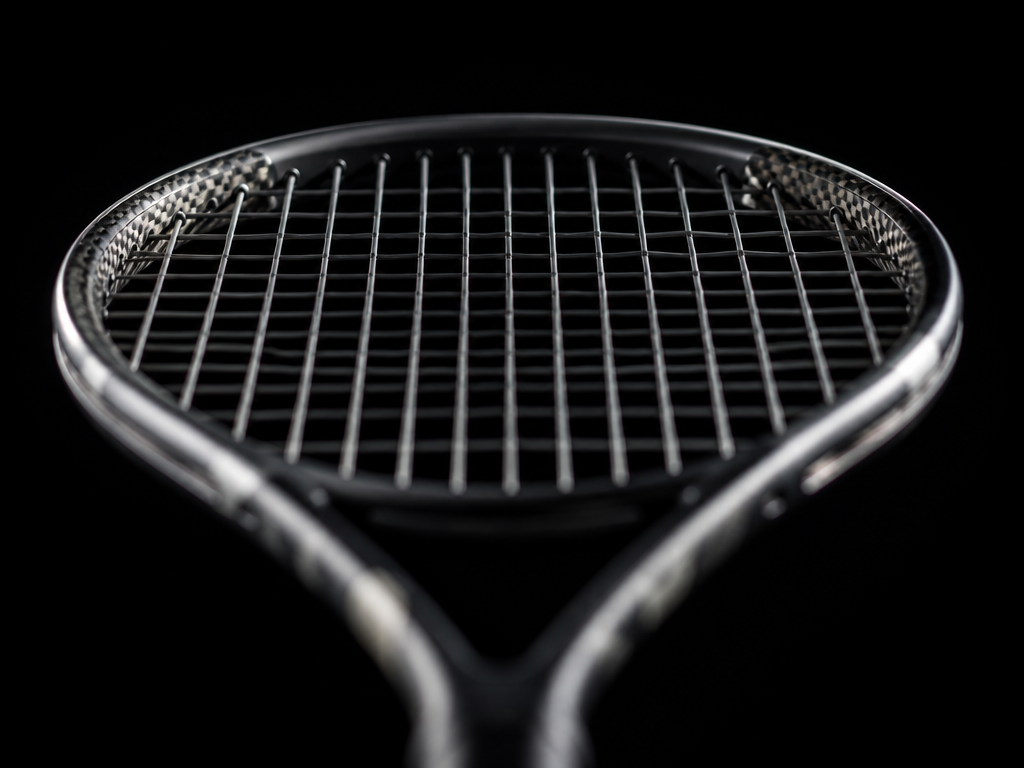
HEAD Extreme 2026 Review – The Mute Button Finally Got Unstuck
The 2024 HEAD Extreme was not a bad racquet. It was a correct racquet that forgot to feel like one. That distinction matters if you demoed the 2024, put it down after twenty minutes, and said…

The 2024 HEAD Extreme was not a bad racquet. It was a correct racquet that forgot to feel like one.
That distinction matters if you demoed the 2024, put it down after twenty minutes, and said something vague like "it's fine but I don't trust it." You weren't imagining things. The 2024 frame was structurally sound — good spin access, decent stability through the upper hoop, predictable launch on centre hits — but the feedback loop was broken. The sensation at impact arrived late, muffled, as if the ball had already left the stringbed before the handle told you what happened. For a racquet family that built its reputation on a loud, raw connection (the YouTek IG Extreme Pro 2.0, the Graphene Touch Radical MP — if you know, you know), the 2024 felt like HEAD had turned down the volume and then apologised for the noise.
The 2026 edition, launched with the Hy-Bor material update shared across the Boom and Radical lines, does not merely fix that problem. It reverses the philosophy. The 2026 Extreme is louder, more direct, and less forgiving of bad contact — which is exactly what this frame needed to be worth your time.
Let me walk you through the lineup, and more importantly, through the feel changes that actually matter on court.
What changed, and why you should care
Hy-Bor is HEAD's term for a boron-fibre layup integrated into the graphite weave at three and nine o'clock and in the throat. Boron is stiffer than graphite. That stiffness does two things you can actually feel:
- It resists torsional twisting on off-centre hits, so the racquet doesn't rotate in your hand as much when you catch the ball toward the frame edge.
- It transmits vibration faster through the handle — which means the sensation arrives sooner and with more clarity. That's the opposite of dampened. That's what the 2024 was missing.
Every model in the 2026 Extreme line uses the same Hy-Bor weave in the same locations. The differences between models come down to head size, beam width, weight, and balance — the usual variables. The material itself is consistent.
The lineup, with honest trade-offs
Extreme MP (100 sq in, 300g unstrung, 16×19)
The safe bet, now with a pulse.
If you played the 2024 MP and found it workable but forgettable, the 2026 MP is what you wanted the first time. The launch angle is similar — mid-to-high, consistent — but you can feel where on the stringbed the ball landed. That changes your behaviour. You stop swinging blind.
The frame still flexes moderately through the throat, so you get pocketing on moderate-paced rally balls. But when you step into a short ball and take a full cut, the Hy-Bor keeps the hoop from fluttering. The result: a forehand down-the-line that lands with the shape you intended, not a shape you hoped for.
Who it's for: 3.5–4.5 all-court players who want spin access without losing directional control. Works with a one-handed backhand if you can supply your own racquet-head speed — the flex won't do the work for you.
Who it isn't for: Players who liked the 2024's pillow-soft response. This frame talks back. If you hit thin, you'll know.
Extreme Pro (98 sq in, 310g unstrung, 16×19)
The demanding option.
The Pro brings the same Hy-Bor layup into a 98-square-inch head with a tighter string pattern and higher static weight. The beam is slightly thinner. The result is a racquet that rewards full, early preparation and punishes everything else.
On clean centre hits, the Pro delivers the most precise ball of the lineup. The dwell time is shorter than the MP, the launch angle is lower, and the ball comes out with a flatter trajectory that holds its line through the court. If you hit a heavy, driving ball from the baseline — think a deep cross-court forehand that stays low — the Pro lets you repeat that shot with less fear of the ball floating long.
The trade-off: mishits above the sweet spot (common when you're late on a high ball) produce a jarring, high-frequency buzz. You will feel it in your wrist. That's not a defect. That's feedback telling you to move your feet. If that bothers you, the Pro is not your racquet.
Who it's for: 4.5+ players who hit through the ball rather than around it. One-handed backhand players will find the thinner beam and lower launch angle favourable for driving the slice and the topspin variant.
Who it isn't for: Anyone who currently uses 2024 Extreme MP and wants an easy upgrade. The Pro is a different game.
Extreme MPL (100 sq in, 280g unstrung, 16×19)
The lightweight that doesn't lie.
The MPL is not a "junior" or "beginner" version — it's a 280g frame that plays like a lighter MP with the same Hy-Bor stiffness in the hoop. The difference is in the throat flex. The MPL bends more, so you get a softer launch and a longer dwell at the cost of stability against heavy incoming pace.

If you're a player with a fast, compact swing who struggles against heavy balls (the 4.0 who folds against a big first serve), the MPL will let you swing freely but will not bail you out when you're late. The Hy-Bor keeps the hoop from twisting, but the lighter weight means you have to meet the ball in front.
Best for doubles players and transition attackers. Not ideal for heavy topspin grinders — the extra flex bleeds pace on full swings.
Extreme MP XL (100 sq in, 300g unstrung, 16×19, 27.5 in)
The one that made me reconsider my main frame.
I did not expect to write this sentence. Extended-length racquets usually feel like compromises — you gain reach and lose manoeuvrability, or you gain power and lose feel. The MP XL does not feel like a compromise. It feels like a 27-inch MP with more of everything that matters.
The extra half-inch, combined with the Hy-Bor stiffness, produces a higher launch angle with noticeably more spin penetration. Not "more spin" in the marketing sense — more spin in the sense that a cross-court passing shot that used to sit up now skids. The balance point is similar to the standard MP (even, roughly 320mm), so the racquet does not feel head-heavy despite the extra length. You can still whip it through contact on a short ball.
The downside: serve returns. The extra length makes the racquet harder to manoeuvre on reflex volleys and rapid-fire returns against a big server. If you face a lot of 120+ MPH first serves, you will miss some balls you'd normally get back with a standard-length frame. That's the honest cost.
But for the baseline player who wants more free pace on groundstrokes without losing control — and particularly for the one-handed backhand player, who gets an extra few centimetres of reach on the high backhand — the MP XL is the best option in the lineup.
How the 2026 Extreme compares to its own history
If you played the 2022 Extreme (Graphene 360+), you know a frame that was firm, direct, and slightly harsh on off-centre hits. The 2024 overcorrected — too soft, too vague. The 2026 sits between them, but closer to the 2022 in feel. The Hy-Bor adds the stability the 2022 lacked at the top of the hoop, and the boron's vibration transfer gives you the clarity the 2024 buried.
I'd take the 2026 over both.
A word on string and tension
With Hy-Bor's increased stiffness, string choice matters more than it did in the 2024 line. The 2024 was forgiving enough to mask a dead poly job. The 2026 will tell you exactly how dead your strings are, and it will do so by sending that dead-string sensation straight into your elbow.
Recommendation: start with a comfortable poly at 22–24 kg (48–52 lbs). A soft co-poly like Yonex Poly Tour Pro or HEAD Lynx Tour (not the original Lynx, which is firmer). If you like the feel but want more pocketing, drop 2 kg and increase the gauge to 1.30mm. If the frame feels too lively at contact, bump tension 1 kg at a time — no more. The Hy-Bor amplifies tension changes.
Stay away from stiff polys at high tension (Kirschbaum Pro Line II at 26kg). The racquet will feel like a frying pan.
Who this is for (final verdict)
- 2024 Extreme owner who wanted more feel: Get the 2026 MP. It's the same swing weight, same head size, same launch angle — but you will actually feel the ball.
- One-handed backhand player looking at the Extreme for the first time: Demo the MP XL. The extra half-inch helps with reach on the high backhand, and the Hy-Bor keeps the hoop from twisting when you catch the ball slightly behind you.
- Player who loves the 2022 Extreme but wants more stability: The 2026 Pro. Same 98-head directness, better hoop stability, slightly more comfortable.
- Player who liked the 2024 for its pillow feel: Do not buy the 2026. You will hate it. Consider the 2024 while stock lasts, or look at the Clash line.
What this piece didn't answer
I haven't hit with the 2026 Extreme long enough to know how the Hy-Bor layup ages. Boron is stiff and durable, but it's embedded in graphite, and every graphite frame eventually softens. Whether the 2026 retains its feel after six months of hard hitting — I don't know yet. I also haven't tested the MP XL beyond four sessions, and the "honeymoon period" is real.
What I can tell you: the first hour with the 2026 Extreme tells you more than the first month with the 2024 did. That alone is worth the demo fee.
Take your current racquet to the court. Bring the 2026 MP and the MP XL. Hit for twenty minutes with each. Then go back to your current frame. You'll know before you finish the first cross-court rally whether the switch makes sense.
That's the test that matters. The rest is marketing.