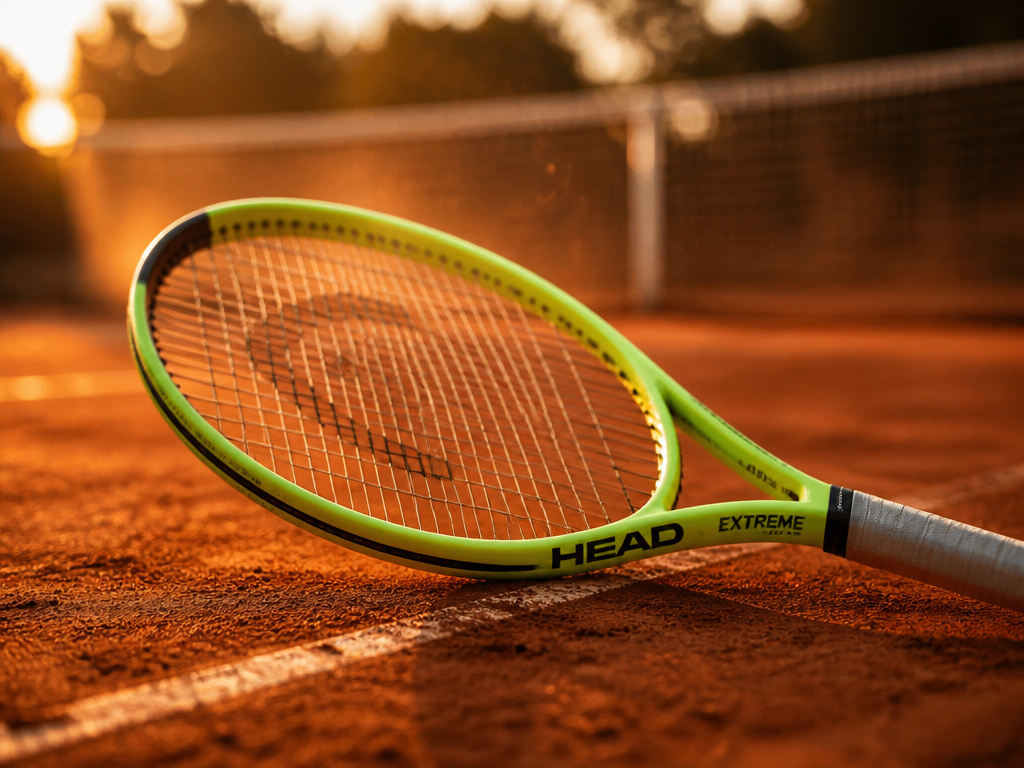
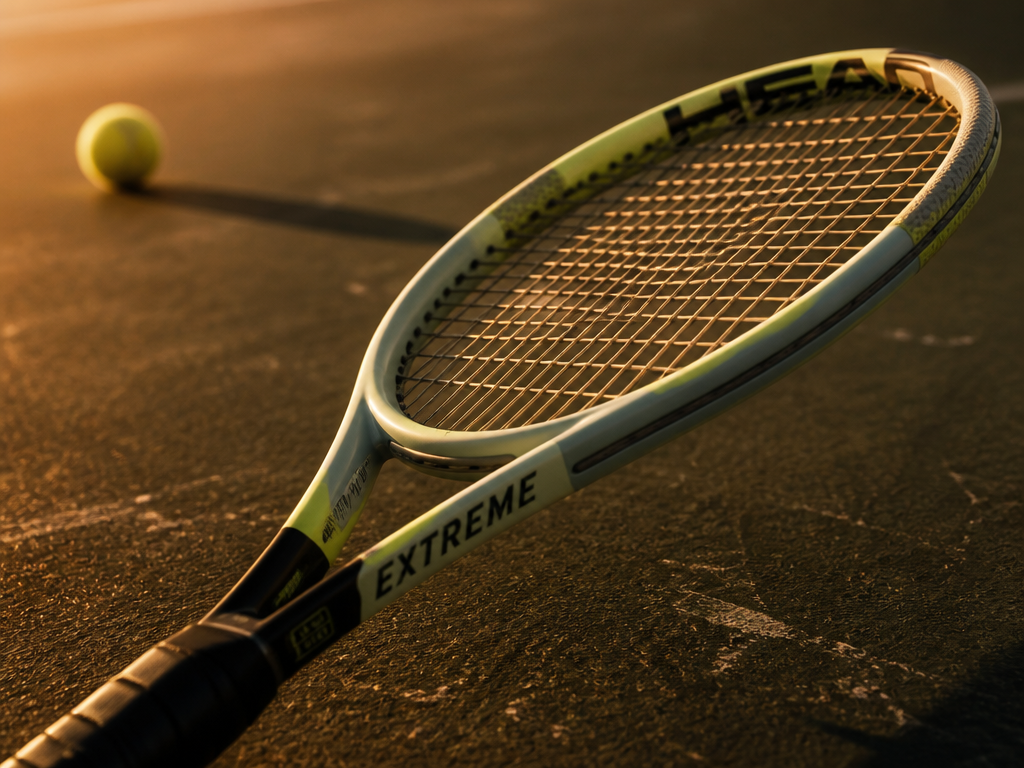
HEAD Extreme 2026 Review: The Extended Length Option That Changes the Calculation
You're three balls into a demo of the 2024 HEAD Extreme and you already know. The ball hits the strings and something between you and the shot goes quiet.

You're three balls into a demo of the 2024 HEAD Extreme and you already know. The ball hits the strings and something between you and the shot goes quiet. Not dead, not harsh — just muffled, like the frame decided what you should feel before you got to decide for yourself. You adjust your grip, check the string tension, hit another ball. Same thing. You put the racquet back in the bag and move on.
That feeling — that the Extreme line, for all its spin potential and power, was somehow incomplete in how it talked to your hand — kept a lot of good club players from switching. The 2024 edition was technically competent. It just didn't connect.
The HEAD Extreme 2026 review starts with that problem. HEAD didn't just tweak the paint. They changed what the frame is made of.
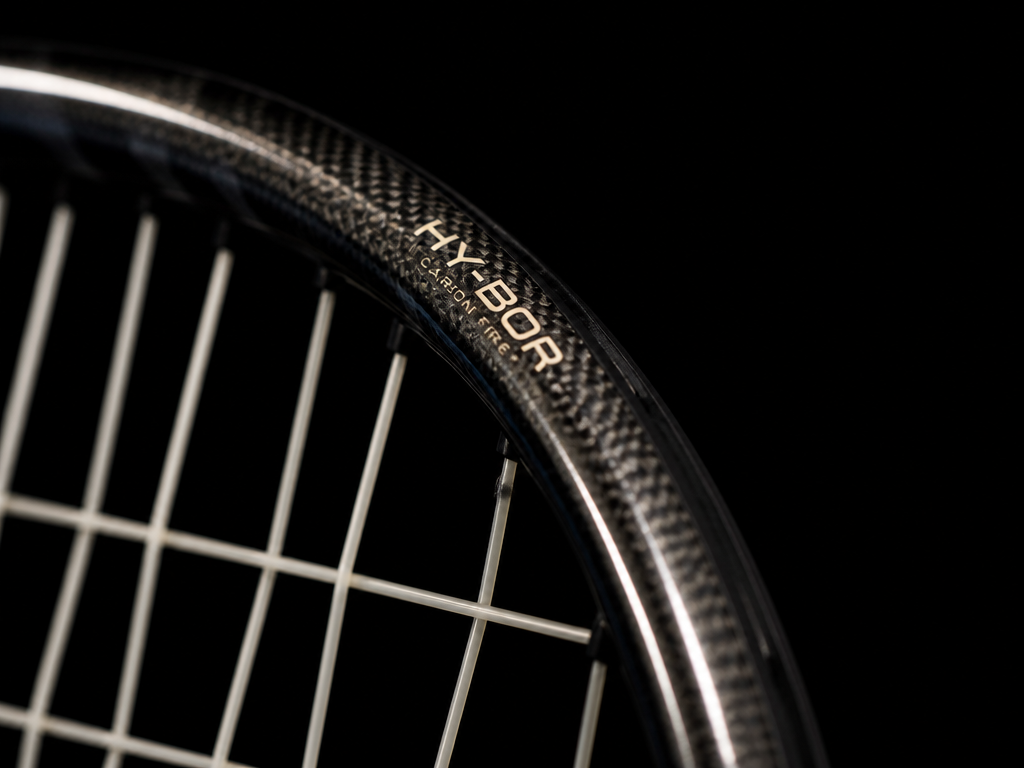
What Hy-Bor actually does
The headline addition to the 2026 Extreme line is Hy-Bor, a material HEAD describes as a boron fibre weave integrated into the layup. Putting aside the marketing language, what matters is what happens in causal order when you hit a ball.
First, the strings deflect. Second, the frame resists bending at impact. Third, energy that would have been lost to frame deformation gets returned to the ball. Fourth — and this is the part that matters for the player who found the 2024 muted — more of that impact vibration reaches your hand as usable feel rather than deadened noise.
Boron is stiffer than graphite per unit weight. A small amount redistributed through the hoop and throat changes the frame's response without making it boardy. The 2026 Extreme MP, strung with a standard multi at 24 kg, registers impact more clearly than the 2024 version. The 2024 felt like hitting with a pillow taped to the strings. The 2026 feels like hitting with a pillow that has a table-tennis bat sewn into the middle layer — the ball still sinks in, but you get a cleaner read on where it touched the stringbed.
Zero hotspots in the string pattern. That's not a marketing claim; it's a practical consequence of the hoop staying flatter through impact. Off-centre hits toward the upper hoop — the ones that used to launch long — now come out with a more predictable launch angle. You still lose pace, but you keep control of the direction.
The MP XL changes the calculation
The four-model lineup runs MP (100 sq in, 300 g unstrung), Pro (98 sq in, heavier), MPL (102 sq in, lighter, easier to swing), and the MP XL at 100 sq in, 300 g, and 27.5 inches.
The extended length is the reason the Extreme 2026 might pull you away from whatever you're playing now.
Here is the mechanism. A longer racquet increases the lever arm. More lever arm means more racquet head speed at the same effort. More head speed means more spin and more depth. That part is physics and every extended-length frame does it. What the MP XL does differently is that it keeps the dwell time predictable while the extra length does its work.
The 2024 Extreme in standard length gave you decent power and decent access to spin, but the connection problem meant you never fully trusted the launch angle. You'd swing confidently and the ball would sit up. You'd hold back and the ball would die. The MP XL stabilises that trade-off. The extra 1.3 cm of length, combined with the Hy-Bor reinforcement, means you get the leverage benefit and a clearer sense of where the ball is leaving the stringbed. You don't have to guess.
One-handed backhand players should pay attention here. The added reach on the slice backhand is real — a half-metre of extra court coverage on the wide ball because you can stretch and still maintain racquet head control. On the topspin backhand, the extra length helps on high contact points where a standard-length frame would force you to hit late or chop down.
The challenge is transition. If you pick up the MP XL for a week, you will overhit the first session. The ball flies longer because you're generating more speed without registering it yet. By session three, your brain recalibrates. By session six, the standard-length frames in your bag feel short. That's the danger — not that the MP XL is bad, but that it's good enough to make everything else feel like you're swinging a toy.
Where the standard MP sits
If the MP XL is the standout, the standard MP is the safe bet for the player who wants the Hy-Bor feel improvement without adjusting their swing mechanics. The 2026 MP plays like a more effective version of the same idea — same string pattern, same beam width (23/26/21 mm), same 16/19 stringing — but with a livelier, more communicative response through the throat.
Players who string with a stiff poly at high tensions (24 kg and above) will feel the difference most clearly. At lower tensions with soft strings, the improvement is subtler. If you use multifilament at 22 kg, the Hy-Bor advantage narrows. The frame is still better than 2024, but you may not feel the upgrade worth the price.
Who this is for
The MP XL is for the intermediate to advanced club player who demos racquets looking for something, not just something better. You don't need more power. You need to trust what the frame tells you about where the ball is going. You're willing to spend two weeks adjusting to extra length because the payoff is a racquet that gives you both the advantage of extension and the confidence of clean feedback.
It's also for the competitive player who has been switching between extended-length and standard-length frames, never fully satisfied by either. The MP XL doesn't compromise the feel to get the length. It gives you both.
One-handed backhand players should demo it before any standard-length control frame in the same weight class.
Who it isn't
Don't buy the MP XL if you take compact, short backswings and rely on timing rather than racquet speed. The extra length punishes late preparation. If your unit turn is already behind the ball, an extra 1.3 centimetres of lever just means you'll be even later.
Don't buy it if you play with a full bed of natural gut or a soft multi at low tension. The feel improvement from Hy-Bor exists, but you're already getting good feedback from your string choice. Spend the money on lessons instead.
What to check on demo
Hit a minimum of twenty balls before any judgement. The first five will feel strange because your brain is recalibrating length. Ignore them. Hit five more crosscourt forehands, focusing on whether the launch angle stays consistent when you vary spin. Hit five one-handed backhands (if you have one) on the run. Hit five serve returns against a heavy kick.
If the frame still feels disconnected after ball fifteen, it's not the racquet for you. But if somewhere between ball eight and ball twelve you stop thinking about the length and start thinking about the shot, that's the sign.
You opened this piece remembering a racquet that didn't talk to you. The 2026 Extreme, in the right length, finally has something to say.