Àbíkú and Ịgbanje: African Folklore in Contemporary Storytelling, and the Label That Almost Explained It Away
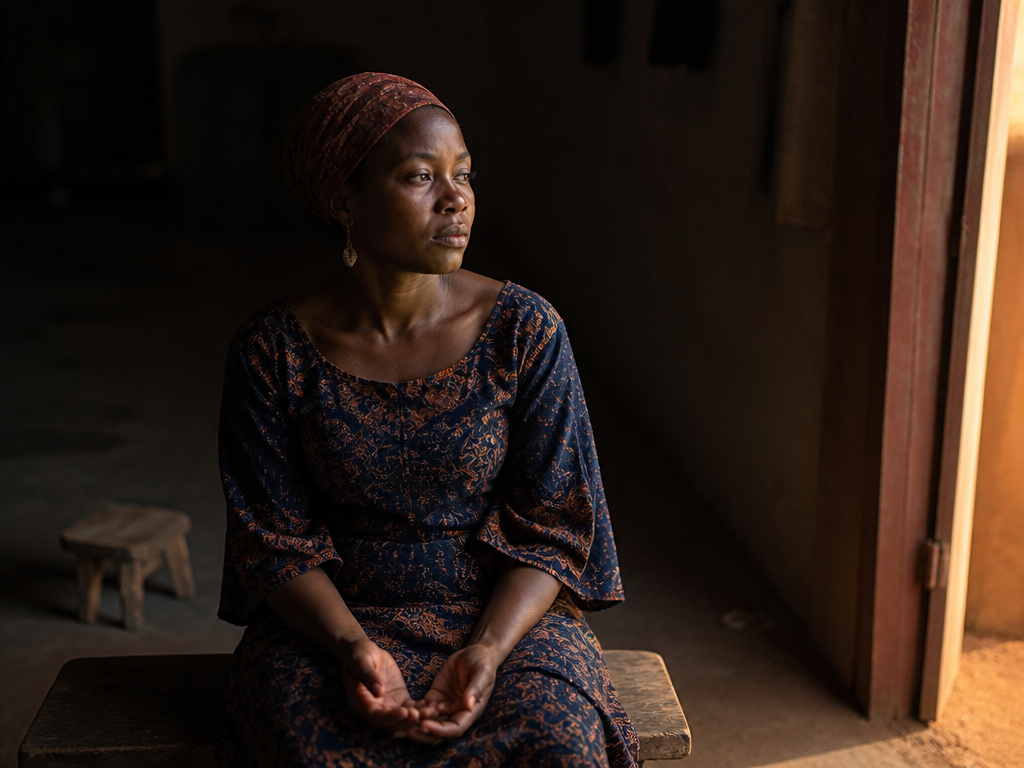
Okagbue Uyanwa digs beside the orange tree while the compound watches. Ezinma, nine years old, has led the men down toward the stream and back again, in no hurry, and then pointed at the ground.

Okagbue Uyanwa digs beside the orange tree while the compound watches. Ezinma, nine years old, has led the men down toward the stream and back again, in no hurry, and then pointed at the ground. The medicine man digs past the height of a man and lifts out a rag. Inside it is a smooth pebble.
That scene, from Chinua Achebe's Things Fall Apart (1958), is the right place to start on African folklore in contemporary storytelling, because of what Achebe declines to do with it. He does not explain the stone. He does not tell you whether Ezinma is an Ịgbanje — in Igbo belief, a child who dies and is born again to the same mother, over and over — or simply a much-loved girl in a family that has buried too many children. He gives you the compound's certainty and the reader's doubt in the same few pages, and then moves on to other business.
Sixty-odd years later, that refusal to adjudicate has become something like a method. It runs through Ben Okri's novels, through Akwaeke Emezi's, through Nigerian cinema from Kunle Afolayan to C.J. Obasi. And almost every time a critic reaches for a word to describe it, the word that arrives is magical realism.
That word has a source. The source is a good deal thinner than the belief built on top of it.
The claim in one sentence
Àbíkú in Yoruba tradition and Ịgbanje in Igbo tradition are two neighbouring peoples' names for a related idea — a child who arrives, dies young, and comes back to the same mother — while magical realism, the label most often fastened to the novels that use them, began as a German art critic's phrase for painting and reached West African fiction by way of Havana, Madrid, Bogotá and a London prize jury. Related, distinct, and mislabelled. That is the whole comparison in a line.
A small history of a borrowed word
In 1925, the German critic Franz Roh published Nach-Expressionismus, Magischer Realismus, a study of post-expressionist painters. His subject was brushwork. He was describing canvases in which ordinary objects — a jug, a face, a length of cloth — were rendered with such flat, over-lit precision that they turned strange. No spirits. No folklore. The magic in Roh's magic realism was the uncanniness of the plainly visible.
In 1927, an abridged Spanish translation appeared in Revista de Occidente, the Madrid journal edited by José Ortega y Gasset, and from there the phrase circulated among Spanish-language writers in Buenos Aires and Havana.
The Cuban novelist Alejo Carpentier gave it its second life. He had travelled to Haiti in 1943, and what he wrote afterwards — the 1949 prologue to El reino de este mundo — argued for something he called lo real maravilloso, the marvellous real. His central case was Haitian: a society where the presence of spirits is not a literary device but the ordinary furniture of belief, held by people who act on it. Carpentier's argument was partly a quarrel with European surrealism, which he thought manufactured its marvels. In Haiti, he said, nobody had to manufacture anything.
Then the term hardened. In 1955 the critic Angel Flores published an essay in Hispania welding "magical realism" to Spanish American fiction as a school. The Boom followed. Cien años de soledad appeared in 1967 and reached English in 1970. By the 1980s the phrase had stopped being a critical proposition and become a publishing category, a shelf.
In 1991, the Booker Prize went to The Famished Road, and Ben Okri's narrator Azaro — a spirit-child who has agreed, against the wishes of his companions in the other world, to stay alive — was placed on that shelf within the week.
Follow the chain back and notice what is not in it. A phrase for German painting, translated in a Madrid journal, sharpened in Havana against Haitian ceremony, applied to Colombian fiction, marketed by London houses, and finally handed to a Nigerian novel about àbíkú. At no point does anyone in that sequence consult a Yoruba or Igbo source. The belief that African writers of the supernatural are working a mode imported from Latin America rests on a genealogy in which West Africa never appears until the last link, and appears there as the object being labelled.
What the chronology does to the story
The dates do the rest of the damage.
Amos Tutuola's The Palm-Wine Drinkard was published in London in 1952, five years before Ghana's independence and fifteen before Cien años de soledad. Reviewers in Britain had no category for it and reached, some of them, for words like naive and primitive — a reception that says more about the reviewers than about a book drawing on Yoruba narrative in written English. Nigerian critics were uneasy for a different reason: they suspected the book would be read as evidence of exactly what English readers already assumed.
Achebe's Ịgbanje scene came in 1958. J.P. Clark-Bekederemo's poem "Abiku" and Wole Soyinka's poem of the same name both belong to the 1960s. Every one of these precedes the moment the label became available in English-language criticism.
So the influence, as usually told, runs backwards. Nigerian writers were not borrowing a Latin American technique for handling spirits in realist prose; they had been handling spirits in realist prose first, out of a different inheritance, and a label arrived later to solve a reviewer's problem. That is worth saying plainly, and without heat. Critics need shelves. But a shelf is not a lineage, and the habit of describing folklore in contemporary African fiction as a variant of somebody else's mode has quietly reversed who taught whom.

What the writers said when asked
Okri has spent decades declining the label in interviews, on the grounds that what looks like a device to a reader outside the tradition is, inside it, simply how the world is reported. You can accept or reject that claim. It is at least the claim of the person who wrote the book.
The two poems make the point more sharply than any argument. Soyinka's "Abiku" is spoken by the spirit-child itself, unrepentant, amused by the charms and the pleading, entirely certain it will go again. Clark's poem is spoken from the other side of the room, in the household's voice, asking the child to come in and stay, listing what the family has endured. One figure, two poems, opposite ends of the same compound.
Neither poem treats the àbíkú as a marvel breaking into an otherwise ordinary world. In both, it is the ordinary world, and the grief in it is completely legible: children die, and a family needs an account of why they keep dying to the same mother.
Akwaeke Emezi, writing from the diaspora seven decades after Achebe, went further. Freshwater (2018) is narrated in the first person plural by the spirits themselves. They have written and spoken publicly about Ịgbanje not as metaphor but as an ontology they hold — a claim about what a self is, offered against the psychiatric account of the same life.
Side by side
| Àbíkú | Ịgbanje | |
|---|---|---|
| People and region | Yoruba, southwestern Nigeria and across into Benin and Togo | Igbo, southeastern Nigeria |
| The name | à-bí-kú, roughly "born to die" | usually glossed as one who comes and goes |
| Where the child belongs | to a company of spirit companions in the other world, who call it back | to the spirit world by a tie often located in a physical token, the iyi-uwa |
| How a household responds | naming and appeal; children are given names that argue with the departure | consultation with a dibia, a diviner-healer; the search for the token that holds the tie |
| Names people carry today | Malomo, "do not go again"; Kokumo, "this one will not die"; Rotimi, "stay with me" | Onwubiko, "death, I beg" |
| How it enters modern work | Soyinka's and Clark's poems; Okri's Azaro | Achebe's Ezinma; Emezi's Freshwater |
The naming row is the one to sit with. These are not archive terms. Malomo and Rotimi are names on class registers and staff badges in Lagos this morning, carried by adults who may or may not think about what they mean. A belief does not have to be actively argued to remain in circulation. Sometimes it is just what a family called the child who lived.
The story, as a story
Accounts differ by region, lineage and teller, and what follows is a common shape rather than the version.
A woman bears a child. The child sickens and dies before it is weaned, or before it walks. She bears another; the same. By the third or fourth, the household stops treating each death as separate and begins to treat them as one visitor. This is not a child who died. This is a child who left, and will try the door again.
What follows depends on the tradition. In Igbo accounts, a dibia may be consulted, and the search turns toward the tie itself — the buried token that keeps the child bound to its companions in the other world. In Yoruba accounts, the argument is often carried in naming: the next child is given a name that speaks directly to the departure, a sentence addressed to the one who keeps going. In some tellings the child is marked, so that if it returns the family will know it. In others, it is not.
And in many accounts the child stays. That part is easy to miss. Àbíkú and Ịgbanje are not only names for infant death. They are also names carried by living adults — people understood to have come from that company and remained, and who are sometimes described as restless, unusually beautiful, hard to hold, at an angle to ordinary expectations of gender and marriage. In some accounts these are people with one foot still in a prior arrangement.
What contemporary work does with it
The modern uses of African folklore in storytelling share one technical move: verification is withheld.
Okri's Azaro has already made the decision the tradition says such children rarely make. He stays, and The Famished Road is largely the accounting of that decision — the pull of the companions who want him back, the poverty and the political violence of the world he chose. Okri and Soyinka both, at different points, turned the figure on the nation itself: a country that keeps being born and dying and being born again, promising each time that this one will live.
Emezi inverts the frame entirely. In Freshwater, the "we" is not a symptom to be diagnosed; it holds the pen. A reader trained to expect a mental-health narrative arrives to find the narration already occupied by the thing that narrative would explain away.
Film does it with the cut rather than the sentence. Kunle Afolayan's The Figurine (Araromire) (2009) builds seven years of good and bad fortune around an object taken from an abandoned shrine, and then declines, in its closing move, to tell you whether the object did anything at all; the film hands the question to the audience and lets the lights come up. C.J. Obasi's Mami Wata (2023), shot in black and white in a coastal village, treats a water deity's authority as a political question — who speaks for the village, who is believed, what happens to a community when that intermediary is doubted — rather than as a special effect.

In none of these is the ambiguity a shrug. It is an argument about knowledge: about what a household can know, what a diagnosis can know, and the fact that these two are answering different questions and both act on the answers. The withholding is precise. It is also the opposite of mystification, which is why the exoticising reading — that these works are trading in unknowable atmosphere — gets them backwards.
Where the connection ends
Àbíkú is not Ịgbanje. Two languages, two cosmologies, two sets of specialists. The Yoruba figure sits inside a framework in which orí, a person's inner head or destiny, is chosen before birth; the Igbo figure sits alongside chi, a personal spirit-double bound up with a person's fortune. These are frequently compared and are not translations of each other. Scholars disagree about how far the two figures share a root, and the honest position is that the resemblance is clear and the mechanism is not.
Neither is magical realism. In the traditions themselves, nothing is interrupting anything. A spirit-child is not the marvellous intruding on the real; it is a proposition about what the real contains. Magical realism, as a critical mode, presumes a baseline world that the marvellous then violates. Remove the presumption and the term stops describing what is on the page.
Diaspora work is not a copy. Emezi writing Ịgbanje from the United States is not producing a diluted version of something purer at home, any more than Haitian Vodou — the tradition Carpentier was actually looking at in 1943 — is a degraded remainder of Dahomean practice. These are continuations with their own authority, made by people living the thing.
And not every spirit in a novel is folklore. Writers invent. Some of what reads as inherited belief in contemporary African fiction is a writer's own construction, and treating every ghost as an ethnographic datum flattens the fiction as surely as the label does.
Names and terms
- Àbíkú (ah-BEE-koo) — Yoruba: a child understood to be born, die young, and return to the same mother.
- Ịgbanje (aw-GBAN-jay) — Igbo: a comparable figure, a child who comes and goes between this world and the spirit world.
- Iyi-uwa — in Igbo accounts, a buried token holding the tie between an Ịgbanje and its companions.
- Dibia — an Igbo diviner-healer, consulted in matters of this kind.
- Orí — in Yoruba thought, a person's inner head: destiny, chosen before birth.
- Chi — in Igbo thought, a personal spirit-double tied to a person's fortune.
- Lo real maravilloso — Carpentier's 1949 phrase, "the marvellous real," argued from Haiti.
The question nobody has settled
There is a medical reading of all this, and it is not a foolish one.
From the middle of the twentieth century, clinicians working in West Africa noticed that families losing several young children in succession often fit a pattern now well understood: sickle-cell disease, inherited when a child receives the gene from both parents, producing crises and high mortality in early childhood, clustering among siblings and skipping others. By common estimates, something like a fifth to a quarter of adults in parts of Nigeria carry the trait. The hypothesis follows easily: àbíkú and Ịgbanje are a pre-clinical description of an inherited illness — an accurate observation of heredity, expressed in the vocabulary available.
The fit is real. It explains why the deaths repeat within one mother's children, why they cluster at particular ages, and why the pattern runs along family lines in a way that looks purposeful from inside a compound.
And then the fit stops. It does not account for the adults — the people identified as Ịgbanje who live full lives and are known as such at sixty. It does not account for the associations that have nothing to do with mortality: temperament, beauty, restlessness, the sense of a person standing at an angle to the arrangements around them. It does not explain why the framework persists in families where the genetics is now understood, tested for, and named by its clinical name in the same conversation. Nor is there any way to test it backwards: the families whose losses shaped the belief are four and five generations gone, and no sample survives them.
So the argument sits unresolved, and it is a genuine disagreement, not a polite one. One position holds that the cosmology is a folk encoding of a hematological fact, and that the fact came first. Another holds that the illness was only ever one occasion among several for a set of ideas about destiny, belonging, and who is fully committed to being here — ideas that would exist without it. Writers have taken sides too: Emezi's insistence that Ịgbanje is an ontology rather than a symptom is, among other things, a refusal of the first position.
Achebe never tells us what was wrong with Ezinma. He tells us a man dug a pit beside an orange tree and brought up a stone wrapped in a rag, and that the household was satisfied.
The open question is not whether Ezinma was ill. It is whether the stone under the orange tree was ever an answer to the same question a blood test answers — and if it was not, what question was it answering?