The Overgrip Problem Nobody Talks About
You're up 5-3 in the first set. You've been holding the racquet a little tighter than usual because you felt the handle shift on the last backhand. Second serve, body slice.

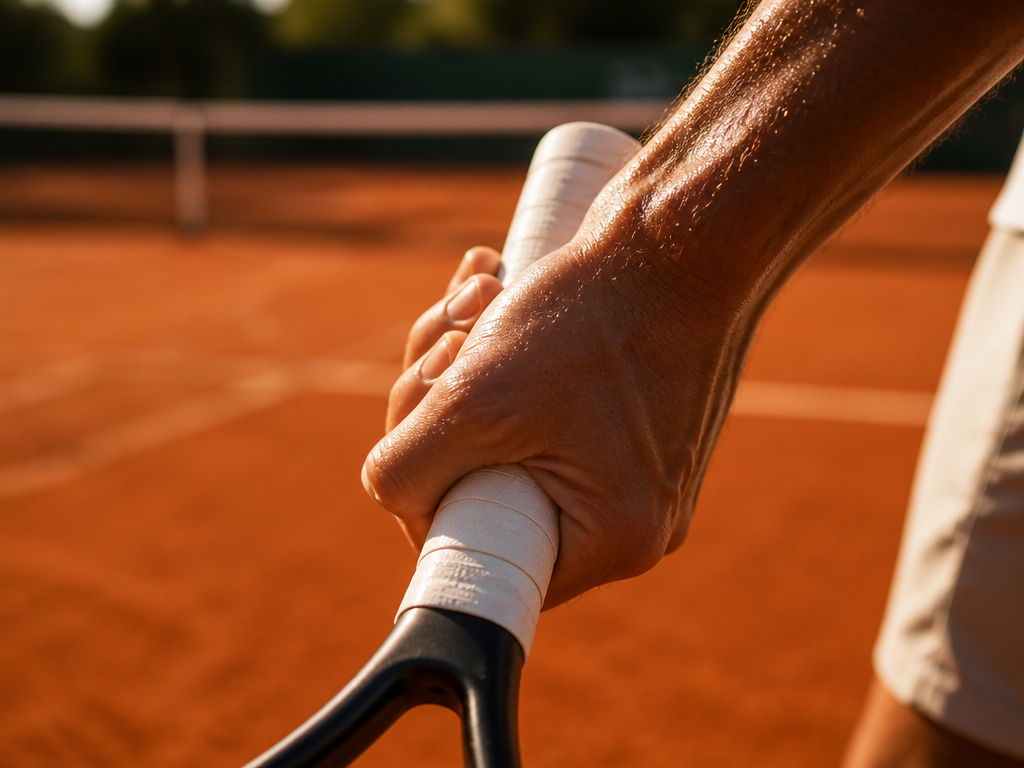
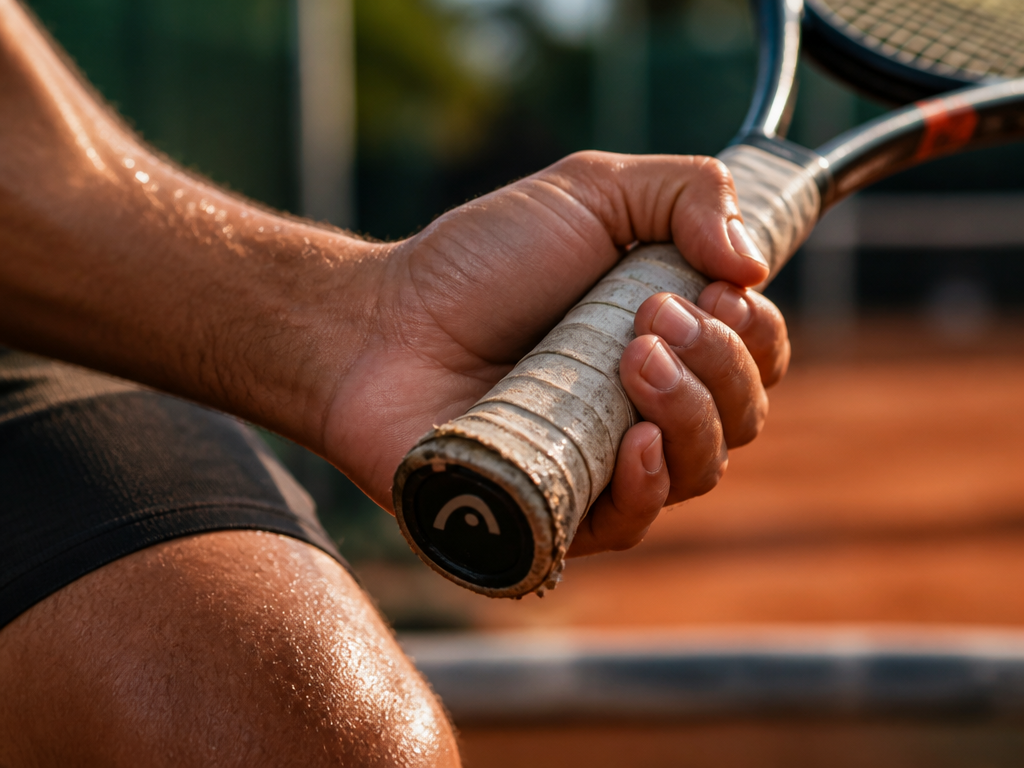
You're up 5-3 in the first set. You've been holding the racquet a little tighter than usual because you felt the handle shift on the last backhand. Second serve, body slice. You swing — and the racquet rotates in your hand a quarter-turn on impact. The ball lands in the net. You look at your palm. It's wet.
Every player with sweaty hands knows this feeling. It erodes trust in every shot. Your two-handed backhand? You're squeezing so hard the left hand cramps. Your serve toss? You're gripping the throat instead of the handle because you don't want the racquet flying into the fence.
Overgrips are meant to solve this. But most of us are buying the wrong kind. Here's what I've found after years of gripping and regripping, through humid afternoons on public courts and pressure sets on clay.
What Most People Do
Walk into any pro shop and you'll see a wall of overgrips. Most are tacky. The packaging says things like "maximum feel" and "non-slip." You buy one because the staffer behind the counter said it's what the club coach uses. It feels great in the hand for the first twenty minutes. Then your palm gets damp and the tack turns to slime. The grip gets sticky in the wrong way — not gripping you, but sticking to your palm like wet tape, causing the racquet to drag instead of flow through the hand on spin shots.
Tacky overgrips are designed for dry hands. If your hands stay dry for a full practice, go ahead — you'll love the feedback. But if you're someone who needs to wipe your palm on your shorts between every point, a tacky grip is working against you.
The second common move is to wrap a towel grip over the base grip. This works for about one set. Then the towel fibres mat down, the absorption rate drops, and you're back to holding a damp sponge. Worse, the circumference of the handle gets noticeably thicker, changing your feel for slices and drop shots.
What the Evidence Suggests
Overgrips split into two real categories. Not "premium vs budget" or "thin vs thick." The meaningful divide is: sticky when wet versus absorptive when wet.
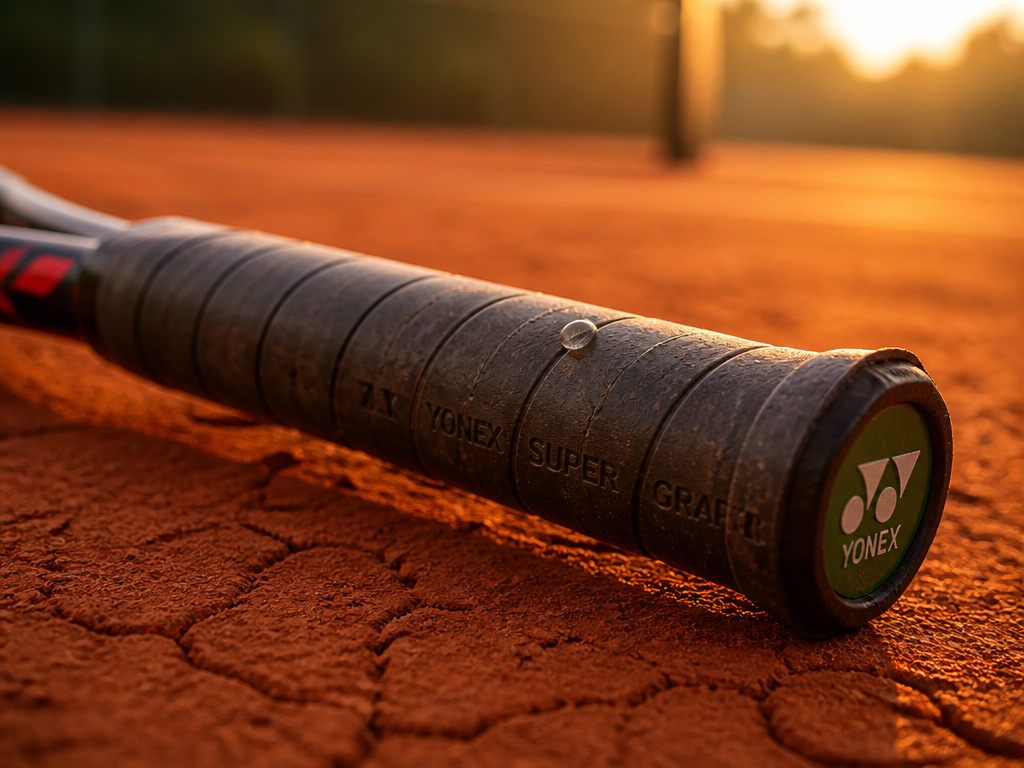
Sticky-wet grips use a polyurethane layer that becomes more adhesive as moisture increases. Think Yonex Super Grap, Wilson Pro Overgrip, and most of the "comfort" lines. These grips get tackier the more you sweat. The racquet does not slip. The trade-off: they wear out fast. The polyurethane layer breaks down after about three to four hours of real match play. The grip goes from perfectly tacky to shiny and slick. You can feel the change happen mid-point sometimes.
Dry-absorbent grips use a cloth-like or perforated surface that soaks sweat into the material. Tourna Grip is the classic here — that papery, chalky feel that makes your hand look like you've been working with flour. These grips are excellent for heavy sweaters. They stay dry to the touch longer than any other type. The trade-off: they have almost no cushion. You feel every string vibration through the handle. And they tear easily during wrapping — one bad pull and you're starting over.
There is no best. There is only what fits your hand chemistry.

The evidence from actual matches (not lab tests) is clear: players who sweat moderately do better with sticky-wet grips because the tack engages before the sweat becomes a problem. Players who sweat heavily — the kind of player who changes shirts between sets — should use dry-absorbent grips because the tack of a polyurethane grip never gets a chance to engage before it's flooded.
What I Actually Do
I used Tourna Grip for eight years. It's what I learned on, what I stocked in my bag, what I wrapped every racquet with. I believed it was the only option for sweaty hands because that's what the heavy sweaters told me to buy.
I was wrong.
About two years ago I tried Yonex Super Grap on a whim — a friend had a roll, I was out of Tourna, and I needed to wrap a racquet before a match. The first thing I noticed was the weight. Super Grap is heavier than Tourna. The racquet felt different in the balance, slightly head-lighter. I didn't like it for the first two games. Then my hands got damp, and something changed. The grip got tackier. Not slimy, not sticky in the unpleasant way — it grabbed my hand without grabbing my skin. The racquet stopped shifting.
The match went three sets. I didn't change grips. At the end, the Super Grap was still tacky. Tourna would have been wet and shredded by then.
Here's the honesty part: Super Grap doesn't last forever. After about four hours it starts to go shiny. You have to replace it more often than you'd like. Each replacement costs about the same as a roll of Tourna, so your monthly grip cost goes up. The extra weight per grip means you're adding roughly five grams to the handle each time — not noticeable for most players, but if you're sensitive to balance, you'll feel it.
But for me — and I've tested six other overgrips in the past year — nothing else solves the wet-hand problem while keeping the feel of the racquet intact. Tourna dries the hand but deadens the feedback. Wilson Pro is excellent for the first two hours and then drops off fast. Volkl V-Dry is a good middle ground but doesn't excel at either camp.
What I actually do now: I wrap all three match racquets in Super Grap at the start of a tournament week. If I'm practicing on humid days, I replace the grip after every second session. It costs more. It's worth it because I have stopped thinking about my grip during points. That mental space — "is my hand wet, should I wipe, is the racquet going to slip on the next serve" — is energy I'd rather spend on the ball.
What This Piece Didn't Answer
I still don't know which overgrip lasts longest while staying tacky through heavy sweat. Tourna lasts longer physically but stops working earlier. Super Grap works better but wears out faster. The durability-versus-performance trade-off is unresolved, and I suspect it's not solvable — you have to pick one.
If you're still looking for answers after trying both categories, the next variable to test isn't grip brand. It's grip thickness (some players wrap with an overlap that changes the bevel feel), it's base grip replacement (a worn base grip makes any overgrip perform worse), and it's how often you wash your hands before a match (natural oils kill tack faster than sweat does).
Those are questions for another piece. For now: figure out whether you're a moderate sweater or a heavy one. Buy the grip that matches. Stop fighting the handle.