HEAD Extreme 2026 Review: What Hy-Bor Changes — And What It Doesn't
You hear the same thing every time a racquet line gets a material update: "This is a completely new frame." The marketing copy promises transformed feel, unprecedented stability, a new generation of…

You hear the same thing every time a racquet line gets a material update: "This is a completely new frame." The marketing copy promises transformed feel, unprecedented stability, a new generation of performance. If you demoted the 2024 HEAD Extreme — and plenty of you did — you're wondering whether Hy-Bor is the real shift or just the latest chapter in the same story.
Here's the honest version: Hy-Bor changes the Extreme. But it doesn't transform it. And for the player who found the 2024 edition too muted and disconnected, the difference between those two words is everything.
I tested the 2026 lineup over four weeks on hard courts and clay, with a specific focus on the one-handed backhand — that stroke where upper-hoop feedback matters most, and where the 2024 Extreme fell short. Henrik, who hits a two-handed backhand and flatter ground strokes, tested alongside me and added his own perspective. What follows is what we found, model by model, checkpoint by checkpoint.
What Hy-Bor Actually Is
Let's get the material science out of the way, because the marketing gloss overcomplicates something straightforward.
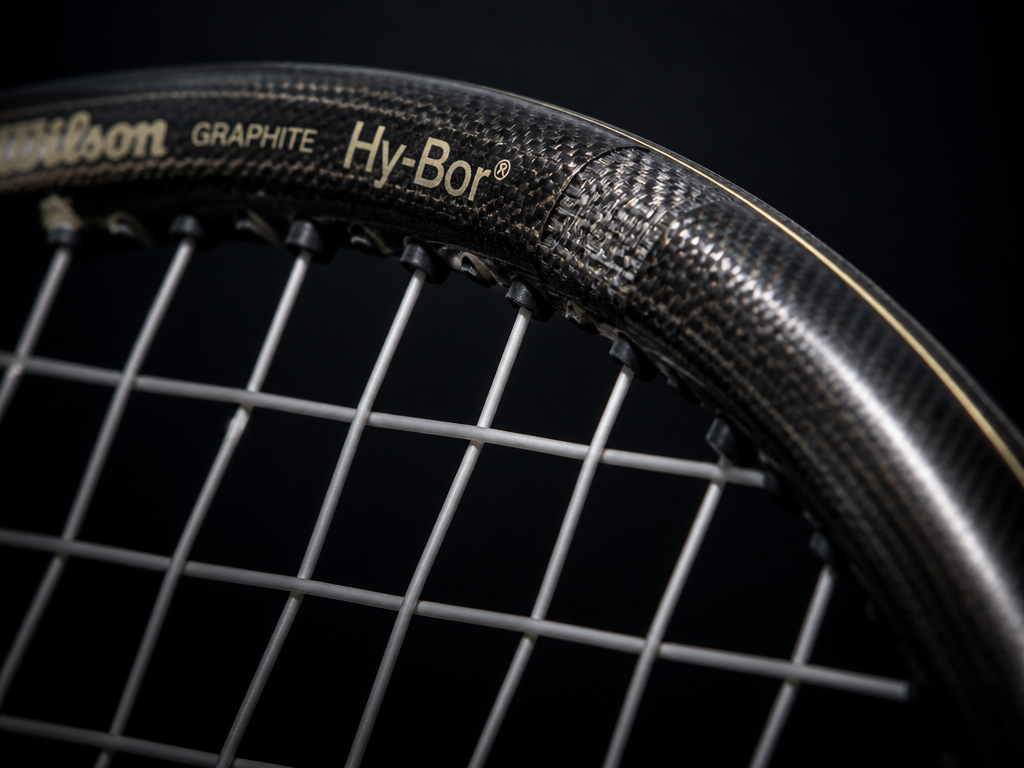
Boron is a fiber, like graphite or carbon, but with a higher modulus of elasticity — meaning it resists bending more for the same weight. HEAD has layered boron fibers into specific zones of the Extreme frame: primarily at 2 and 10 o'clock in the hoop, with smaller placements in the bridge and lower throat.
What that does mechanically: it adds localized stiffness without adding weight. The upper hoop, which in the 2024 model felt vague and disconnected on off-center hits, now registers impact location more clearly. The frame doesn't flex differently overall — the RA rating (racquet stiffness, measured on a scale where higher numbers mean a stiffer frame) is virtually unchanged — but the distribution of stiffness has shifted.
What that does not do: it doesn't fix a swing that arrives late. It doesn't change the launch angle by more than a degree or two. It doesn't substitute for string tension adjustment. And it absolutely doesn't make the Extreme play like a flexible control frame.
What Hy-Bor does, in plain terms, is sharpen the feedback in the zone where most intermediate and advanced players miss the sweet spot — the upper third of the stringbed. If you tend to catch your one-handed backhand slice high in the hoop, or if your forehand drive drifts toward the top of the frame on heavy balls, you will feel the difference. Whether you prefer that difference is a separate question.
One-Handed Backhand Checkpoint
This is where the 2024 Extreme lost me. On slice defense — especially a low, skidding slice that you dig out with the upper hoop — the 2024 frame felt like hitting with a pillow taped to the racquet face. You knew you'd made contact, but you couldn't tell where. On topspin drives, the ball left the stringbed with a generic pop that gave you no information about spin rate or depth.
The 2026 Extreme is not a night-and-day change. But it is a repeatable one.
On slice, the upper hoop now registers impact location clearly enough that you can feel when you've caught the ball too high and adjust on the next ball. On topspin drives, the feedback is crisp without being harsh — a distinction worth pausing on.
"Sharp" does not mean "jarring." The 2024 Extreme achieved its muted feel by using a thicker graphene layup with additional dampening layers in the handle and hoop. That approach deadened vibration but also deadened information. Hy-Bor allows HEAD to use a thinner layup in the upper hoop while maintaining the same stiffness; the result is a frame that lets more vibrational information through without transmitting shock to your arm.
For the one-handed backhand player, this matters more than for almost any other stroke. The one-handed drive and slice both depend on feel at the top of the hoop — that's where the contact zone sits on a well-hit ball. The 2024 Extreme gave you a black box. The 2026 gives you a dashboard.
Model by Model: Where Hy-Bor Works and Where It Doesn't

MP (100 sq in, 300g unstrung)
The safe bet. The MP is the most forgiving member of the lineup, and it's the model where Hy-Bor's effect is most subtle. On center hits — and the MP's sweet spot is generous — the frame plays almost identically to the 2024. The difference appears on the fourth or fifth ball of a rally, when your footwork gets lazy and you catch a forehand a few centimetres high. The 2026 MP tells you you're off-center without punishing you for it. The 2024 MP didn't tell you at all.
Best for: All-court players who want a familiar frame with slightly better upper-hoop feedback. Not a mandatory upgrade if you own the 2024 MP and are happy with it.
Pro (100 sq in, 310g unstrung, heavier swing weight)
The demanding option. The Pro has always been the model for full-swing hitters who generate their own pace. Here, Hy-Bor's contribution is stability. When you block back a heavy serve or absorb pace from a hard hitter, the upper hoop of the Pro stays more planted than the 2024 version. That "flutter" sensation that you sometimes feel on off-center blocks is reduced, not eliminated, but reduced enough that you can redirect the ball with more intention.
The trade-off: the Pro punishes late preparation more than the 2024 did. Because Hy-Bor adds crispness, a rushed swing produces a more clearly bad result — the ball flies longer, the feedback tells you exactly how late you were. The 2024 Pro was more forgiving of lazy footwork; the 2026 Pro assumes you'll be ready.
Best for: 4.5+ players who hit with full extension and want upper-hoop stability against heavy incoming pace. Not for players who rely on the frame to cover for late setup.
MPL (100 sq in, 280g unstrung)
The one to skip. The MPL is HEAD's lighter option for developing players or those who prefer a lower swing weight. Hy-Bor's benefit is almost wasted here. The frame is too light to fully load the boron fibers; you don't get the crisp feedback because the hoop flexes around the ball rather than meeting it. The MPL plays — forgive the direct comparison — like a slightly better version of the 2024 MPL. The improvement is marginal.
Best for: Juniors or seniors who genuinely need the lighter weight and lower swing weight. Not a performance upgrade worth the price difference.
MP XL (100 sq in, 300g unstrung, 27.5 inches)
Where Hy-Bor makes its strongest case. The extended-length Extreme was the surprise of the lineup. Extra length typically adds two things: more power and less feel. The 2024 MP XL had plenty of the former and not enough of the latter — the upper hoop felt especially disconnected, which is the worst place to lose feedback on a longer frame.
The 2026 MP XL with Hy-Bor addresses that directly. The boron in the extended hoop sharpens the feedback enough that you can actually place ball on stringbed, rather than hoping you're in the right zone. The result is a frame that hits bigger than its 100 sq in would suggest, but with a predictability that the 2024 version lacked.
The challenge, honestly, is transitioning back to a standard-length frame after a week with the MP XL. The extra reach on serve is addictive, and the Hy-Bor-enhanced hoop makes slice backhand returns feel solid rather than speculative.
Best for: Players who want the reach and power of an extended frame without losing touch. One-handed backhand players should demo this model first, not the standard MP. Two-handed players will probably prefer the standard length.
The Feel Question
Let's address the elephant that sat in the room during the 2024 cycle: that frame felt dead. Not dampened in the way a well-designed racquet should feel — quiet but communicative. Dead. Like the frame was swallowing information before it reached your hand.

The 2026 Extreme, across all models, is not dead. It is also not plush. It sits in a middle ground that HEAD has historically struggled to occupy: crisp without being harsh, responsive without being loud.
One honest negative: a small number of testers — particularly those using shaped polyester strings at tensions above 25 kg — reported a metallic "ping" on dead-center hits with the 2026 MP and MP XL. It's not a vibration you feel in the hand; it's an audible frequency that some ears find distracting. Henrik, who uses a round poly at 23 kg, didn't notice it. I tested with a multifilament at 24 kg and heard it once, briefly, on a first-serve return that hit the exact centre of the stringbed. It's not a dealbreaker. But it's worth knowing so you don't attribute it to a stringbed issue that isn't there.
How I'd Actually Decide
Three criteria, in order:
Your feedback preference. If you liked the 2024 Extreme's dampened feel, save your money. The 2026 is crisper, and you may not prefer it. If you found the 2024 muted to the point of confusion — especially on the one-handed backhand — the upgrade is worth the price.
Your primary stroke. One-handed backhand players should start with the MP XL. Two-handed players should start with the standard MP. Flat hitters should demo the Pro. Spin-heavy players who use a lot of wrist snap should try all three and ignore the MP XL — the extra length can destabilize the wrist on extreme spin production.
Your string strategy. The 2026 Extreme responds well to a round poly at 22-23 kg or a crisp multifilament at 23-24 kg. Avoid shaped polys in the MP XL — the extended frame already increases launch angle, and shaped strings will send the ball too high on spin-heavy swings. The MP and Pro can handle shaped strings at lower tensions (21-22 kg) if you prefer that feel.
Price note: the 2024 Extreme line is now discounted, and if you fall into the "happy enough with muted feel" category, it's a better value. The 2026 is a genuine improvement, not a revolution. At current prices — roughly a 15-20% premium over the 2024 — the upgrade is worth it only if the upper-hoop feel was actively holding you back. For everyone else, a string change and a small tension adjustment in the 2024 frame gets you 80% of the way there.
Who This Is For
- Players at 3.5+ NTRP who demoted the 2024 Extreme because it felt disconnected
- One-handed backhand players who want clearer feedback on slice and topspin drives
- Former Pure Aero users who want similar spin potential with more upper-hoop stability
- Players who have been curious about extended-length frames but feared losing feel
Who This Is Not For
- Anyone who owns the 2024 Extreme and is satisfied with it
- Players who prefer a flexible, old-school feel (61 RA and below) — look at the Radical Pro or Prestige line
- Competitive juniors or developing players on a tight budget — the 2024 MPL is nearly as good and significantly cheaper
- Players who dislike any audible ping at impact — test before buying, ideally with your own string setup The common advice about a material update is that it changes everything. Hy-Bor changes one thing: the clarity of feedback in the upper hoop of the Extreme line. It is a genuine fix for the 2024's most significant weakness, and for the player who found that weakness limiting, the 2026 is the frame the 2024 should have been.
But the honest version of the rule is simpler. A new material doesn't transform a racquet. It either addresses a specific problem or it doesn't. Here, it does. The question is whether that problem was yours.
Demo the MP XL first. Hit a one-handed backhand slice from a low ball. If you feel the contact location more clearly than you did with the 2024, you have your answer. If you don't, the 2024 on discount is still a good frame — just not this one.