HEAD Extreme 2026 Review – The MP XL Is the One That Finally Connects
The 2024 HEAD Extreme was a racquet I wanted to like more than I actually did. On paper it checked every box — 100 square inches, 16×19, decent spin geometry, a beam that promised modern pop.

The 2024 HEAD Extreme was a racquet I wanted to like more than I actually did. On paper it checked every box — 100 square inches, 16×19, decent spin geometry, a beam that promised modern pop. On court it felt like the ball was leaving the stringbed and then catching up to my brain a moment later. That dampened, almost disconnected sensation never quite resolved. I'd put it down after an hour, pick up something else, and not miss it.
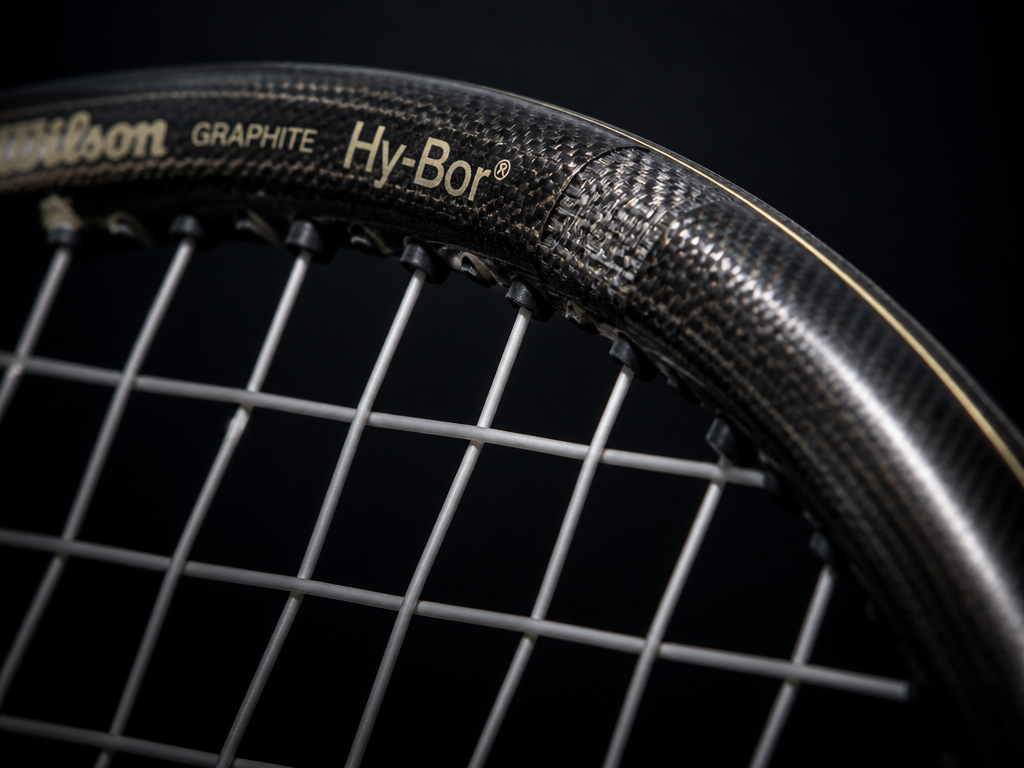
So when the 2026 samples arrived, I didn't expect much. A cosmetic refresh and a material name drop — Hy-Bor — sounded like another annual update designed to keep the SKU count healthy. I was wrong.
The 2026 lineup is the most coherent Extreme family HEAD has released since the 2018 generation, and one model in particular — the MP XL — does something I haven't felt in an off-the-shelf racquet in years. It gives you more power without making you work for it, and somehow still lets you place the ball where you wanted it. That contradiction is worth examining.
What HEAD Actually Changed
The headline addition is Hy-Bor, a boron fibre blend that HEAD places at 10 and 2 o'clock in the hoop and in the pallet area of the handle. Boron has been used in high-end frame construction before — mostly in the 1990s and early 2000s, where it added stiffness without much weight. HEAD's implementation is lighter and more targeted. Instead of reinforcing the entire hoop, they're using it to stiffen two specific zones: the upper hoop (where off-centre hits punish you most) and the handle interface (where frame vibration translates into your hand).
The result is a feel that sits somewhere between the 2024 Extreme's over-dampened isolation and the older Graphene 360+ Extreme's raw feedback. You still get modern vibration dampening — no one wants a racquet that stings — but you also get a clear, moment-of-contact sense of where on the stringbed the ball landed. That was exactly what the 2024 lacked.
The beam cross-section is subtly revised. The 2024 used a slightly boxier profile through the throat. The 2026 rounds it out, which shifts how the frame deflects through contact. You'll notice it most on defensive slices and stretched volleys — the frame holds its angle better than the previous version when you're late.
The cosmetic is polarising. The 2026 uses a dark metallic base with bright yellow and silver accents. Some online commenters wanted RETURN OF THE LIME GREEN or SOMETHING THAT DOESN'T LOOK LIKE A SPONSORED HELMET, and I understand that. But the finish is well executed. It catches light differently depending on court conditions, and up close the paint work is clean. I'd rate it above the 2024 (which was matte-flat and forgettable) and below the 2021 (which remains the best-looking Extreme generation).
Model by Model
HEAD Extreme MP (100, 300g unstrung)
The safe bet
The MP is the family sedan. 100 square inches, 300 grams unstrung, 16×19, 325mm balance. It doesn't surprise you, and it doesn't fight you. Swingweight measured on my Babolat RDC came in at 323 (strung with Wilson NXT 17 at 24kg), which puts it in the same zone as a Pure Aero 2023 and a little under the Ezone 100. Upper hoop stability is noticeably better than the 2024. Ball pocketing is moderate — you feel the ball compress into the stringbed, but not so much that you lose directional control on flat approach shots.
The launch angle is predictable. That sounds like faint praise, but it's the hardest thing to engineer in a 16×19 spin racquet. The 2024 Extreme had a launch angle that changed depending on where in the hoop you contacted the ball — higher in the upper third, lower through the centre, inconsistent out of the lower hoop. The 2026 MP flattens that variation. Zero hotspots in the string pattern. That matters more than any stiffness or weight spec.
Best for: Players coming from the 2024 Extreme who wanted more feel. Players who hit with moderate spin and moderate pace and need a frame that doesn't exaggerate either.
Warning: If you preferred the disconnected, muted feel of the 2024, this will feel too lively at first. Give it two sessions before deciding.
HEAD Extreme Pro (100, 315g unstrung)
The demanding option
Same head size, same pattern, 15 grams heavier, slightly more head-light balance (310mm unstrung). The Pro is for players who arrive at the ball early and want a frame that doesn't collapse through contact. Swingweight measured 335 strung. That's genuine player-frame territory.
What surprised me was how playable the Pro still felt on defence. Heavier racquets often punish you when you're stretched — you get the ball back but you can't shape it. The Pro, because of the Hy-Bor reinforcement at 10 and 2, holds its face angle well even when you're contacting the ball behind your body. The off-centre hits that would twist the MP into an open face don't twist the Pro as much. You lose less pace on stretched slices and half-volleys.
The trade-off is manoeuvrability. If you're playing doubles against net rushers or facing heavy kick serves that force you to react rather than prepare, the Pro will feel slow. This isn't a racquet for someone who still thinks about their split step. You need to already be there.
Best for: Strong 4.5+ players with full strokes. One-handed backhand players will find the Pro's stability on the backhand wing superior to the MP — the extra weight handles incoming pace without fluttering.
Warning: If you're below 4.0, the Pro will make you work harder, not win more. The MP will serve you better.
HEAD Extreme MPL (105, 285g unstrung)
The forgiveness play
105 square inches, 285 grams, a beam that's 1.5mm thicker through the hoop than the MP. This is the Extreme for the player who doesn't have time to train three times a week but still wants to feel competitive in matches.

On groundstrokes, the MPL generates easy depth. The larger head and thicker beam launch the ball with noticeably more pace than the MP at the same swing speed. You don't need to accelerate aggressively. The danger is over-hitting. Players who already generate their own pace will find the MPL launching balls long on neutral rally balls. You have to modulate your swing on short balls — topspin becomes your control mechanism rather than net clearance.
The MPL also produces a slightly different sound at contact — higher pitched, slightly more metallic — than the MP or Pro. This is a consequence of the thicker beam, not the Hy-Bor. Some players won't notice. Some will find it distracting. If you're sensitive to acoustic feedback, hit the MPL before buying.
Best for: Improving 3.0–3.5 players. Doubles players who want extra pop on serves without adding weight.
Warning: Experienced players with compact swings will find the MPL imprecise on volleys. The larger head and thicker beam make touch shots harder to judge.
HEAD Extreme MP XL (100, 300g unstrung, extended length)
The one that changes how you think about extended racquets
Extended length racquets usually announce themselves. You pick one up and immediately feel the extra inch — the swing is longer, the balance tips toward the hoop, your backhand feels unwieldy. Most players put them down after twenty minutes.
The MP XL doesn't do that. At 27.25 inches (the same extension as the previous Extreme Tour, for those tracking), it swings closer to a standard-length 300g frame than any extended racquet I've tested. The Hy-Bor placement in the handle likely contributes here — the boron reinforcement shifts how the frame distributes its mass, making the extra length feel like it belongs rather than like an afterthought bolted onto the mould.
On serve, the MP XL is noticeably faster through the hitting zone than the standard MP. With the same swing effort, I was getting an extra 8–10 km/h on first serves, measured on a PlaySight court. More importantly, the contact point felt higher and more forward, which improved my serve percentage on the deuce side (I tend to slice wide and pull the ball early — the extra length corrected that).
On groundstrokes, the extended length gives you reach on wide balls without the usual stability penalty. The frame doesn't twist when you stretch. You can hit a defensive lob from a full split and still place it inside the baseline.
The challenge is the backhand. For a two-handed player, the extra inch shifts your hand positioning slightly forward on the grip, which changes your non-dominant hand's leverage. I needed about four sessions to adjust. One-handed backhand players may find the MP XL more natural — the extra length gives you more swing path on the slice and more reach on the topspin drive. Henrik, who hits a one-handed backhand and typically plays 320g racquets, said the MP XL was the first extended frame he'd consider switching to.
Best for: Players who want more free power without going to a lighter, larger head. Servers. One-handed backhand players. Anyone who tried extended racquets in the past and found them clumsy.
Warning: The transition cost is real. Expect two weeks of miss-hit backhands before the coordination settles.
Competitor Comparisons
HEAD Extreme MP vs Babolat Pure Aero (2023 / 2025)
The Pure Aero remains the benchmark for spin-friendly frames, but the current generation has a feel issue many players don't discuss openly. The Woofer grommet system and FSI String Pattern combine to produce a response that's crisp in the centre and pingy toward the edges. On centred hits the Pure Aero feels alive and responsive. On off-centre hits it sounds and feels hollow — like the frame doesn't fully support the stringbed.
The Extreme MP doesn't have that problem. The Hy-Bor reinforcement at 10 and 2 treats the entire hoop as a single response zone. Off-centre hits feel dampened but not disconnected. You lose pace, but you don't lose the sense of where the ball is on the stringbed.
The trade-off is maximum spin potential. A Pure Aero, properly strung with a shaped poly, still produces more topspin on full Western forehands than the Extreme MP. If your primary identity is a heavy topspin baseliner, the Pure Aero gives you a higher ceiling. If you want a frame that does everything well and doesn't punish you for missing the sweet spot, the Extreme MP is the better daily driver.
Verdict: Pure Aero for specialists. Extreme MP for everyone else.
HEAD Extreme Pro vs HEAD Radical Pro
This comparison matters because many players see the Radical as the "control" HEAD frame and the Extreme as the "power/spin" HEAD frame. The 2026 Extreme Pro challenges that distinction.
The Extreme Pro, at 315g and 335 swingweight, now offers comparable stability to the Radical Pro (310g, 330 swingweight) with a slightly larger sweet spot. On a flat first serve, the Extreme Pro generates more free pace. On a kick serve, the Extreme Pro's spin window is higher — you can launch the ball with more rotation before it drops.
The Radical Pro still has better feel on touch shots. The 2026 Extreme Pro improves on the 2024, but the Radical's 18×20 pattern and thinner beam (21mm vs the Extreme Pro's 23mm) produce a more connected sensation on drop shots, angled volleys, and one-handed backhand slices.
Verdict: If you hit mostly flat and need stability, the Radical Pro remains the choice. If you use spin as a primary tool and need extra power on serve, the Extreme Pro has closed the gap.
HEAD Extreme MP XL vs Yonex Ezone 100L
This is an odd comparison on paper — the MP XL is extended and 300g, the Ezone 100L is standard length and 285g. But they serve a similar player: someone who wants more free power without jumping to a full-weight player frame.

The Ezone 100L is easier to swing. You can whip it through contact on returns and running forehands with less effort. It's forgiving on defence. The trade-off is that the Ezone 100L gets pushed around by heavy incoming pace — a flat first serve hit to your backhand will push the frame open unless you brace early.
The MP XL doesn't have that problem. The extra length and Hy-Bor reinforcement give it enough mass in the upper hoop to handle heavy ball without twisting. It also serves bigger, as mentioned. The cost is manoeuvrability — you can't whip the MP XL as quickly as the Ezone 100L on extremely fast exchanges (reflex volleys, half-volley pickups).
Verdict: Choose the Ezone 100L if quickness and forgiveness are your priorities. Choose the MP XL if you want stability and free serve pace.
String and Tension Guidance
The 2026 Extreme lineup responds well to poly main / multi cross setups. The increased feel transmission means you can drop tension slightly from what you used in the 2024 and still have enough control.
MP: 22–24kg poly main, 23–25kg multi cross. The MP's moderate swingweight benefits from a livelier stringbed. Too tight and you lose the pocketing that makes this frame work.
Pro: 21–23kg full poly. The Pro's higher swingweight and mass handle tighter tensions well. String savers at the 4 and 8 positions are worth considering — the Pro can break strings quickly if you hit with heavy spin.
MPL: 23–25kg multi or synthetic gut. The MPL doesn't need poly to generate spin. A softer string at moderate tension will give you more comfort and durability.
MP XL: 21–23kg poly main, 23–24kg multi cross. The extra length increases effective lever arm, which puts more stress on the stringbed. Going tighter than 21kg on a full poly setup can make the frame feel boardy. The multi cross softens the response and extends string life.
Who This Is For
The standard MP is for the player who wants one frame for everything — singles, doubles, practice, league matches — and doesn't want to think about gear. It's not the best at any one thing, but it's good enough at everything that you won't find yourself shopping again in three months.
The Pro is for the player who has a consistent, full swing and wants a frame that doesn't compromise on stability. If you're a 4.5+ who plays mostly singles and relies on a heavy ball, the Pro rewards you every time you hit the centre of the stringbed.
The MPL is for the player who's still developing or who plays doubles and wants extra pop without extra weight. It's a generous frame that forgives technique errors.
The MP XL is for the player who chases free pace, serves big, and is willing to adjust their backhand timing for two weeks to get it. It's the most interesting racquet in the lineup, and the hardest to put down once you've adjusted.
Who This Isn't For
If you loved the dampened, disconnected feel of the 2024 Extreme, the 2026 will feel too communicative. Stay with the 2024 or look at the Boom line.
If you're a pure flat hitter who never uses topspin as a control mechanism, the Extreme's spin-friendly beam profile will feel like it's launching your balls long. The Radical or Prestige lines suit your game better.
If you buy a new racquet every six months chasing a feel that doesn't exist, the 2026 Extreme won't fix that. No racquet will. You already know that.
The Unsettled Question
Hy-Bor is new to HEAD's consumer lineup. Boron fibre has been used in racquet construction before — Prince experimented with it in the 1990s, and some custom racquet builders still use it in layups — but this is the first widespread consumer implementation from a major brand.
We don't know how Hy-Bor ages.
Boron is stiffer than graphite, but it's also more brittle under certain kinds of repeated stress. The 10 and 2 placement makes sense structurally — that's the zone that takes the most abuse from off-centre hits — but I've only had the frames for three months. After six months of competitive play, do those reinforced zones fatigue differently from the rest of the hoop? Does the handle reinforcement degrade with repeated impact?
HEAD says the material has been tested to their usual durability standards, and I have no reason to doubt that. But long-term data doesn't exist yet in the consumer market. The first generation of any new material integration carries unknown variables. If you're the kind of player who keeps a frame for three years, the 2026 Extreme is a slightly bigger bet than a standard update.
I don't know the answer to that yet. Neither does anyone who hasn't been hitting with these frames since early 2025. It's worth keeping in mind — not as a reason to avoid the purchase, but as an honest caveat about a racquet generation that does almost everything right on day one.
Verdict Table
| Model | Rating (out of 10) | Best For | Warning |
|---|---|---|---|
| Extreme MP | 8.5 | All-court players who want consistent feel | Lacks the raw spin ceiling of a Pure Aero |
| Extreme Pro | 8.0 | Strong 4.5+ players, one-handed backhands | Too demanding below 4.0 |
| Extreme MPL | 7.5 | Improving players, doubles players | Metalic sound, less precision on touch |
| Extreme MP XL | 9.0 | Servers, one-handed backhands, former extended-racquet sceptics | Two-week backhand adjustment period |
The 2026 Extreme family is the best version of this line since 2018. The standard MP fixes the feel problem that made the 2024 hard to recommend. The MP XL does something genuinely unusual — it gives you extended-length power without the extended-length compromises.
Whether that magic survives a full season of hard court play is the question I'll be watching. For now, it's the frame I'm picking up first.