Enkai: Maasai God of Rain, Cattle, and the Two-Coloured Sky
The Maasai creator who is one god in two colours — Enkai Narok, the black god of gentle rain, and Enkai Na-nyokie, the red god of thunder and drought — and who entrusted the people with cattle.

The stories, in brief
-
Story 1
In Maasai telling, Enkai lowered cattle to the people down a strip of hide or bark rope — the root of the bond between the Maasai and their herds.
-
Story 2
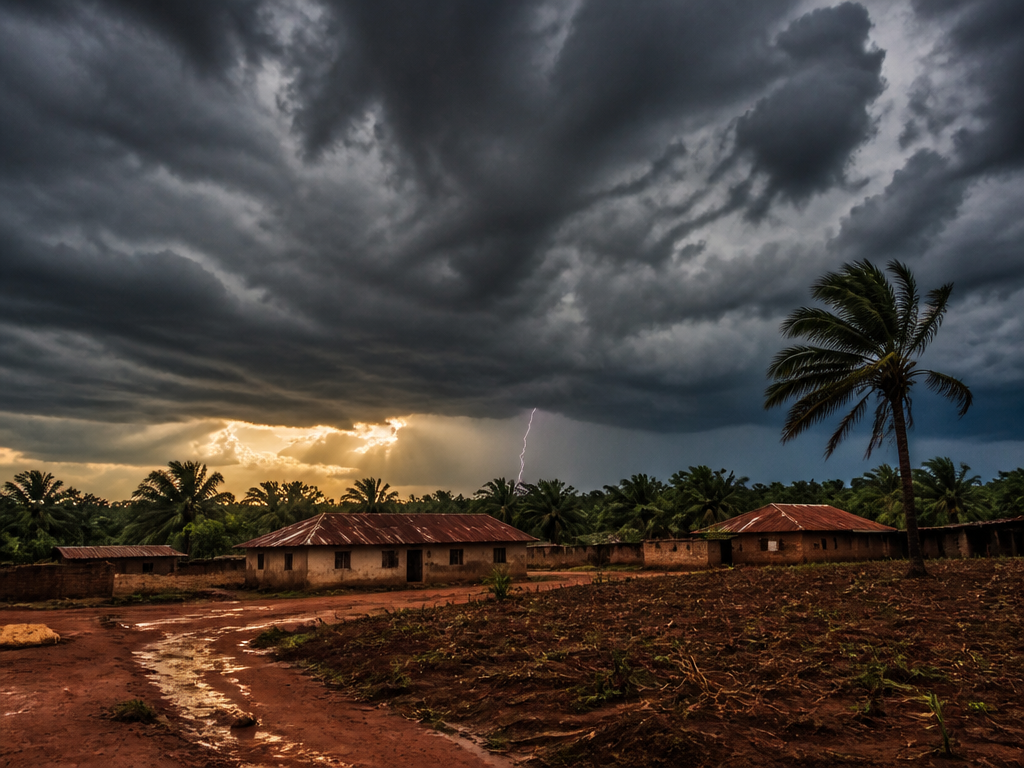
The black and red aspects are read in the sky itself — dark rain-bearing clouds as favour, red lightning skies as anger.
The sentence arrives early in almost every guidebook, documentary voice-over and travel blog: Enkai gave the Maasai all the cattle on earth, so every cow in the world is really theirs. It gets repeated the way a rule gets repeated — flat, confident, no teller named. Readers meet the line long before they meet the tradition it came from.
It is a rule worth taking seriously, because it is not invented out of nothing. Enkai — Maasai god of sky, rain and cattle, also written Engai — sits at the centre of Maasai belief among the Maasai of southern Kenya and northern Tanzania, and cattle really are the hinge of the relationship. But the guidebook line compresses a story about trust into a claim about property, and most of what is interesting happens in the gap between those two things.
Where the rule holds
Start with what is solid. In Maasai tradition, Enkai is the creator: the source of rain, of the grass rain makes, and of the cattle that eat it. The name is the ordinary Maa word for God — Maa being the language of the Maasai — which is why it turns up in blessings, in personal names, and in the place name Oldoinyo Lengai, "Mountain of God," the active volcano in northern Tanzania that still throws pale ash over the plains below.
This is not a distant creator who set the world going and withdrew. Enkai is understood to act in weather, and weather in this landscape is not scenery. It is whether the herds live. A god of rain and cattle, in semi-arid savanna, is a god of everything that matters most.
So the guidebook is right that Maasai belief ties Enkai to cattle, and right that the tie is foundational rather than decorative. Where it goes wrong is in what kind of tie it is.
The story of the cattle and the hide
In Maasai telling, the cattle did not begin on earth. They were with Enkai in the sky, and the people below had none.
Enkai let them down. In one telling the cattle descended along a strip of hide; in others it is a rope of bark, or a length of the fig tree's fibre, lowered from the sky to the ground. The animals came down that line one after another into the keeping of the first Maasai, and from that moment the people were herders — not by choice or by trade, but by an arrangement made above their heads.
Versions differ on what happened next, and the differences matter. In some accounts the connection is severed afterwards, by accident or by another party's interference, and the flow of cattle stops; the herds on earth are all there will ever be, which is why they must be tended so carefully. In others the emphasis stays on the handing-over itself. What every telling shares is the shape of the thing: cattle are not a resource the Maasai found. They are something given, into specific hands, with the giver still watching.
That is a story about obligation. A herd received from Enkai is a herd held on terms.
Where the rule breaks down
The guidebook sentence takes entrusted and quietly reads it as entitled. Once the story becomes "all cattle everywhere belong to us," it stops being an account of relationship and becomes a title deed — and, in the colonial-era record, an explanation offered for Maasai cattle raiding by administrators who wanted a tidy motive for it.
Two things get lost in that move. The first is that cattle raiding was practised among many East African herding peoples, with reciprocal raiding across neighbours, and it had economic and political logic that did not depend on theology at all; a story can be cited after the fact without having caused anything. The second is that Maasai are not of one mind about the story's reach, any more than any people are of one mind about their oldest inheritance. Some tell it as a charter. Many more tell it as a covenant — the reason a herd is counted, named, bled and kept rather than simply owned.
The honest correction is not that the guidebook made the story up. It is that it kept the loudest half.
One god, two colours
The second thing outsiders repeat, and get backwards about as often, is that Enkai is two gods — a good one and an evil one.
Maasai tradition describes Enkai in two aspects. Enkai Narok is the black god: generous, giving, associated with the dark rain-bearing clouds that mass before a storm and with the green that follows. Enkai Na-nyokie is the red god: angry, associated with red lightning skies, with drought, with the sun that burns the grass to nothing.
Readers raised on Western colour codes reach for the obvious mapping and find it inverted. Here black is the favourable colour, because black is the colour of a sky about to give water. Red is the colour of withholding. And these are aspects, moods, faces of one god — not a matched pair of rival deities, and not a moral dualism imported from somewhere else. The sky is read the way a face is read: the same person, in a different temper.
It is a theology built out of looking up. Whether Enkai is favourable is not an abstraction to be settled by argument. It is visible on the horizon by mid-afternoon.
What the symbols carry
The cattle are the sign of the original giving, which is why they appear in Maasai life far past their food value — in bridewealth, in settlement of disputes, in the naming of individual animals and the memory of their lines. The clouds and the lightning are the sign of the giver's present disposition. And Oldoinyo Lengai, the mountain the Maa name gives to God, is the place where sky and ground are least separable — a peak that visibly acts.
Each of these is a way of keeping a relationship legible. None of them is an ornament.
In living practice
Enkai is not a closed chapter. The name is in current use among Maasai communities today, in prayer, in blessing and in everyday speech, and it has been carried into Christian and Muslim usage as well — for many Maasai the word for God in church on Sunday is the same word their grandparents used on the plain, which is one reason the name has stayed alive rather than becoming a museum label. Communities hold these things in different combinations, and it is common for people to move between them without treating it as a contradiction.
Ritual life is the province of specific people. An oloiboni (plural iloibonok) is a Maasai ritual expert and diviner, a hereditary role, and the details of what such a person does belong to that lineage rather than to a general readership. What can be said plainly is that appeals concerning rain, cattle and the wellbeing of a community are made to Enkai, and that they are made by people with standing to make them.
What has changed is the ground itself. Land tenure, conservancies, fenced ranchland, tourism and a sequence of severe droughts across the Horn and East Africa have reshaped how Maasai families keep herds and where they can move them. A belief organised around rain and cattle is being held by people whose access to both has been altered by things no story anticipated.
Getting the name right
| Name | Who uses it | What it refers to |
|---|---|---|
| Enkai / Engai | Maasai (Maa language), southern Kenya and northern Tanzania | The creator; sky, rain, cattle, providence |
| Ngai | Kikuyu, central Kenya | God, in a distinct tradition centred on Mount Kenya |
| Oldoinyo Lengai | Maa place name, northern Tanzania | "Mountain of God" — an active volcano |
The most common error is the last row of confusion in that table. Ngai among the Kikuyu is a related name in a neighbouring language, but it belongs to its own tradition, oriented toward Mount Kenya — Kĩrĩnyaga — not Oldoinyo Lengai. The names are cousins. The traditions are not the same tradition, and merging them flattens two peoples into one paragraph.
A second error is pantheon-mapping: slotting Enkai into a roster of specialised gods on the model of the Yoruba orisha or the Greek Olympians, with a rain portfolio and a cattle portfolio. Maasai tradition is not organised that way. Enkai is singular, with aspects, and the aspects are not staff.
A third is the spelling anxiety. Enkai and Engai are both in use, along with other transliterations of a language written down comparatively recently by outsiders with inconsistent ears. None of them is a different god.
Names and terms
- Enkai (en-KYE) — God, in the Maa language of the Maasai.
- Enkai Narok — the black aspect: rain clouds, giving, favour.
- Enkai Na-nyokie — the red aspect: lightning, drought, anger.
- Maa — the language of the Maasai and related peoples.
- Oldoinyo Lengai — "Mountain of God," an active volcano in northern Tanzania.
- Oloiboni — a Maasai ritual expert and diviner; the role is hereditary.
- Ngai — God among the Kikuyu of central Kenya; a related name, a separate tradition.
The honest version
The myth, as it is usually printed: Enkai gave the Maasai every cow on earth, and so the Maasai may claim any herd they find.
The truer sentence: Enkai lowered the cattle down a strip of hide into the hands of one people, and what came down that line was not a licence but a duty — to keep them, and to keep watching the sky that sent them.