Ananse, Ìjàpá, and African Folklore in Contemporary Storytelling
A spider is climbing a thorn tree with a clay pot strapped to his belly. The pot holds every scrap of wisdom in the world — he has spent a long season gathering it — and he means to hide it at the top…

A spider is climbing a thorn tree with a clay pot strapped to his belly. The pot holds every scrap of wisdom in the world — he has spent a long season gathering it — and he means to hide it at the top where nobody else can reach. He cannot climb. From the ground his small son watches, then says the obvious thing: tie it on your back. Of all the Akan tales of Ghana now circulating as African folklore in contemporary storytelling, this is the one that keeps its edge, because the joke is on the expert.
Three neighbouring West African traditions — Akan in Ghana, Yoruba and Igbo in Nigeria — each keep a story in which a knowing figure is out-thought by an unknowing one. The resemblance is real and unmysterious: neighbouring peoples, centuries of trade, and a shared habit of putting hard questions in the mouths of animals. What is not shared is the point each tale is making. And sitting on top of all three is a fourth thing, younger than any of them — the moral most of us were taught the tales carry, which in many cases was attached in print, by collectors and schoolbook editors, rather than by the people doing the telling.
The night the pot broke
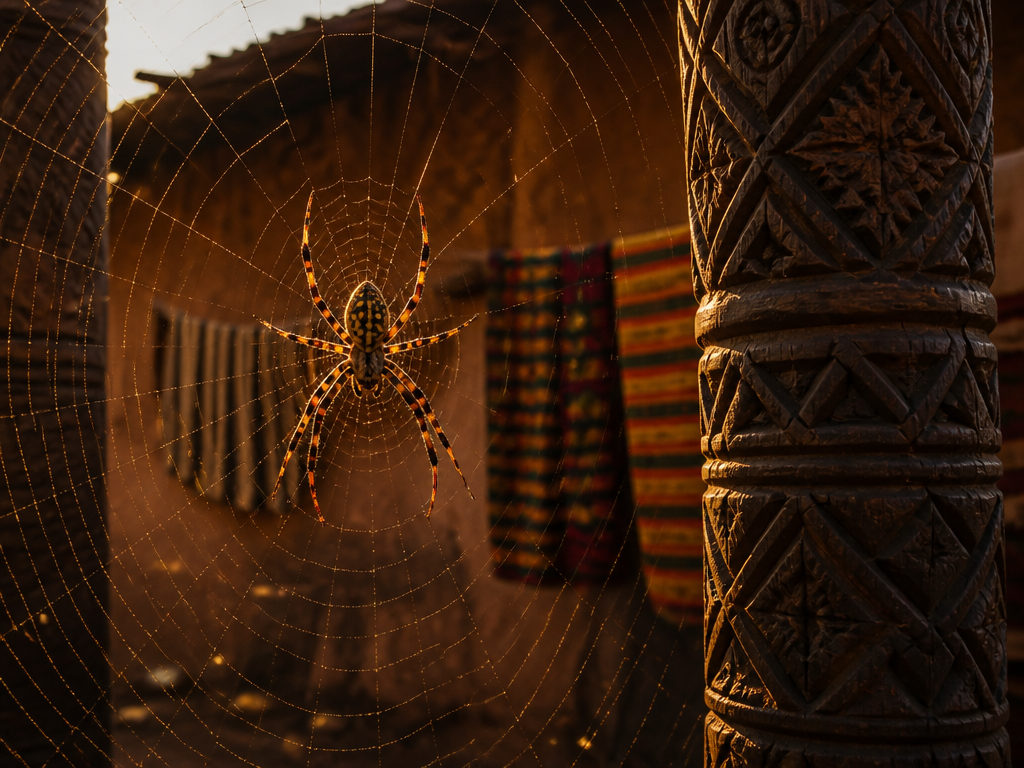
Among the Akan, the tales are Anansesem — Ananse stories — and Kwaku Ananse is the spider who holds them. In the telling that reached print most often, Ananse decides that wisdom should belong to him alone. He goes about gathering it, piece by piece, into a gourd or a clay pot, and when the pot is full he sets out to hang it at the top of a tall tree, beyond everyone.
He ties the pot in front of him and starts to climb. The pot is in the way. He slips, tries again, slips again. His son — in most tellings, Ntikuma — has followed him and is watching from below, and eventually says: Father, if you put the pot behind you, you could climb.
What happens next is the part that matters. Ananse does not thank him. He is enraged that a child standing on the ground has seen what he could not, and he throws the pot down. It breaks. Wisdom scatters — into the bush, into the river, out to every quarter of the world. Versions differ on the last beat: in some, rain carries the pieces to the water and people take what they find home; in others, the scattering is the whole explanation, and the story simply stops.
Note what the story does not end with. It does not end with a lesson for the child. It ends with an account of why the world is the way it is: wisdom is distributed, everyone has a piece, nobody has the pot.
How the moral got attached
So where did the lesson come from?
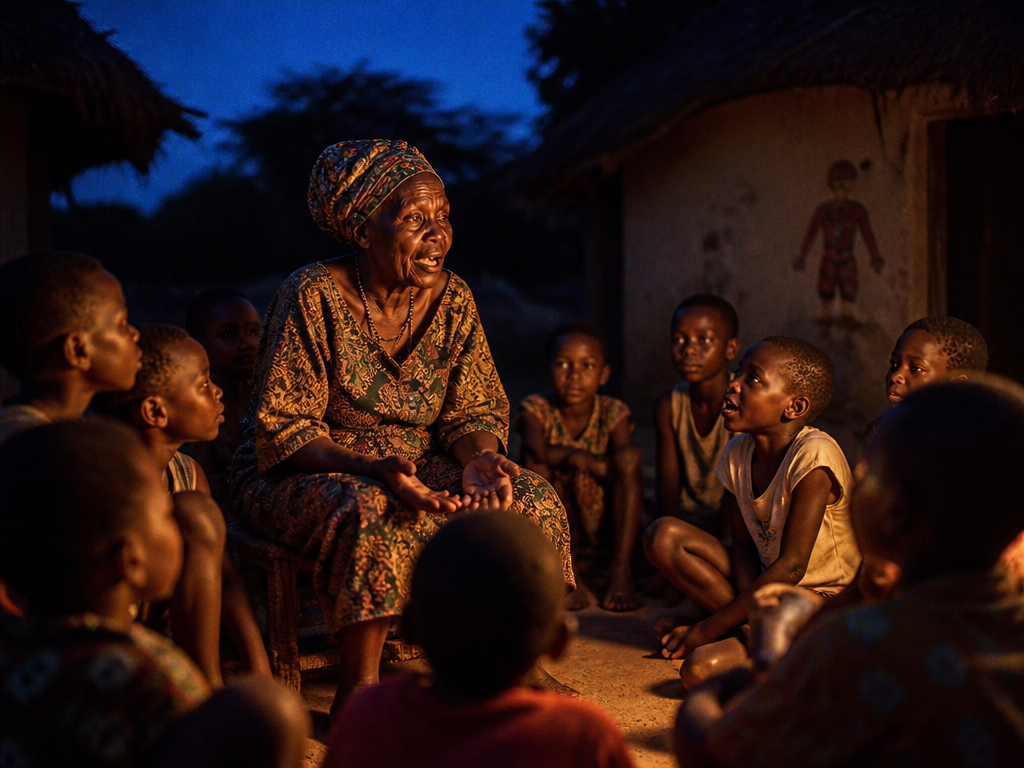
A real place, and a smaller one than the belief it produced. In 1930 the British government anthropologist R. S. Rattray published Akan-Ashanti Folk-Tales, Twi on one page and English on the other, from Asante tellers. Two things he recorded almost never survive reprinting. First, a formula spoken before the tale — roughly, we do not really mean it — a standing disclaimer that what follows is not to be taken as truth. Second, a closing formula handing the story onward: this is my story; if it is sweet, or if it is not sweet, take some elsewhere and let some come back to me. A tale that opens by denying it is true and closes by inviting revision is not behaving like a rule.
Rattray was working inside a genre that had already been decided in Europe. Missionary and administrator collectors across the continent — Henri Junod among the Tsonga in the 1890s is one of many — filed what they heard under folk-tale, a word that by the late nineteenth century meant a printed book for children with a lesson at the end. The tales were told at night, to mixed-age audiences, with song, interruption and back-talk from the listeners. The page kept the plot and dropped everything else.
Then came the school readers. Across the Gold Coast and Nigeria, mid-century classroom anthologies printed the tales in English with a single italic line beneath: Do not be greedy. Pride goes before a fall. That line is the thinnest part of the whole apparatus, and it is the part that travelled furthest. It went into the diaspora anthology, the picture book, the assembly-hall retelling. A great many educated readers now believe that African tales are moral instruction machines in which wisdom defeats innocence — and the source of that belief is a handful of colonial-era collections, a schoolbook convention, and a European genre label.

Scholars have not settled this. One position holds that the didactic reading is largely an artefact of collection, and that Anansesem were principally entertainment, fiction-framed and enjoyed as such. Another holds that instruction was always present but distributed — carried by the audience's argument about the tale rather than printed under it. Both can point at real evidence. Neither gets to claim the tales were only one thing.
Side by side
| Akan (Ghana) | Yoruba (southwest Nigeria) | Igbo (southeast Nigeria) | |
|---|---|---|---|
| The clever one | Kwaku Ananse, the spider | Ìjàpá, the tortoise | Mbe, the tortoise |
| Who out-thinks him | his own small son, standing on the ground | the birds, who take their feathers back | the birds, with Parrot carrying a false message |
| What the tale explains | why wisdom is scattered among everyone | why the tortoise is always hungry | why the tortoise's shell is a patchwork |
| What the schoolbook said | do not be greedy | do not be greedy | do not be greedy |
The sky-feast tale in the second and third columns is told of Ìjàpá in Yoruba and of Mbe in Igbo, and arguing about who had it first is mostly a way of forgetting that neighbours tell each other stories. Chinua Achebe puts the Igbo version inside Things Fall Apart (1958): Ekwefi tells it to her daughter Ezinma at night, in a woman's voice, in a house where Okonkwo considers his son Nwoye's taste for such stories a defect.
What the novelists put back
The innocence-versus-wisdom frame did not stay inside the tales. Critics turned it on the writers. When Amos Tutuola published The Palm-Wine Drinkard in 1952 — Yoruba àló material driven straight into English — London reviewers received it as a kind of natural wonder, and Nigerian critics of the day were embarrassed by exactly the same qualities. Achebe, arriving six years later in careful, ironic prose, was read as the sophisticated one. Innocent and wise: the binary reapplied to two men who were both doing deliberate work.
What the strongest contemporary African storytelling does is put back the framing the collectors dropped. Ben Okri's The Famished Road (1991) keeps the spirit-child's world unresolved, refusing to tell you whether Azaro sees or imagines. Souleymane Cissé's Yeelen (Mali, 1987) makes knowledge a dangerous inheritance held by initiates and withheld from a son. Mati Diop's Atlantics (Senegal, 2019) lets the drowned return to Dakar and speak through the living without once explaining the mechanism. Kunle Afolayan's Anikulapo (2022) builds a whole plot on a bird from Yoruba story. None of them appends a moral. That restraint is not vagueness — it is the older shape of the tale, restored.
Where the connection ends
Ananse, Ìjàpá and Mbe are not one figure with three names. Ananse is a spider and, in Akan tradition, the owner of stories themselves — a status neither tortoise has. Anansi in Jamaica and the Caribbean is a continuation of the Akan figure carried by enslaved Akan people, still working, still told; it is not a degraded copy of a purer original. And Eshu, whom outsiders often file with these three, is not a folktale animal at all. He is an òrìṣà, addressed in Yoruba religious practice today, and putting him in a trickster line-up is how the missionary-era mistranslation of him as the devil got started.
Names and terms
- Anansesem (a-nan-SEH-sem) — Akan word for the body of Ananse stories, and by extension for tales generally.
- Kwaku Ananse — the spider of Akan tradition; Kwaku marks a Wednesday birth.
- Ntikuma — Ananse's son in many Akan tellings.
- Ìjàpá (ee-JAH-pah) — the tortoise of Yoruba tales.
- Àló (AH-law) — the Yoruba genre of tales, many sung.
- Mbe — the tortoise of Igbo tales.
- Òrìṣà — a Yoruba divinity, part of living religious practice, not a story character.
The Akan have a proverb that says what the broken pot says, and says it faster: wisdom is not in one person's head. So here is the honest rule for tonight — when a tale arrives with a moral printed under it, ask whether the teller or the editor put it there, and if you cannot tell, trust the part of the story that explains something over the part that instructs you.