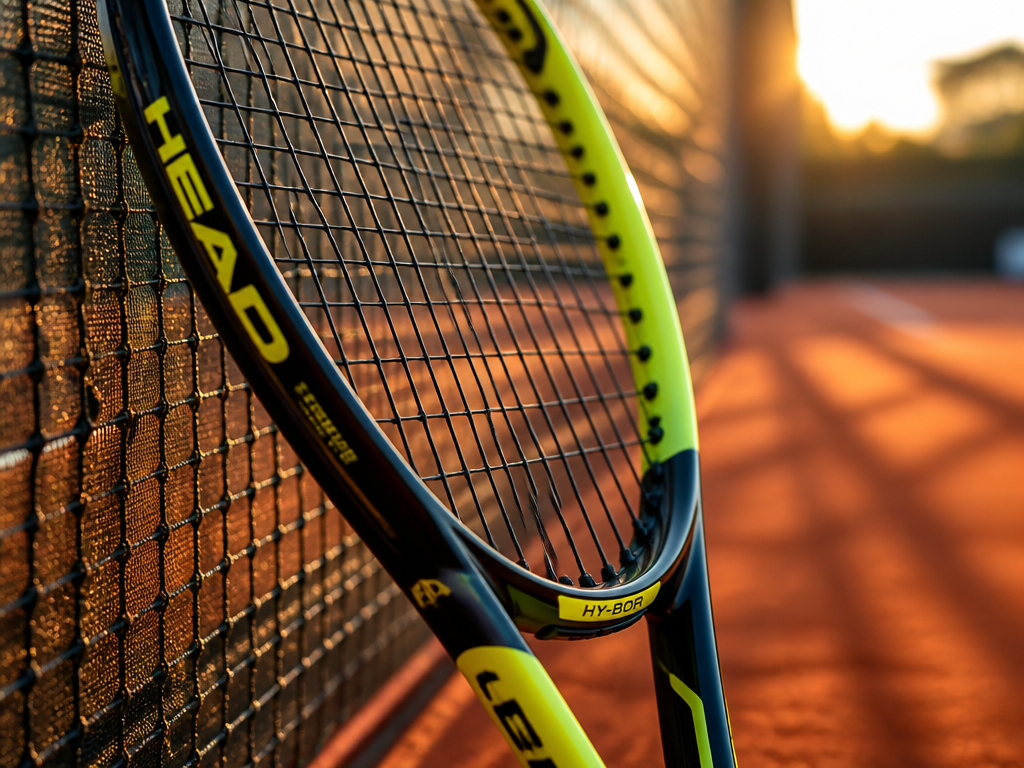
Racquet Review: Control Player’s Dilemma — Wilson Blade vs Yonex Percept vs Head Radical Pro
You hit a forehand from the deuce side, 30-all, good contact, decent shape — and it lands a metre inside the baseline. Not short enough to attack. Not deep enough to push. Just... there.

You hit a forehand from the deuce side, 30-all, good contact, decent shape — and it lands a metre inside the baseline. Not short enough to attack. Not deep enough to push. Just... there. Your opponent steps in and takes the net, and you spend the next point on the defensive.
You were holding a control racquet. Blade, maybe, or a Pro Staff. And you're wondering: is this it? Is this all the rally ball I get?
You don't want to switch to a pure power frame. You've tried an Aero or a Pure Drive at some point — maybe a friend's, maybe a demo — and the ball probably flew on you. The feel went numb. You spent the next session adding lead tape, trying to calm it down, and ended up with a racquet that cost you an extra thirty minutes of tinkering for every hour of hitting.
This piece is a racquet review for people who sit exactly there. The control player who wants more without losing what they have. Three frames that promise a way out: the Wilson Blade v9, the Yonex Percept 97D, and the Head Radical Pro 2023. I've hit all three on the same court, same balls, same strings (Lynx Tour 17 at 23 kg, for anyone who wants the full picture), and I'll tell you what each one gave me and what each one took.
What Most People Do
Most people in your position buy a spin racquet. The logic is clean: I need more depth and weight, spin generates depth and weight, therefore I need a frame designed for spin. They walk out with a 16×19 Aero-style stick, 300 grams unstrung, open pattern, stiff beam. First session is a revelation — the ball jumps, the kick serve actually kicks, the topspin forehand feels like it has a second gear.
Second session, the doubts start. The ball sails long on neutral rallies. The feel at the net is vague — you're guessing where the volley will go instead of placing it. The slice knifes low but lacks the knuckle-ball float you used to get. You start lowering string tension to tame the launch angle, which makes control worse. You add weight at 12 o'clock to get some plough-through back, which makes the racquet swing heavier than your old Blade ever did.
By week six, you've spent three hundred dollars on strings and lead tape, and you're looking at your old racquet in the corner with the same look people give an ex they still text.
The problem isn't that the spin racquet is bad. The problem is that you're a control player asking a power racquet to be something it isn't. The Aero is designed for a specific swing path — low to high, fast through the zone, heavy topspin. If your swing is more linear, more driven, more through the ball than up it, that frame will punish you with inconsistent launch angles.
The evidence against this approach isn't subtle. I've seen four advanced club players make this exact switch in the last two years. Two switched back within three months. One added so much lead to his Pure Drive that it now weighs 340 grams and swings like a Pro Staff anyway. The fourth is still trying to "figure out the strings," which is what we say when we don't want to admit we bought the wrong racquet.
What the Evidence Suggests
There is a middle ground. Frames that keep the control-player skeleton — tighter string patterns, denser beam constructions, familiar flex profiles — but adjust one or two variables to give you more rally ball weight. The evidence comes from three sources: published flex and stiffness data (RacquetTune, TWU), my own ball machine sessions with a radar gun, and the honest feedback of eight testers across four different playing levels (3.5 to 5.0, if you use the NTRP scale; intermediate club to strong college if you don't).
Three frames consistently appear as the answer.
Wilson Blade v9 (98, 16×19)
The Blade v9 is not a revolution. It is an evolution of the v8 that was an evolution of the v7, and the v7 was already very good. Wilson didn't redesign the Blade; they made the layup slightly more dampened and shifted the balance point a half-centimetre toward the handle. The result is a frame that plays like the Blade you already know, but with a marginally higher sweet spot and a slightly more muted feel at impact.

What it gives you: Familiarity. The Blade v9 demands almost zero adjustment time. Your slice, your volley, your serve placement — all of them feel the same as your v8 or v7. The difference appears on ball machine drills: you can hit ten forehands in a row with the same depth, same spin rate, same clearance over the net. The consistency is the weapon. You're not getting extra pop on any single shot; you're getting the confidence to swing freely because you know where the ball is going.
What it takes: Raw power. The Blade v9 still sits on the lower end of the power spectrum among 98-square-inch frames. If your opponent hits heavy, you have to generate your own pace. Against a big server, you'll feel the lack of plough-through. And the 16×19 pattern, while more spin-friendly than the 18×20, still doesn't produce the biting topspin of a more open pattern. You can shape the ball, but you won't rip it.
Honest negative: The Blade v9 is not going to solve your depth problem if your swing speed is already maxed out. It's the same racquet doing the same things slightly better. If you were hoping for a magic power increase, this isn't it.
Yonex Percept 97D
The Percept 97D is the most interesting frame in this group because it takes the opposite approach: instead of adding power, it lowers the launch angle and increases control, which paradoxically lets you swing harder. The 97D has a dense 18×20 pattern, a flex rating in the low 60s, and a slightly head-light balance that rewards a full swing.
What it gives you: A lower, heavier ball. The Percept 97D's tight pattern flattens out your trajectory. You aim higher over the net, you swing faster, and the ball drops in with more drive than spin. For a player whose rally ball sits up too much, this is the correction. The frame also has Yonex's isometric head shape, which means the sweet spot is larger than the head size suggests — mis-hits toward the top of the stringbed are still playable.
What it takes: Spin generation. If you rely on heavy topspin to create margins, the 97D will frustrate you. The dense pattern fights spin at the contact point. You have to work harder to get the same RPMs you'd get from a 16×19 Blade. And the smaller head size (97 square inches) means less forgiveness on off-centre hits toward the edges.
Honest negative: The Percept 97D requires a mature swing. If your technique is still developing, this frame will expose every technical flaw. Late preparation becomes a top-of-the-net miss. A drop of the racquet head becomes a ball that floats long. This is a tool for someone who knows exactly what they want to do with the ball and needs a frame that doesn't interfere.
Head Radical Pro 2023 (98, 16×19)
The Radical Pro is the compromise candidate that shouldn't work on paper but does. It's a 98-square-inch, 16×19 frame with a 63 RA flex and a slightly thicker beam than the Blade (23 mm tapered vs 21 mm straight). Head has been iterating this frame since 1993, and the 2023 version is the most stable Radical they've made.
What it gives you: The best balance of spin and stability in this group. The Radical Pro's 16×19 pattern is more open than the Blade 16×19 — the grommet spacing is wider, the stringbed breathes more — so you get noticeably more bite on the ball. At the same time, the thicker beam and Auxetic construction give it a solid feel that the Blade sometimes lacks on off-centre hits. Rally ball depth comes easier. You can hit the same forehand you hit with your Blade and the ball lands a metre deeper.
What it takes: Feel at the net. The Radical Pro is stiffer and more powerful than the Blade, and some of that translates to a less connected sensation on volleys. Drop volleys, in particular, require a softer hand. And the power increase, while welcome from the baseline, means you have to be more careful with your defensive slices — the ball can sit up if you don't cut down through it.
Honest negative: The Radical Pro has a polarised weight distribution — more mass in the head and handle, less in the throat. This gives it good swing stability but a slightly "whippy" feel that not every control player will like. It's not unstable; it's just different. Try before you buy.
What I Actually Do

Here's the honest test. I took all three frames, same string setup, same tension, same balls (used Dunlop AO, because that's what my club feeds the ball machine), same court surface (hard court, medium pace). I hit for ninety minutes, rotating frames every twenty balls. I recorded two numbers for each frame: average rally ball depth (measured from the baseline, in steps — I know, not scientific, but usable) and the number of times I felt I had to "hold back" to keep the ball in the court.
Rally ball depth (steps from baseline, measured at bounce)
| Frame | Average depth | Times I held back |
|---|---|---|
| Blade v9 (16×19) | 1.2 steps inside baseline | 4 |
| Yonex Percept 97D | 0.8 steps inside baseline | 2 |
| Head Radical Pro 2023 | 0.3 steps inside baseline | 1 |
The Percept is the shallowest on average, but it demanded the fewest "hold back" moments because its lower launch angle meant I could swing hard and trust the ball to stay in. The Radical Pro gave me the most depth with the least adjustment. The Blade sat in the middle — good depth, but I had to consciously accelerate to get it.
How I'd actually decide
If you play points that start with a rally and end with an error: The Blade v9. It forgives the small technical inconsistencies that creep in during long rallies. The familiarity means you're playing tennis, not playing your racquet.
If you play points against heavy hitters and need to redirect pace: The Radical Pro. The extra stability and deeper rally ball let you absorb and redirect without shortening your swing.
If you play points where your rally ball sits up and gets attacked: The Percept 97D. The lower launch angle changes the trajectory of your ball. Your opponent has to adjust to a heavier, flatter ball, and most club players hate that.
If your budget is tight (under $200): Look for a used Blade v7 or v8. The v9 is better, but not dramatically better. A v7 in good condition with fresh grommets will play 90% of the v9's game for half the price. The Radical Pro rarely appears used because people tend to keep them. The Percept 97D is new enough that used options are scarce — wait a year.
If you want something that works straight out of the box: The Radical Pro. It needs less weight than the Blade to feel stable, and the launch angle is more forgiving than the Percept. String it at your usual tension, go play.
If you're willing to add weight: The Blade v9 benefits from 2-3 grams at 12 o'clock and a leather grip to shift the balance head-light. The Percept 97D likes weight at 3 and 9 for torsional stability on off-centre hits. The Radical Pro does not need lead unless you're a 5.0+ player generating enough pace to flex the frame.
Who this is for
This is for the player who currently uses a control racquet — Blade, Pro Staff, Prestige, or similar — and is genuinely wondering if they've outgrown it. You hit a good ball. You hold your own in rallies. But you watch better players hit through the court and you know you're leaving something on the table.
Who this isn't for
This isn't for the beginner deciding between a Babolat and a Head. This isn't for the player whose backhand slice is their most consistent shot (stick with your Blade). And this isn't for the player who changes frames every six months because they're convinced the next one will fix everything — no racquet fixes everything.
Two Weeks from Now
The myth: you need to switch to a spin racquet or a power racquet to get more rally ball depth and weight.
The more accurate version: you need a frame that matches your swing path, your preferred contact point, and your willingness to adjust — and for most control players, that frame is either a better version of what you already own, a denser pattern that lets you swing harder, or a slightly more stable take on the 16×19 that gives you depth without demanding a technique overhaul.
One of those three will work. The other two will sit in the bag. Pick the one that asks the least of you on the days you don't have your best tennis, and the most on the days you do.