Netflix Releases and African Mythology: What One Number Misses
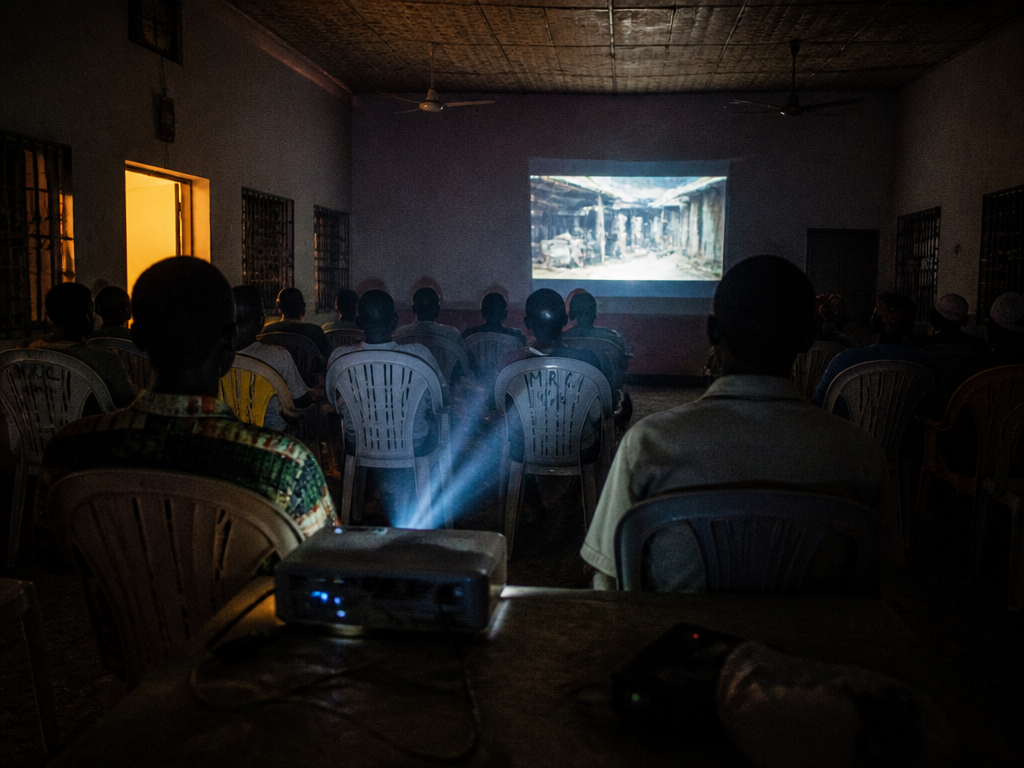
A multiplex in Lekki on a Friday night seats a few hundred people. Nigeria — a country of more than 200 million — has fewer than 200 cinema screens in total.

A multiplex in Lekki on a Friday night seats a few hundred people. Nigeria — a country of more than 200 million — has fewer than 200 cinema screens in total. The counts vary by source and by year, and people in the industry argue about the exact figure, but every serious tally lands in the same neighbourhood: under two hundred. Hold that number while you read the week's Netflix releases coverage, where Colours of Fire, a fantasy epic of rival tribes and forbidden love, arrives on August 7 after a theatrical run the trades described as underwhelming.
The number is worth sitting with, because almost everything written about a Nigerian film's performance is downstream of it.
Fewer than 200 screens, for more than 200 million people
The screen count is not a secret and not a scandal. It is the ordinary shape of a market where cinema-going rebuilt itself from close to zero in the 2000s, after the old halls closed and the home-video trade took over. The screens that exist cluster where the shopping malls are: Lagos first, then Abuja and Port Harcourt, with a thin scatter beyond. Some counts include every screen in a multi-hall complex; some count complexes. That is most of the disagreement.
What it means in practice is that a Nigerian theatrical release has a hard mathematical ceiling, and everyone selling tickets knows roughly where it sits. A film cannot outperform the number of seats available to it. A record-breaking domestic run and a modest one are separated by a much smaller gap than the language of box office reporting suggests.
So when a mythology epic is called a theatrical disappointment, the sentence is doing less work than it sounds like it is doing.
What box office actually measures
It measures how many people were near a screen, on a weekend, with money for a ticket and a reason to spend it on that film rather than the other four in the same lobby.
That is a real measurement. It captures marketing reach, star power, release timing, and whether a distributor got decent showtimes rather than the 11am slot. Producers need it, because theatrical revenue arrives fast and unshared in a way that few other revenue lines do.
But read it precisely. Box office is a measure of urban access. It tells you about the density of multiplexes in three cities and the disposable income of the people who live near them. It does not tell you how many Nigerians wanted to see the film. It cannot — most of them were never within reach of a screen showing it.
Do Nigerian films make money on Netflix?
Usually, yes, and usually before anyone watches. The standard arrangement for a licensed title is a fee paid up front for streaming rights over a set term. The producer is paid whether the film finds ten thousand viewers or ten million. That is why a streaming date can be the more consequential number on a film's calendar than its opening weekend: it is the point at which the production's economics are settled, not the point at which they are tested.
The trade-off is that the up-front fee is negotiated against expectations, and expectations are set by — among other things — the theatrical run. The screen count quietly shapes the licensing conversation too.
What the number cannot see
Here is where the piece gets interesting for anyone who cares about African mythology on screen rather than African film finance.
A theatrical figure cannot see a household in Houston where three generations watch on one account. It cannot see a shared login in Peckham, a laptop passed around a hostel in Ìbàdàn, or a film left running twice in one evening because someone's mother wanted to hear the Yoruba dialogue again. It cannot see anyone who watched six months later.

And it cannot see the thing that matters most to the traditions on screen: recognition. Whether a Yoruba viewer watched a divination scene and thought, yes, that is what it looks like. Whether an Igbo viewer heard a name pronounced the way their grandfather said it. Whether an Akan viewer saw a chieftaincy scene staged with the protocol it actually has.
| The measurement | What it captures | What it misses |
|---|---|---|
| Domestic box office | Ticket buyers near an urban multiplex | Everyone outside those three cities; the diaspora entirely |
| Streaming hours viewed | Total attention, aggregated | Who watched, where, and whether they finished it satisfied |
| Top-10 chart position | Relative performance in one week | Long-tail viewing, rewatching, word of mouth |
| Awards recognition | Peer and jury judgement of craft | Whether the tradition depicted was handled accurately |
Netflix does publish engagement figures — hours viewed, country-level top-10 lists. Those are real data and better than the void that preceded them. They still measure attention, not accuracy, and certainly not trust.
Why this matters more for mythology than for a thriller
Nollywood has a specific history with traditional belief, and it is not a neutral one.
The home-video wave that began in the early 1990s — the era Living in Bondage opens — built much of its commercial engine on spiritual horror. Traditional practice appeared as the thing that ruined people: the shrine as a trap, the diviner as a villain, the word juju used as a synonym for menace. That framing was inherited partly from missionary-era vocabulary and partly from the fact that horror sold cassettes. A generation of viewers, in Nigeria and abroad, learned to read Yoruba and Igbo religious life through it.
The correction is already underway, and it is being made by filmmakers rather than by critics. Recent epics treat òrìṣà tradition as cosmology — a coherent system of thought about creation, justice, and obligation — rather than as a threat with a soundtrack. Ifá, the Yoruba divination system, is practised today by babaláwo across Nigeria, Benin, Brazil and Cuba; a film that shows it as living knowledge instead of as a curse is not being progressive, it is being accurate.
But the metrics available to us cannot tell that story. A film that gets the tradition wrong and a film that gets it right register identically in a box office table. Both are just a figure. The screen count, the licence fee, the hours viewed — none of them contain a variable for whether the people depicted felt seen.
Names and terms
- Nollywood — Nigeria's film industry, named in the early 2000s; enormous by output volume, small by screen count.
- Nollywood epic — a period genre, often in Yoruba or Igbo, set before or during colonial contact, typically involving kingship, lineage, and traditional religion.
- Ifá (ee-FAH) — a Yoruba divination system and body of oral literature, practised today by trained diviners known as babaláwo.
- Òrìṣà (oh-REE-shah) — the divinities of Yoruba tradition; also spelled orisha, and carried into Cuban Lucumí and Brazilian Candomblé.
- Licence fee — the up-front payment a streamer makes for rights to a finished film, as distinct from a per-view royalty.
- Hours viewed — the engagement metric Netflix publishes; total time, not unique viewers.
The question nobody has a number for
Colours of Fire will arrive on August 7 and generate a figure. That figure will be reported, compared, and used to argue about whether African mythology sells.
It will not answer the question underneath. No platform publishes, and no researcher has yet found a reliable way to measure, whether a film carried a tradition faithfully to the people whose tradition it is. Reception studies of African audiences are thin, diaspora viewing is barely instrumented, and the communities best placed to judge accuracy are the ones least likely to be surveyed about it.
So which is the real success — the epic that tops a chart in forty countries, or the one a Yoruba grandmother watches without once needing to correct the screen? Right now, we have a number for only one of them.